



I had the privilege of serving missions that allowed me to see first -hand how government technology has transformed in the past 20 years. What is obvious to the first computerization initiatives at zero counterfeit adoption plans is that the world does not stop for the government to catch up. In addition, web3, the next version of the Internet – and the wave of the future – has already started to break, presenting us a new area of digital property, confidence and commitment. But what is web3 actually? Why would federal, state and local leaders be concerned with digital currency, blockchain or decentralized identity? And how do they connect with the requirements for the provision of citizen services, zero-frust architecture (ZTA) and cybersecurity? Let’s take a step by step, practically and personally.
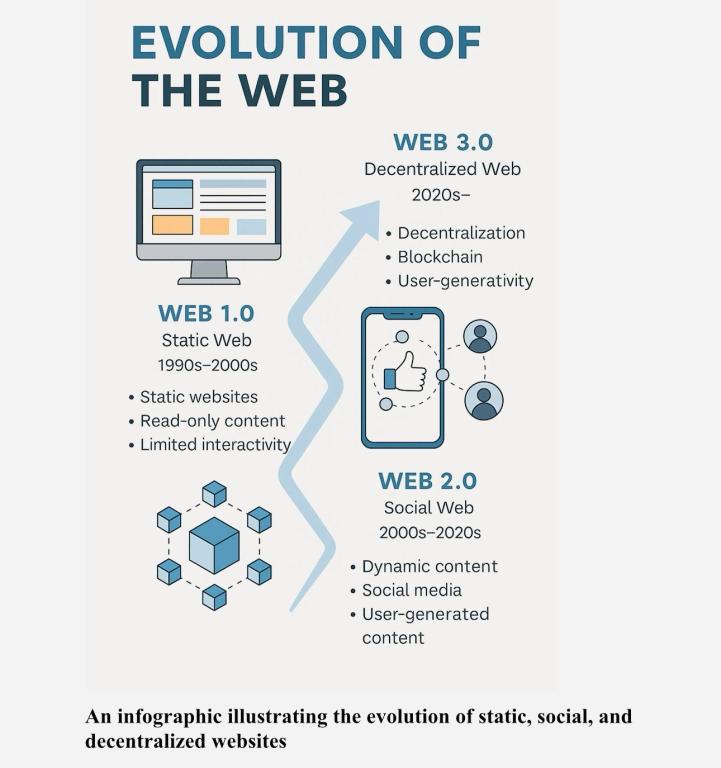
If we want to grasp web3, let’s first discover our own past. There was a web “in reading alone”, or web1, extending from the 1990s to the early 2000s and mainly composed of static websites, electronic brochures and simple information sharing. He was not interactive and provided practically no security or control over the user’s identity. It was used mainly by government agencies to provide basic public information. Web2 (2000 to 2020) is the period when the “social web” has entered. Here, citizens were able to use applications hosted in the cloud to govern services, create content and engage with other people on social networking platforms such as Facebook, YouTube and Twitter. He caused vulnerability, where user identification and confidentiality have been omitted and the centralization of data, where several large companies had huge personal data. Virtual private networks, firewalls and final points detection are now default security options.
Again, web3 (2020 and forward) moves the paradigm. We are now talking about a decentralized web where users control their data and identities. Transactions, identity tests and governance are all activated by Blockchain technology. The data is distributed and verified using consensus models instead of being stored in one place. The ZTA concepts that most agencies seek to implement are in fact in accordance with that of design.
This new cybersecurity base is based on the hypothesis that no user or system should never be reliable by default. Authentication never stops. Access is restricted. Surveillance is constant. Now observe how these principles are intrinsically activated by Web3 and by Blockchain, a large unchanging book. Transactions and changes are permanently stored. Individuals are responsible for their own digital identity information, which can be verified without a central transmitter, thanks to a decentralized identity.
While others still see web3 as a theory, we see real applications within the government, with organizations from throughout the United States, implementing digital progress. The Ministry of Internal Security is investing in a decentralized identity to accelerate security and immigration screenings. The blockchain vote for overseas troops was piloted in Virginie-Western. The General Services Administration and NASA study the use of intelligent contracts in the supply and management of subsidies. California and Illinois, among other departments of engine vehicles in the state, test the digital driver’s permits based on blockchain.


