





In a conversation on the Podcast Epicentre, the co -founder Ethereum Vitalik Buterin addressed the imminent threat posed by quantum computer – an existential risk often cited for modern cryptography and blockchain networks. While many in the cryptographic industry consider quantum attacks as a distant or even speculative concern, Buterin has offered a more nuanced and data -based assessment, rooted in current research and technical forecasts.
Is Ethereum prepared against quantum computers?
According to Buterin, the community can take significant clues of the prediction markets organized on platforms like Metaculus, which bring together expert forecasts on emerging technologies. “If you are just looking for quantum Metaculus computer science,” he noted, “the median response you get when a quantum computer is powerful enough to break the cryptography is between 2030 and 2035.” This projected period places the emergence of a credible quantum threat well in the lifespan of Ethereum and other blockchain protocols currently in service.
Buerin, however, paid attention to the distinction between media threshing and reality. “There is a lot of grade in quantum space,” he warned. Some organizations claim to have quantum computers, but what they often present are quantum adiabatic machines – devices that can be “technically quantum” in the structure, but which are functionally unable to execute the types of operations necessary to constitute a real threat to cryptographic infrastructure. “They cannot really really do anything interesting that conventional computers cannot do,” he said.
The real reference for quantum risk, explained Buterin, is not the existence of quantum machines in itself, but their demonstrated capacity to execute specific algorithms that break cryptography. “The question you ask is: What is the greatest number you have taken into account using the Shor algorithm?” Buterin stressed. “As long as the answer continues not to exceed 35, it is not super interesting.” Shor algorithm is the main quantum algorithm that could undermine the RSA and other cryptographic standards widely used in blockchain technologies. Its large -scale application would point out a fundamental vulnerability in systems based on the encryption of public keys.
However, Buterin has recognized that real progress is made in quantum computer science research. Although there has not yet been a breakthrough that justifies panic, there is “a huge amount of progress that occurs on quantum resolution,” he said. The Ethereum community is already preparing for this possibility thanks to cryptographic innovation. “Justin Drake worked on signatures respectful of quantum aggregation,” noted Buterin, highlighting the active development of post-Vingetum cryptographic primitives within the Ethereum research team.
Buterin has concluded a note of cautious optimism: “I am therefore very optimistic that Ethereum will be able to cover it.” The proactive position of the community on post-health security, combined with the slow and measurable rhythm of quantum progress, seems to offer a reasonable window for the transition.
This optimism took a new momentum last week when the Ethereum Foundation published a roadmap to integrate a ZKEVM directly into layer 1 in the twelve months. The initiative, described by researcher Sophia Gold in the blog post “Shipping of an L1 ZKEVM # 1: Proving in real time”, commits the protocol to check the succinct evidence based on 99 percent of the main line blocks inside the time of 12 seconds, with a compulsory security floor of 128 bit and proof sizes below 300 KIB. By allowing validators – even solo stakers performing “promoted at home” – to check the blocks using quantum resistant tests rather than reorganizing each transaction, the plan accelerates both the scalability and narrows the attack surface of Ethereum should arrive in advance on the calendar.
At the time of the press, ETH exchanged $ 3,040.
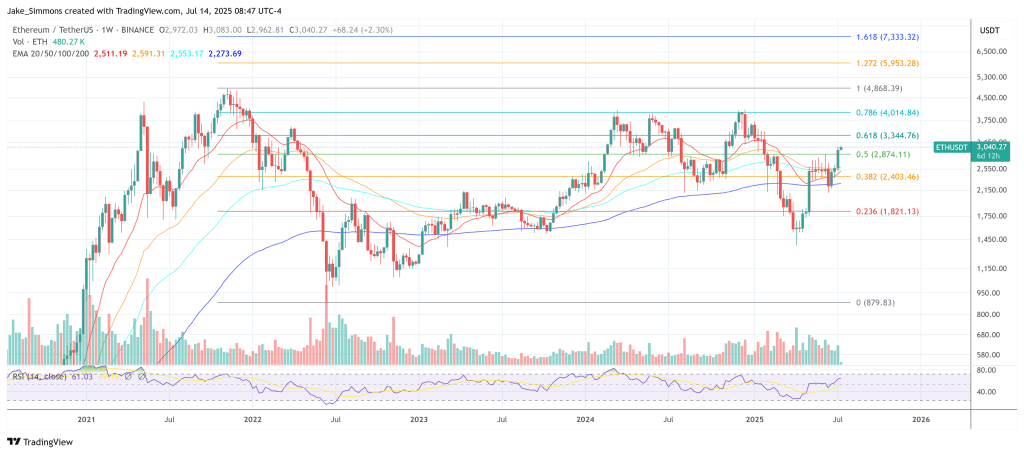
Youtube star image, tradingView.com graphic
Editorial process Because the bitcoinist is centered on the supply of in -depth, precise and impartial content. We confirm strict supply standards, and each page undergoes a diligent review by our team of high -level technology experts and experienced editors. This process guarantees the integrity, relevance and value of our content for our readers.


