



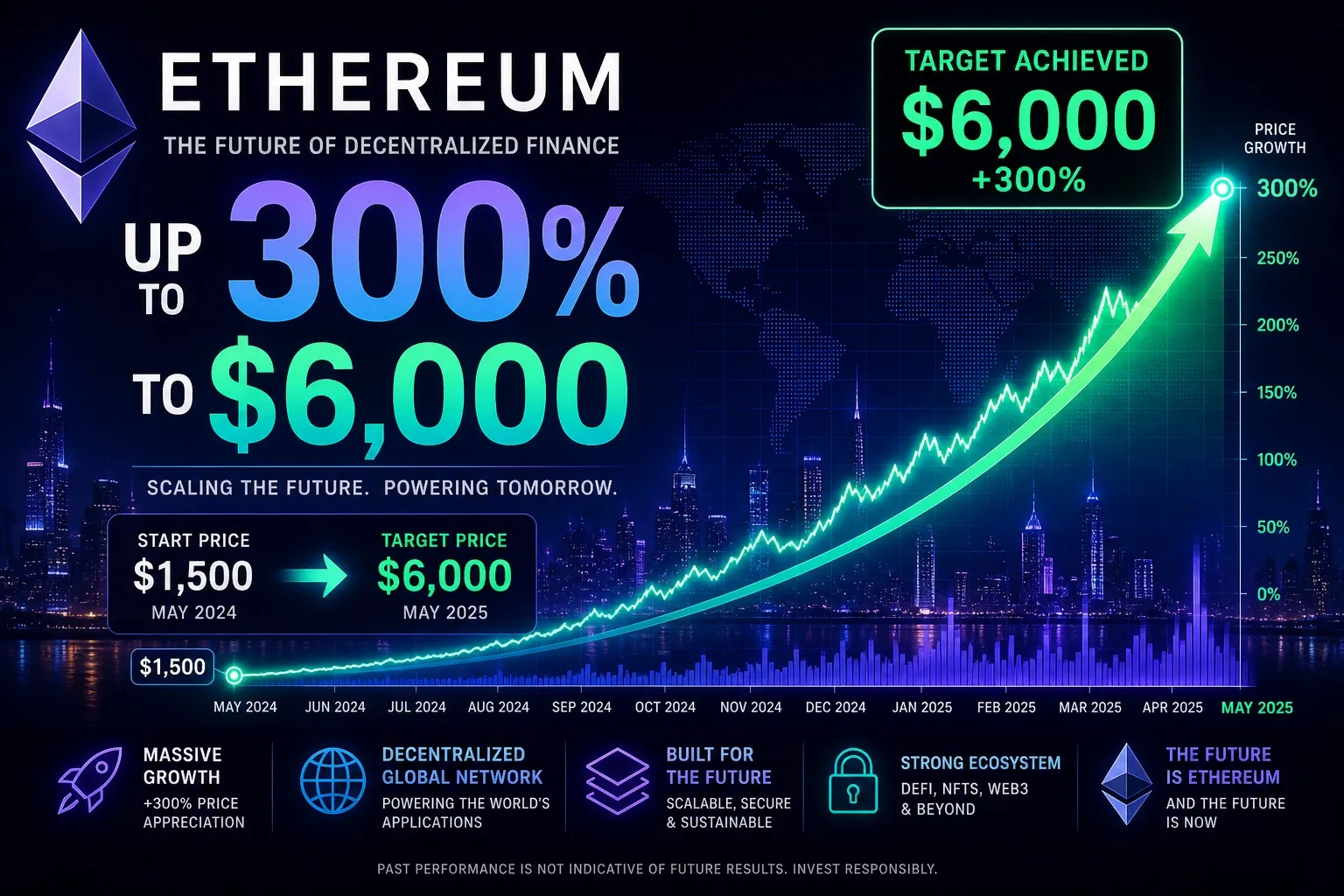
Ethereum’s Next Scaling Upgrade ” draws attention to the entire market, raising the crucial question of whether a major increase in network capacity can translate into equally strong price growth. The idea seems simple, but the relationship between infrastructure and valorization is rarely so direct.
Does a 300% capacity increase translate into a 3x increase in Ethereum price?
The conversation begins with the expected upgrade of the recently ‘Glamsterdam’ highlighted by crypto commentator @Hasufl. The upgrade is set to increase Ethereum’s gas limit from around 60 million to around 200 million, representing a jump of more than three times its current execution capacity. It also appears that this capacity could increase further after the upgrade goes live.
Related reading
This change is not the result of a single change, but of several combined improvements. The separation between the proponent and builder allows more time to assemble the blocks, which helps transactions are processed more efficiently. Blocked access lists allow systems to prepare transaction data in advance, making it easier to manage multiple processes at once. Additionally, gas repricing adjustments are being introduced to better match actual resource usage, helping the network safely support higher limits. A related proposal also increases the cost of creating new data on the network, helping to prevent it from growing too quickly.
Following coordinated efforts involving over 100 developers, there is now an agreement around maintaining a gas limit close to 200 million after the upgrade. The direction is clear: increase the capacity of the network to handle while keeping it stable and efficient.
Even with this strategy, higher capacity alone does not guarantee higher demand. Without a corresponding increase in usage, the impact remains more about improving the structure than improving the structure. directly influencing the price.
Lower Fees and Market Dynamics: Can We Reach $6,000?
One of the most notable implications of this upgrade is the possibility that transaction fees could remain close to zero for an extended period of time if usage does not increase at the same rate as capacity. If lower fees improve accessibility and make the network more attractive for users and developers, it reduce pressure due to congestion which has always accompanied sharp price increases.
Related reading
Ethereum is currently trading around $2,363 and is up 2.2% over the past seven days, reflecting steady but moderate market movement. An increase to $6,000 this would represent approximately a tripling, but such a move would require more than an improvement in efficiency. This would depend on a significant expansion of user activity, capital inflows and sustained demand for applications built on the network.
Past market cycles show that price increases tend to follow periods of intense adoption rather than simple infrastructure upgrades. As Glamsterdam’s modernization strengthens The Long-Term Scalability of Ethereum and positions it for future growth, it does not directly drive up the valuation on its own.
Clearly, a 300% capacity increase does not equate to a 300% price increase. The upgrade lays the foundation, but market demand remains the deciding factor on whether Ethereum can approach $6,000 level.
Featured image created with Dall.E, chart from Tradingview.com


