




Tether froze $344 million in USDT on two blockchain addresses on April 23, 2026, acting on information from the Office of Foreign Assets Control and U.S. law enforcement in a coordinated action that simultaneously added two crypto addresses linked to the Central Bank of Iran to the OFAC sanctions list, marking the latest development in the Iranian stablecoin drama.
Blockchain analytics firm Chainalysis released its analysis four days later, mapping a multi-layered financial pipeline stretching from Iranian oil revenues through brokers, intermediary wallets, DeFi bridges, and into accounts affiliated with the Islamic Revolutionary Guard Corps.
OFFICIAL: Treasury Secretary Scott Bessent FREEZES $344 MILLION in Iranian Cryptocurrency
"We will track the money Tehran is desperately trying to move out of the country and target any financial lifelines linked to the regime." pic.twitter.com/1zBfrk5a0H
– Altcoin Daily (@AltcoinDaily) April 24, 2026
 OFFICIAL: Treasury Secretary Scott Bessent FREEZES $344 MILLION in Iranian Cryptocurrency
The detail missing from most headlines is what this action reveals about a belief that millions of stablecoin holders quietly hold: that USDT functions like digital money that no one can touch. This story is direct proof that’s not the case – and why it matters whether you’re in Tehran or Toronto.
The total market capitalization of USDT currently stands at over $144 billion, making it by far the largest stablecoin in circulation and the asset of choice for legitimate users and, as this case shows, state-level sanctions evaders.
What the Chainalysis Iran USDT trace actually reveals
– Chain Analysis (@chainalysis) April 27, 2026
Tether, the issuer of USDT, has a master key that allows it to freeze any wallet containing its tokens. When OFAC identifies a sanctioned address, Tether can blacklist it, thereby locking funds in place and preventing transfers. The $344 million was not seized; it was frozen, like funds in a blocked account.
Chainalysis traced the infrastructure around these wallets before the freeze. The funds originated from brokers converting Iranian fiat into stablecoins, passed through intermediary wallets, crossed DeFi bridges to obscure the trail, and returned to Iranian crypto exchanges and IRGC-affiliated accounts.
They noted that the Central Bank of Iran’s stablecoins were laundered through various protocols before being reintegrated into the Iranian crypto ecosystem. Analyst Alireza Derakhshan was linked to coordinating over $100 million in crypto linked to Iranian oil sales.
EXCLUSIVE: 99Bitcoin Readers – Earn $10 USDC when you sign up for Binance
Why this coercive measure is more complicated than it seems
The optimistic outlook is that the recent freeze shows that stablecoin issuers are acting as effective compliance gatekeepers. Tether has frozen assets worth $4.4 billion, including $2.1 billion at the request of the U.S. government, indicating that enforcement efforts are ongoing.
Conversely, skeptics point to Iran’s sophisticated, multi-tiered routing system, which complicates tracing, suggesting that a significant amount may have moved undetected before this action. In 2025, illicit crypto addresses received over $154 billion globally, with stablecoins accounting for a large portion of this amount.
Additionally, Iran’s transition from Bitcoin to stablecoins has been driven by the need for liquidity and stability, with results showing the Central Bank of Iran accumulating $507 million in USDT to support the rial and trade under sanctions. This incident highlights the centralized control of stablecoin issuers that has been downplayed in their marketing.
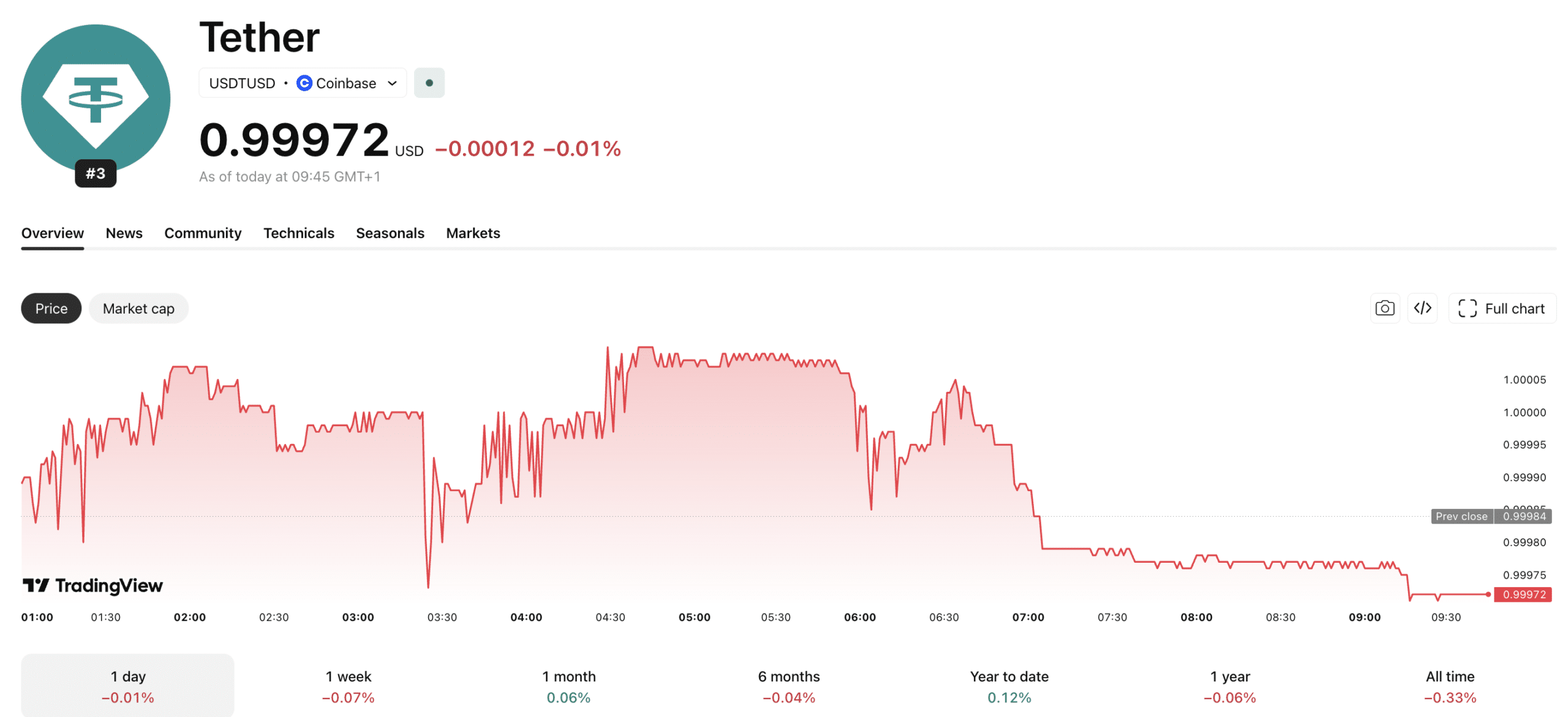
(SOURCE: TradingView)
What the Freeze of Iran Stablecoin USDT Means for Your Stablecoin Holdings
If you hold USDT and are not connected to sanctioned entities, the risk to your funds is low. Tether freezes are targeted based on formal sanction designations, not random audits.
However, USDT is not censorship-resistant like Bitcoin; Tether can freeze wallets on demand, making it a financial control tool.
Retail users face risks through intermediaries, as some exchanges may have unknowingly participated in sanctioned activities. If an exchange or wallet provider is caught in enforcement action, access to your funds could be disrupted, even without wrongdoing on your part.
Keep an eye out for the expansion of OFAC designations to include more Iranian brokers and intermediaries, as the next round will show the breadth of the network involved.
EXPLORE: Best Crypto Presales with Staking Rewards
Follow 99Bitcoins on XYouTube and Telegram for more crypto news and analysis.
The post Chainalysis Traces Iran Stablecoin Network After $344 Million USDT Freeze appeared first on 99Bitcoins.


