



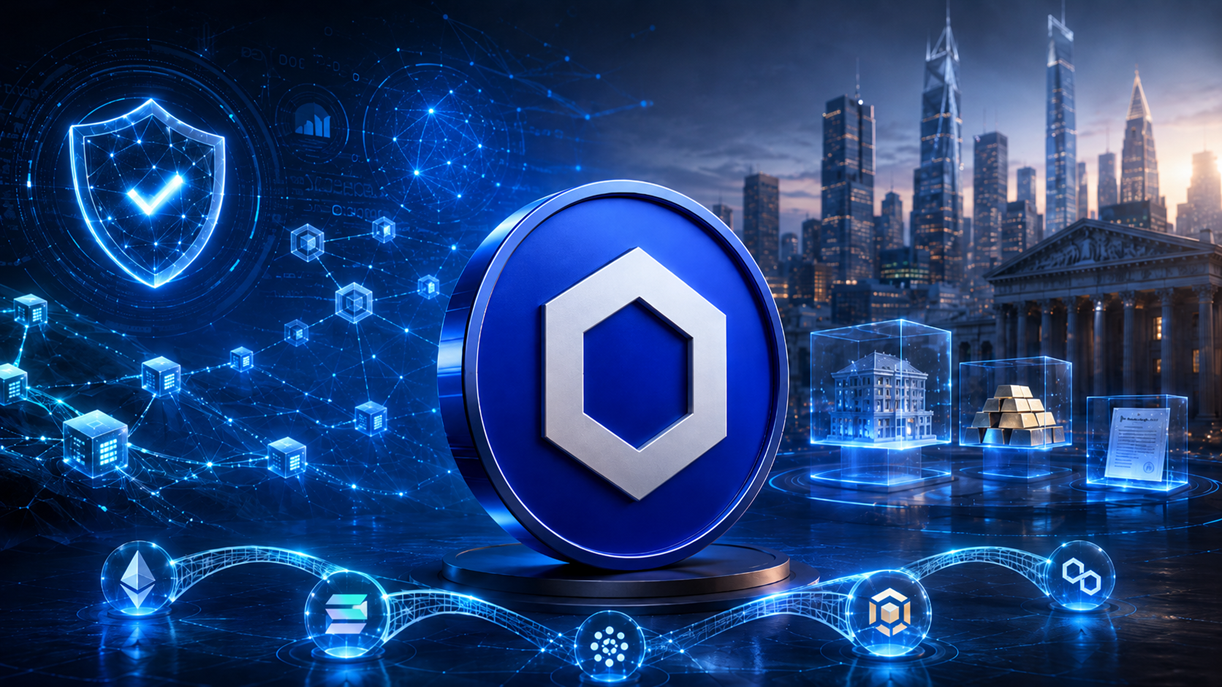

The infrastructure story of Chainlink continues to expand. The CCIP v1.6 upgrade supports Solana and introduces architectural improvements aimed at making the protocol more flexible in different virtual machine designs.
For LINK investors, this is the type of development that matters even when the token’s price is calm. Chainlink is not trying to attract attention through a single mainstream app. It attempts to become a connective tissue for tokenized assets, cross-chain applications and institutional blockchain systems.
For more details, visit the official Chain platform.
TL;DR
Chainlink says CCIP v1.6 introduces support for non-EVM chains starting with Solana, while reducing costs and accelerating chain expansion. The upgrade also strengthens the standard Cross-Chain Token narrative and supports a broader push toward secure interoperability.
This is important because it is unlikely that the next wave of crypto activity will live on a single chain.
Stable coins, tokenized assets, DeFi applications, private chains, public chains, and hybrid networks all need ways to communicate securely. Chainlink’s bet is that secure messaging, cross-chain transfers, and programmable infrastructure become more valuable as the market becomes more fragmented.
Why Solana support is important
Solana is not an EVM chain, which makes this upgrade more significant than adding another similar network. Support for Solana shows CCIP moving toward a more virtual machine-agnostic model, giving developers and token issuers more options beyond the Ethereum-style environment.
This is important for assets that need to be distributed across different ecosystems. A token issuer may want the liquidity of Ethereum, the speed of Solana, and access to other chains without fragmenting the supply or relying on weaker bridge architecture.
The role of the CCIP is to make this movement more secure and standardized.
For Chainlink, Solana’s support also places the project in one of the most active high-speed ecosystems in crypto. If Solana’s RWA, stablecoin, and DeFi businesses continue to grow, the demand for interoperability is expected to grow with it.
LINK Long Term Setup
LINK does not always trade directly on listings like this. Infrastructure tokens can be frustrating because adoption often manifests slowly through integrations, standards, and company conversations rather than explosive user-facing measures.
But the strategic direction is clear. Chainlink wants to be part of the stack that allows value to flow between chains with fewer trust assumptions.
If the future of crypto is multi-chain, this role becomes more important. If real-world tokenized assets continue to grow, the need for secure cross-chain infrastructure becomes even harder to ignore.
The market can still judge LINK based on price action, but CCIP v1.6 gives the project a stronger product story. Solana support isn’t just another integration. This is a sign that Chainlink is building a crypto market where assets and applications refuse to stay within a single network.
This report is based on information from Chainlink.
The commercial aspect is just as important as the technical aspect. Institutions and token issuers do not want every new on-chain connection to require a custom security model. A standardized interoperability layer gives them a clearer framework for expansion, which is exactly the role Chainlink is trying to play.
This article was written by the News Desk and edited by Samuel Rae.
Editorial process as Bitcoinist focuses on providing thoroughly researched, accurate and unbiased content. We follow strict sourcing standards and every page undergoes careful review by our team of top technology experts and seasoned editors. This process ensures the integrity, relevance and value of our content to our readers.


