



DoorDash crypto will soon be a thing after the delivery company announced it is integrating stablecoin payment functionality through Tempo, a payments-focused Layer 1 blockchain backed by Stripe and Paradigm, enabling faster merchant payments and cross-border settlements in more than 40 countries.
The detail missing from most headlines is what this is really testing: whether stablecoins can quietly disappear into the background of everyday commerce, or whether friction and unfamiliarity will expose the gap between crypto infrastructure and traditional consumer behavior.
DoorDash plans to offer stablecoin payments to merchants and drivers around the world using Tempo, a blockchain launched by Stripe and Paradigm. pic.twitter.com/7gjDD5edId
– Wall Street Engine (@wallstengine) April 21, 2026
This is not a startup experience. Tempo officially launched in March 2026 after raising $500 million at a valuation of $5 billion, and its existing partners include Visa, Shopify and Fifth Third Bank.
DoorDash’s crypto integration is one of the largest deployments of crypto payment rails on a gig economy platform, and what happens here will tell us something important about whether stablecoins can solve real or just theoretical payment problems.
What Stablecoin Payments Really Mean for Dashers and Merchants
Think of today’s payment system like waiting for a paper check to clear after a shift. DoorDash co-founder Andy Wang acknowledged that delivery drivers, Dashers, can wait days for their revenue to arrive, while merchants absorb the payment delays that eat into cash flow when a significant portion of revenue flows through the platform. Stablecoin rails changes this by reducing the number of intermediaries between a completed transaction and a funded account.
Here’s how the mechanisms work in simple terms: Instead of a payment going through traditional banking channels – processor, acquiring bank, correspondent bank, receiving bank, a stablecoin transfer is settled directly on-chain, usually within seconds, at a fraction of the cost.
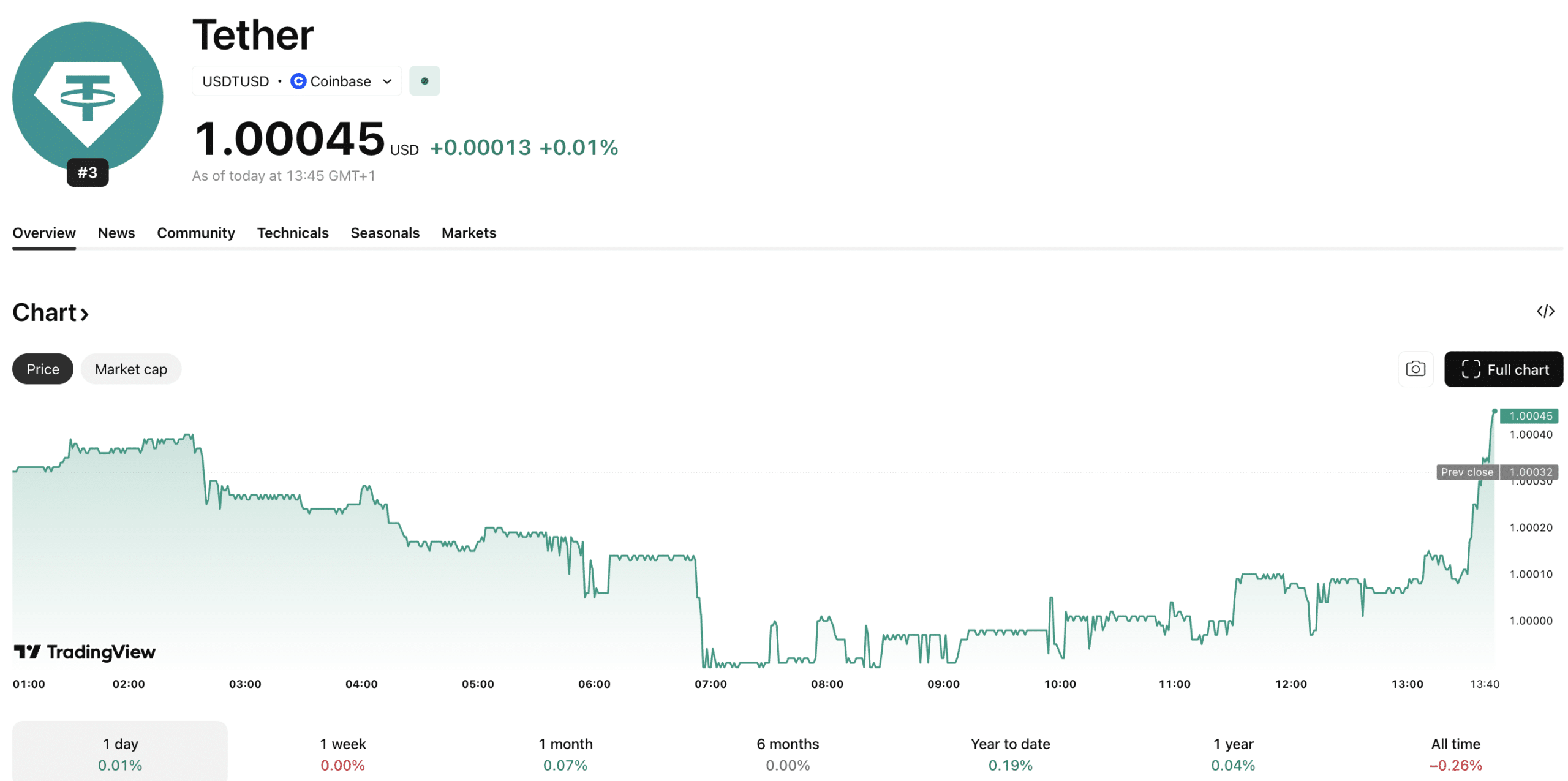
(SOURCE: TradingView)
For cross-border payments, where currency conversion and correspondent banking fees add up quickly, the difference can be substantial. Tempo claims its infrastructure reduces these costs while improving settlement speed and flexibility for both parties in the transaction.
The rollout begins with merchant payments in international markets on a pilot basis, not a full stable consumer-facing payments feature. No specific stablecoin has been disclosed and no firm timetable exists for broader expansion.
Stablecoin infrastructure has grown significantly in terms of institutional reach, but the last mile consumer experience is still being analyzed in real time. The gap between fast checkout on the backend and a seamless experience on the frontend is exactly what this pilot will measure.
DISCOVER: The best crypto presales to watch this month
DoorDash Crypto: Is It Real-World Adoption?
Businesses are putting stable payment flows into production on Tempo, including @DoorDash, @band, @CoastalBankWAAnd @arq_finance.
We’re also launching our Stablecoin Advisory to help more companies build real-world payment workloads on stablecoins. pic.twitter.com/JuQZd4HhiO
— Tempo (@tempo) April 21, 2026
The key question is whether DoorDash’s use of stablecoins signals mainstream acceptance of crypto or simply a logistics company finding a cheaper wire transfer option. This is important because it influences the trajectory of stablecoin adoption.
The optimistic view is that Tempo’s infrastructure enables faster payments and lower costs for merchants and Dashers, allowing crypto to operate invisibly, much like Visa. Companies like Circle are building the infrastructure to support this seamless integration.
Conversely, challenges could arise, such as regulatory issues, consumer confusion regarding visible stablecoins, or integration costs outweighing the benefits to merchants. Even user-friendly platforms like Coinbase require consumers to understand what they are investing in.
The Golden Mean is a pilot project that achieves modest efficiency gains in international markets, delivers positive earnings data for DoorDash in the first quarter of 2026, and is growing quietly without a major consumer launch. This would demonstrate that stable rails operate effectively within existing consumer infrastructure.
EXPLORE: Best Crypto Presales with Staking Rewards
Follow 99Bitcoins on XYouTube and Telegram for more crypto news and analysis.
The article DoorDash Crypto: Delivery Company Plans Stable Coin Payments appeared first on 99Bitcoins.


