





Despite losing the $2,100 mark over the weekend, Ethereumthe second largest cryptocurrency asset, is making waves at the institutional level. Since the recent updates regarding ETH, the network is going through a pivotal moment in its evolution, becoming a yield-generating asset for institutions in the sector.
Institutions can now earn yield on Ethereum
As the crypto industry evolves, the Ethereum network is also experiencing a major change in its evolution. For industry institutions, the leading altcoin is emerging as a growing alternative for generating additional capital due to its yield-generating capabilities.
Technology enthusiast and investor BMNR Bullz on announcement that Ethereum recently moved to the institutional level with yield, allowing large companies holding ETH to make money from the altcoin. With new mechanisms that allow large investors to earn rewards directly on-chain, the network is evolving from a settlement layer to a more developed financial ecosystem.
This development simply allows institutions to earn capital beyond simple price appreciation. Currently, large companies can earn more through expanded yield opportunities, representing a major step in greater integration of decentralized networks with traditional finance.
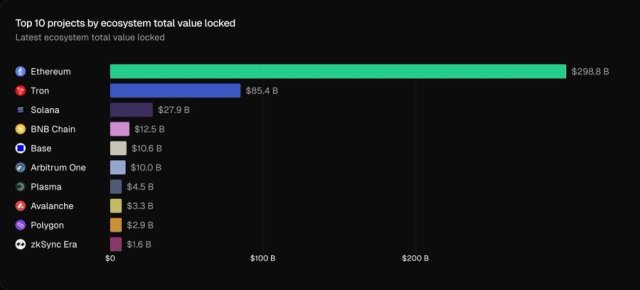
Looking at the chart shared by the investor, the EPF network already manages the largest registered capital on-chain. In terms of the Total Value Locked (TVL) ecosystem, Ethereum is in the lead, ranking ahead of other major chains such as Tron, Solana, and BNB Chain, with over $298.8 billion.
Meanwhile, BlackRock, the largest asset management company, recently launched its Staking ETH ETP (Exchange-Traded Product), ETHB. The launch marked a major change since the Ethereum Spot ETF were introduced without staking. After launch, between 70% and 95% of ETH was locked into staking, while 3% to 4% of the yield goes into traditional finance (TradFi).
According to BMNR Bullz, this is the unlocking of ETH, and the altcoin is no longer an asset you can only hold. Meanwhile, it evolves into something that pays investors, especially institutions, while supply locks in, compound returns and institutions finally have access.
At the center of this trend is Bitmine Immersion. Bitmine was built for this before it became obvious, with the company steadily accumulating ETH, increasing staking, and generating returns daily. According to BMNR Bullz, “this is where institutional allocation begins.”
More of Bitmine’s ETH goes to staking
Given the current market structure, Bitmine is now focused on generating yield through Ethereum staking rather than its price appreciation. As of March 21, Wise advice common that the company held more than 70% of its entire capital ETH cash reserve.
This figure represents approximately 3.135 million ETH from the company’s ETH holdings, valued at a staggering $6.75 billion. After a series of purchases over the years, Bitmine currently holds 3.8% of the total Ethereum supply. Wise Advice noted that for every $22 ETH pump, Bitmine sees $100 million in unrealized gains. However, the company’s return target is set at $280 million per year, at an annual rate of just 2.8%.
Featured image from Pxfuel, chart from Tradingview.com
Editorial process as Bitcoinist focuses on providing thoroughly researched, accurate and unbiased content. We follow strict sourcing standards and every page undergoes careful review by our team of top technology experts and seasoned editors. This process ensures the integrity, relevance and value of our content to our readers.


