




A wallet linked to Ethereum’s 2014 ICO moved around $23 million in ETH last week after around a decade of inactivity, with the blockchain monitoring service flagging the transfer from the dormant address and tracing the proceeds through a multisig wallet, which has since deposited a cumulative 12,001 ETH, equivalent to around $24.62 million, to OKX over the past 60 days.
The wallet initially accumulated around 38,800 ETH during the 2014 ICO at an average acquisition cost of around $0.31 per token via Poloniex, implying a base cost close to $12,000 in total – a figure that puts unrealized gains in the tens of millions and, by extension, puts real distribution risk on the table.
A #Ethereum ICO participant “0xCD59” transferred the 10,000 $ETH($22.88 million) in a new wallet after being inactive for 10.8 years.
He only invested $3,100 in the ICO and received $10,000. $ETH — now worth $22.88 million, a return of 7,381x! pic.twitter.com/5gBezsDQC2
– Lookonchain (@lookonchain) April 28, 2026
Dormant whale reactivations are among the most closely watched on-chain signals in the Ethereum market, precisely because they combine three structurally distinct possibilities – outright distribution, custody migration and renewed accumulation – and the data available at the point of detection rarely resolves what is happening.
The distinction is important: sell-side distribution from a near-zero cost portfolio represents unfettered exit pressure, while a guard reshuffle is neutral from a market perspective. This ambiguity is the tension that currently draws the attention of analysts to this discourse.
DISCOVER: The next crypto will explode in 2026
Ethereum ICO Whale Reactivation: What a $23 Million Move Really Means After Ten Years
The mechanism works as follows: When an ICO-era wallet that hasn’t transacted in around ten years initiates an outbound transfer, on-chain monitoring tools report the address against historical activity logs and cross-reference the destination wallets with known exchange deposit addresses.
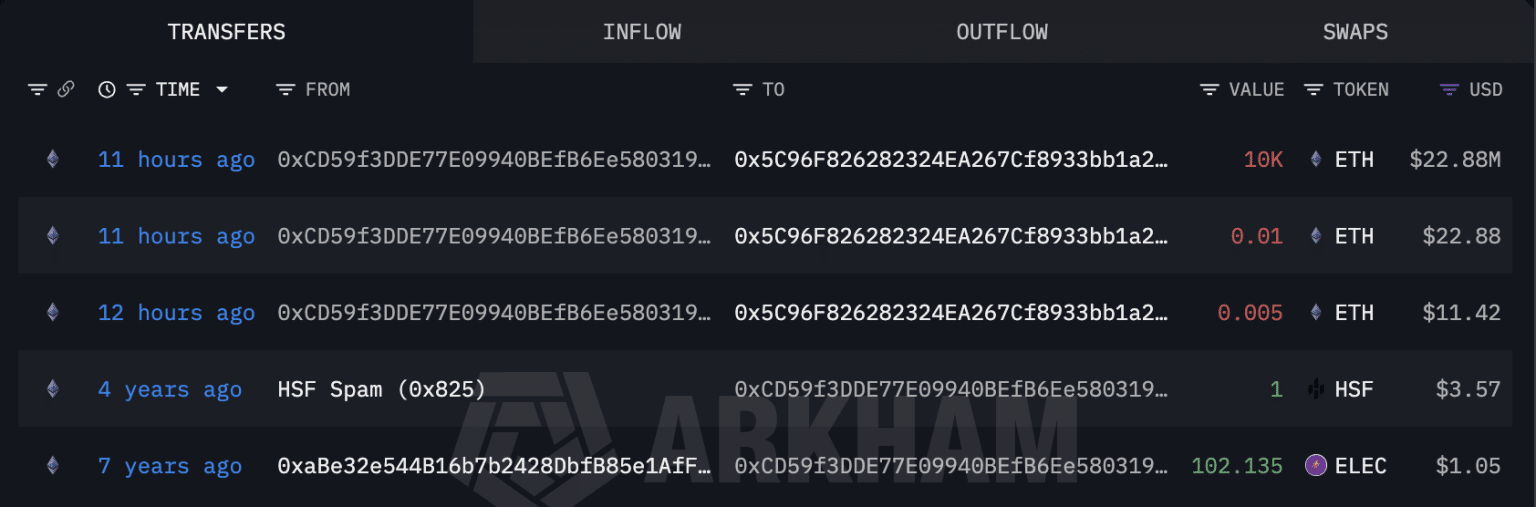
Source: Arkham
The context of the ICO era is not incidental here. An acquirer who paid around $0.31 per ETH is effectively under no cost pressure at a price above single digits, meaning the decision to sell or hold is driven entirely by portfolio strategy and macroeconomic outlook, not the need to recover capital. This asymmetry is precisely why ICO-era whale reactivations have structural weight beyond their nominal dollar size.
EXPLORE: Best Meme Coins to Buy in 2026
following
Disclaimer: Coinspeaker is committed to providing unbiased and transparent reporting. This article is intended to provide accurate and current information, but should not be considered financial or investment advice. Because market conditions can change quickly, we encourage you to verify the information for yourself and consult a professional before making any decisions based on this content.

Daniel Frances is a technical writer and Web3 educator specializing in macroeconomics and DeFi mechanics. Hailing from crypto since 2017, Daniel leverages his experience in on-chain analytics to write evidence-based reports and in-depth guides. He holds certifications from the Blockchain Council and is dedicated to providing “insight gain” that overcomes market hype to find real utility for blockchain.


