




Ethereum is approaching a critical resistance zone as recent recovery attempts begin to lose momentum. While price action still shows signs of a corrective structure, attention turns to the possibility of a return to lower levels if sellers intervene at key resistance.
HTF range aligns with Ethereum TCT distribution model
According to crypto analyst The Composite Trader, Ethereum is currently growing in a well-defined higher time frame (HTF) range that aligns with a TCT distribution model. This structure suggests that price action could be heading into a potentially bearish rotation, with a wider range still intact and guiding market behavior.
The analyst emphasized that full confirmation has not yet been obtained, as a clean, high-quality third tap is still needed to validate the setup. This third interaction with resistance is a key part of the pattern, often acting as the trigger point for a more decisive move towards the lower end of the range.
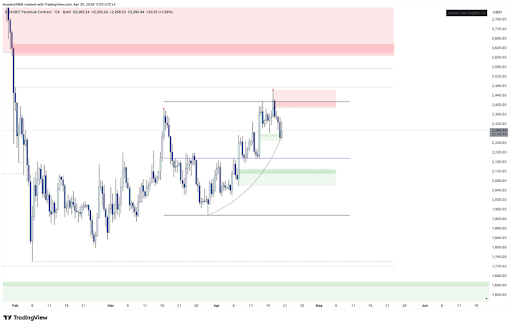
While waiting for this confirmation, the expert is focusing on short-term opportunities (LTF), particularly short-term accumulation setups that can push the price into the predicted third faucet zone. He further explained that some of his most successful trading sequences come from linking these periods, capturing upside gains via long LTF positions, and then rotating those profits into short positions near HTF resistance.
By treating the entire process as a continuous sequence rather than as separate transactions, it becomes possible to accumulate gains more aggressively. This strategy is rooted in the concept of “TCT creating TCT,” where patterns on shorter time frames integrate with and reinforce structures on longer time frames.
B-Wave Bounce faces key resistance between $2,332 and $2,420
More Crypto Online highlighted that the first major resistance for a potential wave B bounce lies between $2,332 and $2,420. This area should act as a decisive barrier, where any upward movement could face selling pressure and determine whether the recovery is strong or remains corrective.
The analysis highlights that the structure of the bounce is just as important as the level itself. As long as any movement towards this resistance region occurs in a clear three-wave pattern, this suggests that the market is still in a corrective phase. In this scenario, the door remains open for further decline in the near term before a more significant recovery can develop.
On the other hand, the $2,037 level is identified as the key support to watch over the coming sessions. This level could serve as a stabilization point if tested. However, a decisive break below would increase the likelihood of a prolonged correction before the start of the next bullish phase.


