




The Crypto Fear & Greed Index fell to 5 on Thursday, signaling a sharp deterioration in market sentiment as digital asset prices continue to fall.
The decline reflects growing panic among investors, with an erosion of risk appetite amid broader uncertainty in global markets.
Sponsored
Sponsored
Crypto Sentiment Sinks Deeper into “Extreme Fear”
The Crypto Fear & Greed Index measures the overall emotional state of the cryptocurrency market on a scale of 0 to 100. Readings between 0 and 24 indicate extreme fear, 25 to 49 signal fear, 50 represent neutral conditions, 51 to 74 reflect greed, and 75 to 100 indicate extreme greed.
At 5, the index places the market firmly in extreme fear territory. This latest decline comes against a backdrop of a steady decline in sentiment over recent weeks.
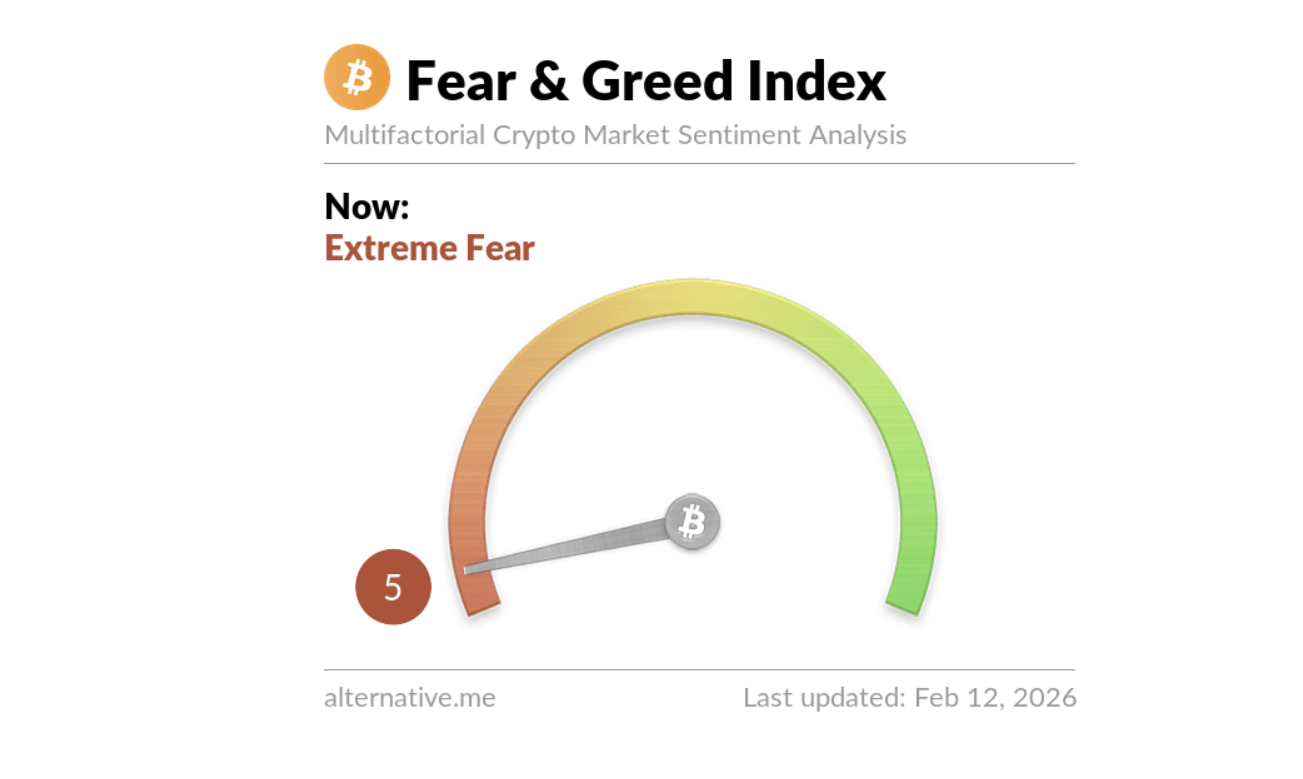
A month ago, the index stood at 26, already in the Fear range. It fell to 12 a week earlier and recorded 11 just a day before hitting its current low. The rapid deterioration highlights how quickly confidence collapsed as prices weakened.
The collapse in crypto sentiment coincides with a broader rise in global economic anxiety, as reflected in the Global Uncertainty Index. The index tracks how often the term “uncertainty” appears in country reports from the Economist Intelligence Unit.
It covers more than 140 countries and provides a cross-national quarterly indicator widely used in macroeconomic research and global risk analysis.
In the third quarter of 2025, the global uncertainty index reached an all-time high above 100,000. In the fourth quarter, it was recorded at 94,947.
Sponsored
Sponsored
These levels are roughly double the peaks seen during previous major crises, including the COVID-19 pandemic, Brexit and the Eurozone debt crisis.
“Increasing geopolitical tensions, market volatility and political uncertainty are driving this rise, as investors struggle to assess what comes next,” Coin Bureau wrote.
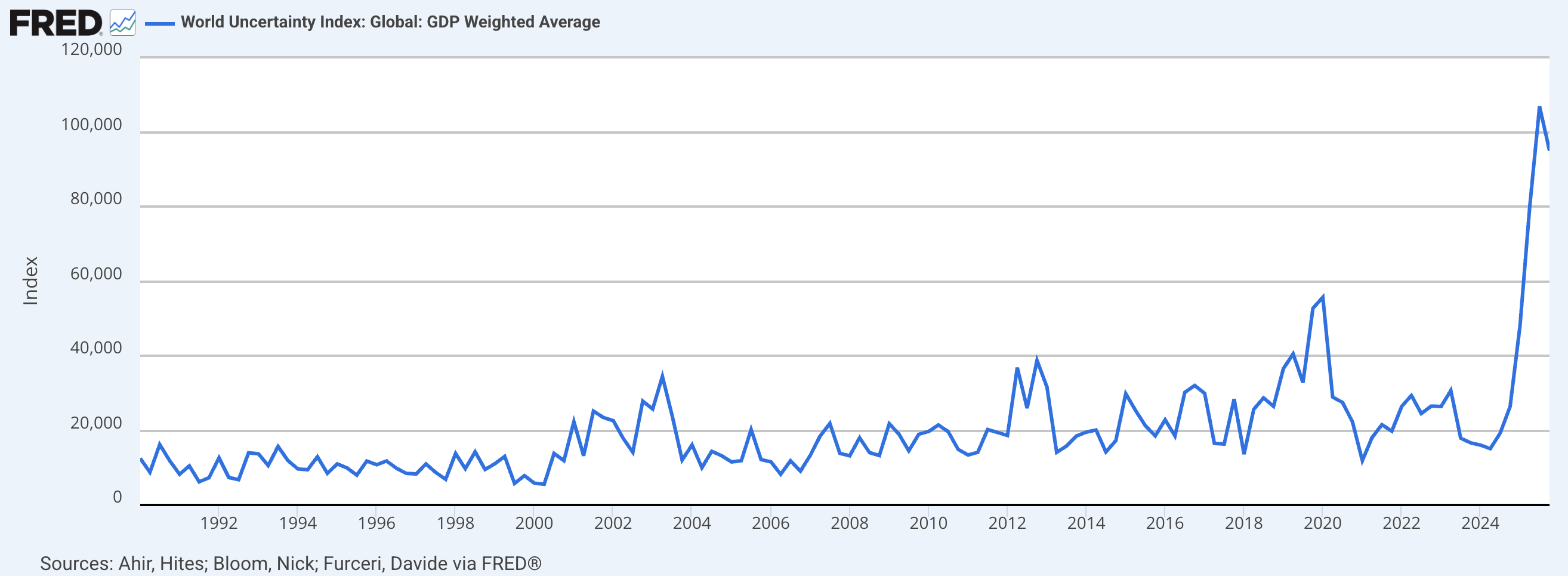
The high figure reflects increased anxiety in global markets as investors grapple with unpredictable economic and political conditions. Against this backdrop, the crypto market’s plunge into extreme fear reflects not only falling prices, but also a broader withdrawal of risk assets around the world.
Crypto market cap falls 22% in 2026 as Bitcoin and Ethereum extend losses
The collapse in sentiment comes as the broader crypto market continues to decline. In 2026, total market capitalization fell by more than 22%, reversing the optimism that characterized the start of the year.
Sponsored
Sponsored
Bitcoin, which began January on stronger footing, ended the month down more than 10%. It has fallen another 14.6% so far in February.
Ethereum has also fallen 33.8% year to date. The prolonged decline weighed on market activity.
Analysts assess the next step for the crypto market
In these bear market conditions, the community remains uncertain about what will happen next. Analyst Kyle Chassé pointed to historical precedents, noting that similarly depressed numbers in the Crypto Fear & Greed Index were seen in 2018, March 2020, and following the FTX collapse in 2022.
Sponsored
Sponsored
“Each time, it marked a huge window of opportunity. No, it doesn’t guarantee the bottom. But historically, that’s where the asymmetry lies,” he said.
Other analysts say the current slowdown could represent a restructuring phase before a possible breakout. It remains unclear when or if a broader crypto market recovery will follow.
Ray Youssef, CEO of NoOnes, predicted that Bitcoin could trade sideways until summer 2026. He noted that the exact location of Bitcoin’s bottom remains uncertain and that current dynamics increasingly suggest that the market has entered a prolonged reassessment of risks.
Youssef pointed to several structural factors, including U.S. political and monetary cycles, continued inflation constraints, weakening retail capital flows, and cautious institutional demand after heavy losses.
“As a result, we are unlikely to see a V-shaped reversal before summer 2026. More likely, we will see regular rebounds, triggered by short coverings and short squeezes,” he told BeInCrypto.
According to Youssef, these rebounds could be strong, between 20 and 30%, and potentially prolonged. However, he warned that they could ultimately prove to be bull traps.
He said the crypto traditionally remains in a long accumulation phase within a single range before a true bull market begins.


