



Key takeaways
- Orbit Robotics unveiled Helios on May 20, 2026, a 4-armed robot designed for station maintenance.
- Helios targets tasks costing around $140,000/hour, potentially reducing space operations costs.
- Orbit Robotics plans Helios for commercial stations as post-ISS infrastructure grows.
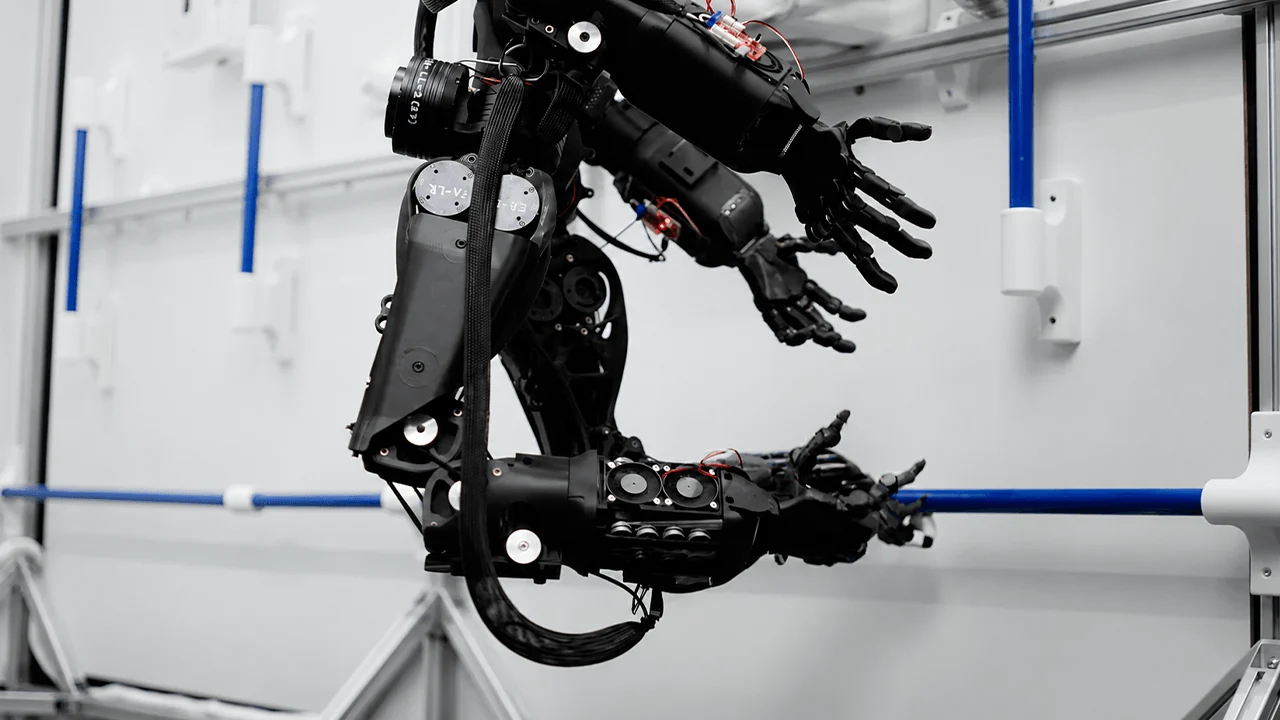
Meet Helios, a four-armed humanoid from Swiss startup Orbit Robotics, designed for the realities of microgravity. Without legs and with 28 degrees of freedom, it clings, stabilizes and always keeps spare limbs for wrench work and unloading cargo on space stations. The goal is pragmatic: manage maintenance and transportation tasks autonomously or remotely, so that astronauts can concentrate on science. If it works, each hour of work could offset the roughly $140,000 price tag of the astronauts’ labor.
A robot designed for space-first functionality
Every now and then a design choice seems obvious once you see it. Orbit Robotics, a Swiss startup, presented Helios, a humanoid robot adapted for microgravity. No legs, four arms, ready to park. It’s built for life inside orbital habitats, ones that NASA and its partners continue to provision and operate. Think about maintenance checklists, cargo transfers, and routine work that advances science.
Helios stands out by treating weightlessness as the default and not an afterthought. Instead of walking, he moves hand in hand, anchoring himself to rails and bulkheads while freeing two arms for the task at hand. The company positions it as an assistant for repetitive tasks that consume astronauts’ hours but rarely require human judgment.
How Helios came to life
Founded in late 2025 from a Swiss research ecosystem, Orbit Robotics spent its first months building for a single environment: space stations. The team publicly introduced Helios in a video released on May 20, 2026, highlighting a machine that trades Earth symmetry for orbital pragmatism. The message was clear: optimize for the station, not for the sidewalks.
The startup says it prioritizes tasks that space crews actually face, from routine inspections to securing cargo. This focus aligns with a broader industry shift as commercial stations and servicing missions move from concept to schedules, including efforts related to post-ISS planning in the United States.
Design suitable for zero gravity operations
Legs are ineffective in microgravity. Helios uses four coordinated arms to move, stabilize and work. Two arms can attach to the structure, two can handle tools or payloads. The robot can operate autonomously for defined routines or accept remote control for complex procedures (teleoperation latency is manageable in low Earth orbit).
This approach reduces the jostling that can complicate fine-grained tasks in a cramped module. It also reflects the way astronauts already move around inside the International Space Station, only with a machine that doesn’t tire on long, repetitive missions.
Inside the Specs: What Makes Helios Work
Helios is compact measuring 5.2 feet tall (160 cm) and weighing 70 pounds (32 kg), using aluminum alloy and carbon fiber. It offers 28 degrees of freedom, including 14 in dexterous hands, for precise manipulation. Power comes from electric actuators with tendon-based drivetrains, concentrating the motors near the shoulders to keep the moving limbs light.
Battery life is 3 hours per charge. Transit speed exceeds 1.2 miles per hour (2 km/h), which is more than sufficient for station interiors. The package targets the balance between endurance, agility and safe interaction with delicate equipment.
The economic arguments in favor of space robotics
Astronaut time is scarce and expensive. By some estimates, it costs about $140,000 an hour, a figure that swells when hours extend to unloading goods or swapping filters. Helios is designed to take on these tasks so teams can focus on research and critical work.
As commercial stations and lunar infrastructure plans advance, tools that turn checklists into substantive tasks could shape costs and schedules. This is the case with Helios: not a science fiction assistant, but a practical colleague, attentive to daily tasks in orbit.


