




The energy-autonomous radio mesh network enables secure communications and digital transactions independent of public networks – with the deployment of infrastructure and funding of public tokens now operational.
Increasing power outages highlight fragile infrastructure
Recent large-scale power outages and internet disruptions in Europe, North America, Africa and the Middle East have exposed the structural fragility of centralized communications and financial infrastructures. From network outages to government-mandated network shutdowns, millions of people have experienced a sudden loss of connectivity and access to digital services.
In response to these systemic vulnerabilities, HydraMeshnet introduced a commercially available off-grid radio mesh system designed to maintain secure digital communications and transactions even when conventional power grids, mobile networks, or Internet connections fail.
How Off-Grid Mesh Infrastructure Works
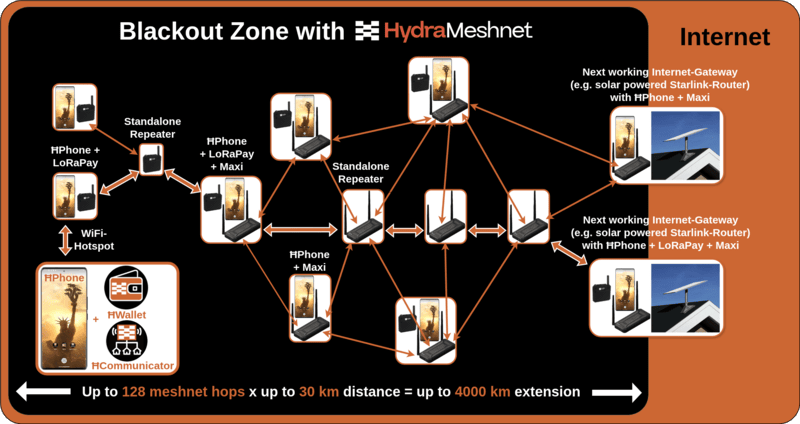
The system works using commercially available ISM band radio equipment (subject to local regulations) and supports encrypted multi-hop routing across up to 128 stitch skips. Under line-of-sight conditions, individual nodes can travel distances to the horizon (typically 30 kilometers or more), allowing transactions and messages to cross extended blackout zones and reach functioning Internet gateways over distances of several thousand kilometers.
By removing dependence on centralized telecommunications providers, the architecture enables energy independent operation through solar, wind and battery-powered deployments. Local communities, private households and organizations can operate digital communication and transaction networks independently of public infrastructure.
Proof of concept demonstrates off-grid digital transactions
A publicly available proof of concept demonstrates encrypted cryptocurrency transactions transmitted across the autonomous radio mesh network without conventional internet infrastructure.
The demonstration validates that cryptocurrency transactions – including Bitcoin, Ethereum, stablecoins and ERC-20 tokens – can be run in off-grid conditions using the deployed hardware and software stack.
Proof of concept video:
Deployable equipment and immediate availability
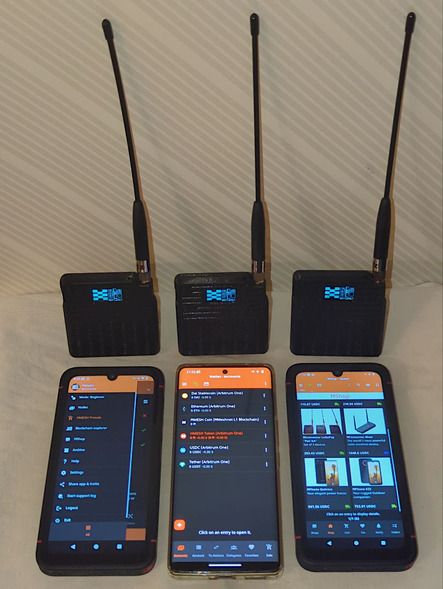
The infrastructure layer consists of deployable hardware components, including the ĦLoRaPay connector and professional ĦMaxi connector (pre-order) radio modules, as well as privacy-focused modules Phone X23 and Phone Quintus smartphones.
These devices are commercially available and can be acquired via the integrated system ĦShop within ĦWallet application, enabling immediate deployment in the field (via Bluetooth or Wi-Fi connection) by individuals, private households, businesses, organizations and local communities seeking infrastructure resilience.
Additional components include validator-ready ĦNode home servers (in preparation) and off-grid solar and wind power kits (in preparation) designed to support independent year-round operation.
Bandwidth management and token integration
To manage bandwidth allocation, support long-term network sustainability, and avoid network congestion, transactions transmitted over mesh infrastructure require dynamic fees paid natively. ĦMESH utility token.
The token runs on a Layer 1 proof-of-stake blockchain and is designed to economically regulate network traffic as adoption grows. The HydraMeshnet project is currently conducting a public inquiry HMESH Token Presale via the ĦWallet application, providing early participants with the opportunity to support infrastructure deployment and participate in the economic layer of the network.
Strategic partnerships
HydraMeshnet collaborates with established technology partners including Volla Systemsprovider of privacy-focused smartphones, and Beechat Network Systemsdeveloper of high performance radio hardware.
These partnerships support the technical foundation of the commercially deployable off-grid infrastructure stack.
Why it matters
• Independent infrastructure: Decentralized and private peer-to-peer radio mesh operating without dependence on governments, banks, telecommunications providers or centralized platforms.
• Energy autonomous deployment: Solar panels, wind turbines and rechargeable batteries enable continuous, autonomous operation.
• Scalable architecture: From localized community networks to regional gateway hubs and long-distance mesh bridges.
• Token-regulated bandwidth model: Economic incentives align network use with infrastructure sustainability.
As natural disasters, geopolitical tensions and infrastructure instability increase globally, resilient digital infrastructure is emerging as a strategic priority for private households, businesses, communities and responsible policymakers. HydraMeshnet is positioned as an independent infrastructure layer capable of complementing existing networks or operating autonomously in the event of a failure of centralized systems.
Additional information
Website:
Suite of applications (Android):
HMESH token presale: Kit:
Additional resources:
Telegram:
YouTube:
GitHub:
About HydraMeshnet
HydraMeshnet is an international digital cooperative of engineers, software developers and infrastructure specialists developing a private, energy-autonomous radio mesh ecosystem for secure digital communications and transactions. By combining decentralized physical infrastructure (DePIN) with self-hosted blockchain architecture (DeFi), HydraMeshnet enables communities to stay connected and economically active – from urban blackouts to remote, off-grid environments.
Disclaimer: The information provided in this press release does not constitute an investment solicitation nor is it intended to constitute investment advice, financial advice or trading advice. Investing involves risks, including the potential loss of capital. It is strongly recommended that you perform due diligence, including consulting a professional financial advisor, before investing in or trading cryptocurrencies and securities. Neither the media platform nor the publisher shall be liable for any fraudulent activity, misrepresentation or financial loss arising from the contents of this press release.


