



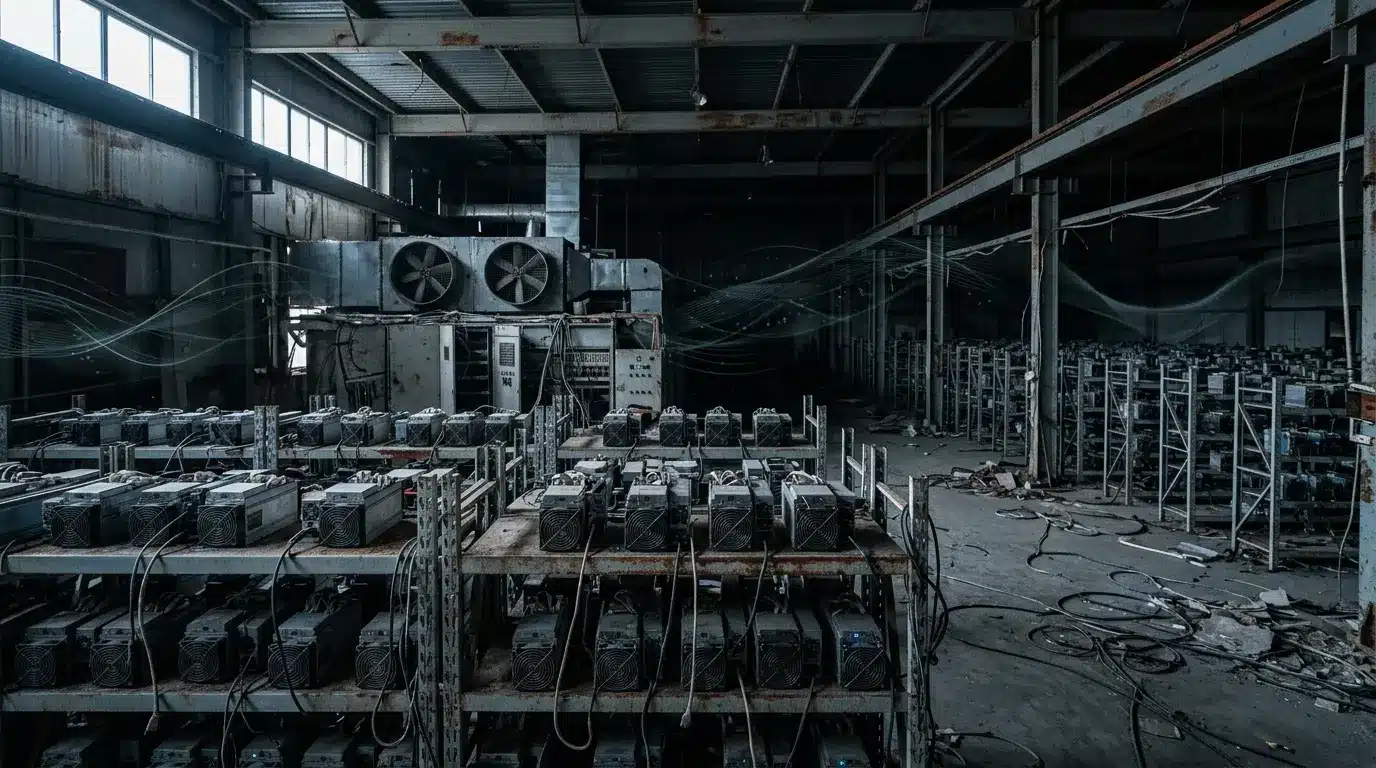
Iran’s Bitcoin hashrate fell about 77% over the past quarter, from about 9 exahashes per second to 2 EH/s, as U.S. and Israeli military strikes disrupted power infrastructure and forced about 427,000 active mining machines offline, according to a Hashrate Index report released Monday by Ian Philpot, chief marketing officer at Luxor Technology.
The loss represents approximately 7 EH/s quarter-over-quarter and marks the most severe regional hashrate contraction since China’s 2021 mining ban.
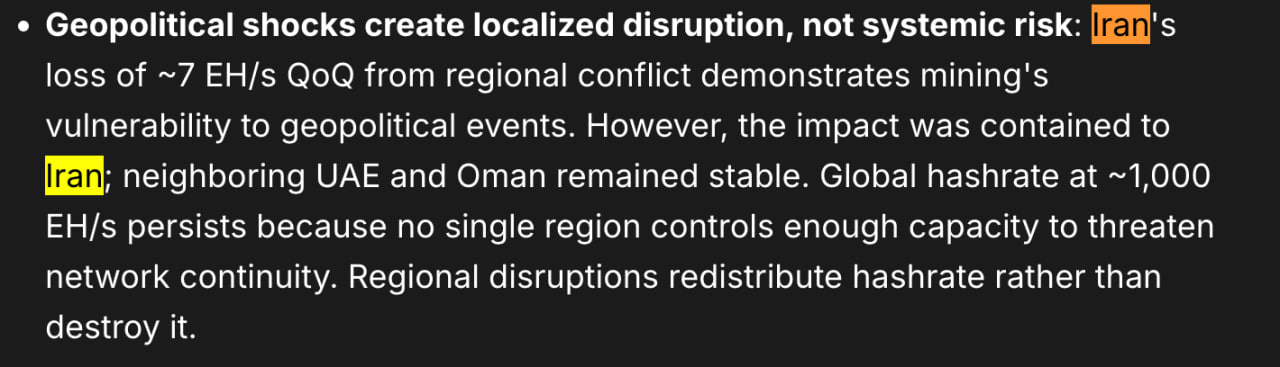
The immediate implication is geographic redistribution rather than network degradation. The global hashrate remained at nearly 1,000 EH/s throughout the disruption, a figure that underscores the decentralized architecture that Bitcoin’s proof-of-work security model was designed to preserve.
Source: Hashrateindex
DISCOVER: Coin Supercycle: Top Performers This Week
Collapse of Bitcoin mining in Iran: infrastructure strikes and resumption of conflict over the hashrate
The chain of transmission works like this: US and Israeli strikes that began in February targeted Iran’s entire infrastructure, cutting off reliable network access to industrial mining facilities that had been operating under government license since Iran legalized Bitcoin mining in 2019.
Iran deliberately built its mining sector around the incentives of the sanctioned economy – subsidized hydroelectric power and a monetization mechanism for energy exports that circumvented dollar-denominated regulations. This strategy gave Iranian operators a structural cost advantage that evaporated as soon as the stability of the network became uncertain.
Philpot noted that while the conflict clearly limited its impact within Iran’s borders, there was a risk of spillover into neighboring UAE and Oman, given regional energy interdependencies – a risk that did not materialize. “The impact was limited to Iran; neighboring UAE and Oman remained stable,” he wrote. “The global hashrate of around 1,000 EH/s persists because no region has enough capacity to threaten network continuity.
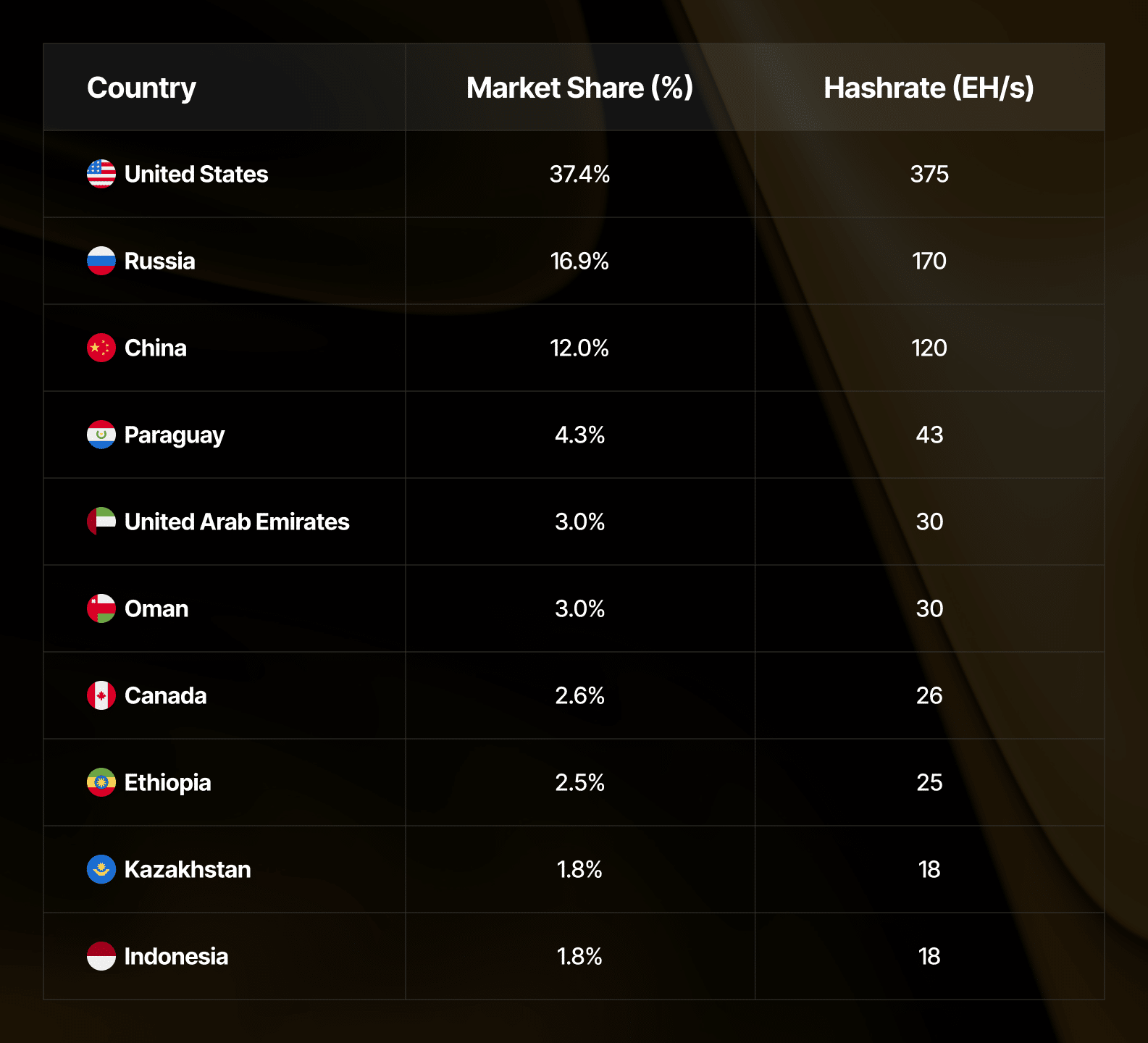
Regional disruptions redistribute hashrate rather than destroy it. The 7 EH/s lost by Iran represents less than 0.7% of the grid capacity before the conflict, which explains why the global figures absorbed the shock without measurable degradation in security. A two-week ceasefire between the United States and Iran was agreed on Tuesday, although the durability of that agreement – as well as the timetable for infrastructure restoration – remains uncertain.
Bitcoin’s difficulty algorithm adjusts every 2,016 blocks – approximately every two weeks – to maintain an average block time of ten minutes, regardless of the amount of hashrate entering or leaving the network. Iran’s loss of 7 EH/s is regionally significant but statistically modest compared to a global benchmark of 1,000 EH/s; the difficulty adjustment would absorb this volume in a single recalibration cycle without material impact on the lock interval or transaction finality.
The most consequential signal of difficulty is elsewhere: the 30-day simple moving average of the global hashrate fell from 1,066 EH/s in the first quarter to around 1,004 EH/s in the second quarter, a 5.8% quarter-over-quarter decline that Philpot attributed primarily to the collapse in Bitcoin prices rather than geopolitical disruption.
Bitcoin has fallen more than 45% from its all-time high of $126,000 set in October, according to CoinGecko data, pushing hash prices to record highs and forcing around 252 EH/s of older, less efficient ASICs offline worldwide. The parallel with China’s post-2021 mining ban is instructive but imperfect: China’s exit in 2021 wiped out 50-70% of the global hashrate in a matter of weeks, triggering several consecutive negative difficulty adjustments before capacity migrated to the United States and Kazakhstan.
Iran’s loss is an order of magnitude smaller and has produced no comparable adjustment cascade. We believe the low difficulty in the second quarter is mainly a question of profitability – miners voluntarily reducing their marginal machines – rather than a story of conflict. The Iranian disruption is a regional footnote in a price-driven global contraction.
EXPLORE: Crypto Breakout Alerts This Week
following
Disclaimer: Coinspeaker is committed to providing unbiased and transparent reporting. This article is intended to provide accurate and current information, but should not be considered financial or investment advice. Because market conditions can change quickly, we encourage you to verify the information for yourself and consult a professional before making any decisions based on this content.

Daniel Frances is a technical writer and Web3 educator specializing in macroeconomics and DeFi mechanics. Hailing from crypto since 2017, Daniel leverages his experience in on-chain analytics to write evidence-based reports and in-depth guides. He holds certifications from the Blockchain Council and is dedicated to providing “insight gain” that overcomes market hype to find real utility for blockchain.


