



Cypherpunk Technologies has deepened its bet on Zcash, fueling a growing debate over whether privacy-focused cryptocurrencies can play a Bitcoin-like role in corporate treasuries.
The Nasdaq-listed company said it purchased an additional 56,418.09 ZEC for approximately $29 million, at an average price of $514.02 per token.
With the latest transaction, Cypherpunk now holds 290,062.67 ZEC, or approximately 1.76% of the circulating supply of Zcash.
The company said its total position was accumulated at a weighted average price of $334.41 per ZEC.
Cypherpunk sets its sights on 5% of the Zcash network
Will McEvoy, chief investment officer, said the company was working on a long-term goal of owning 5% of the Zcash network.
He structured the strategy around the growing importance of financial privacy while also highlighting plans to expand into other privacy-focused technologies.
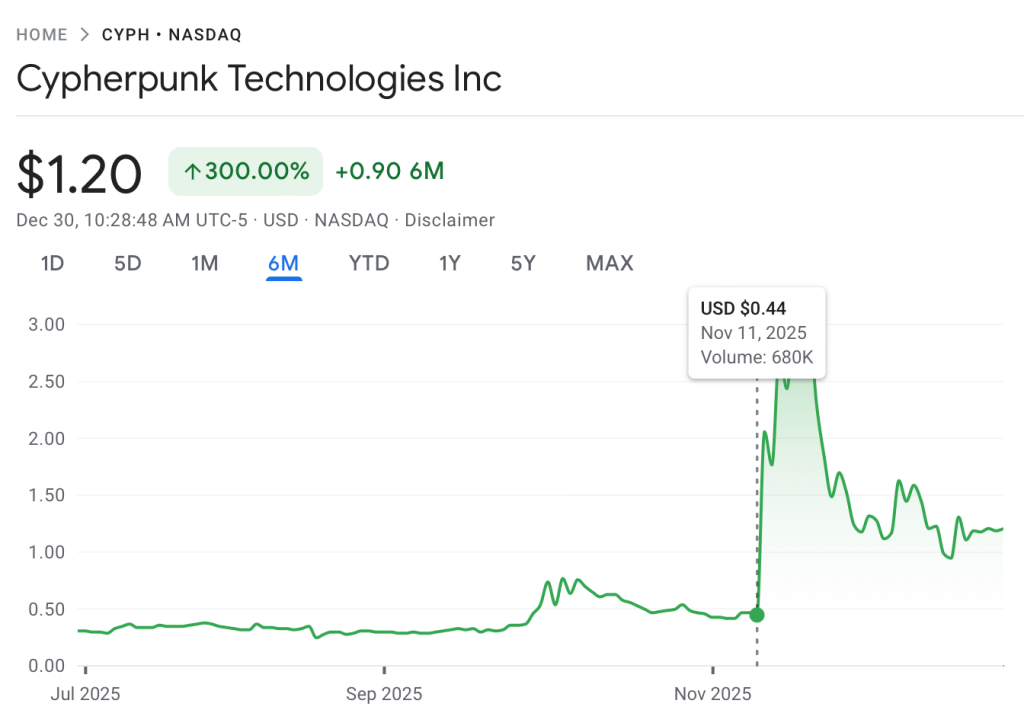
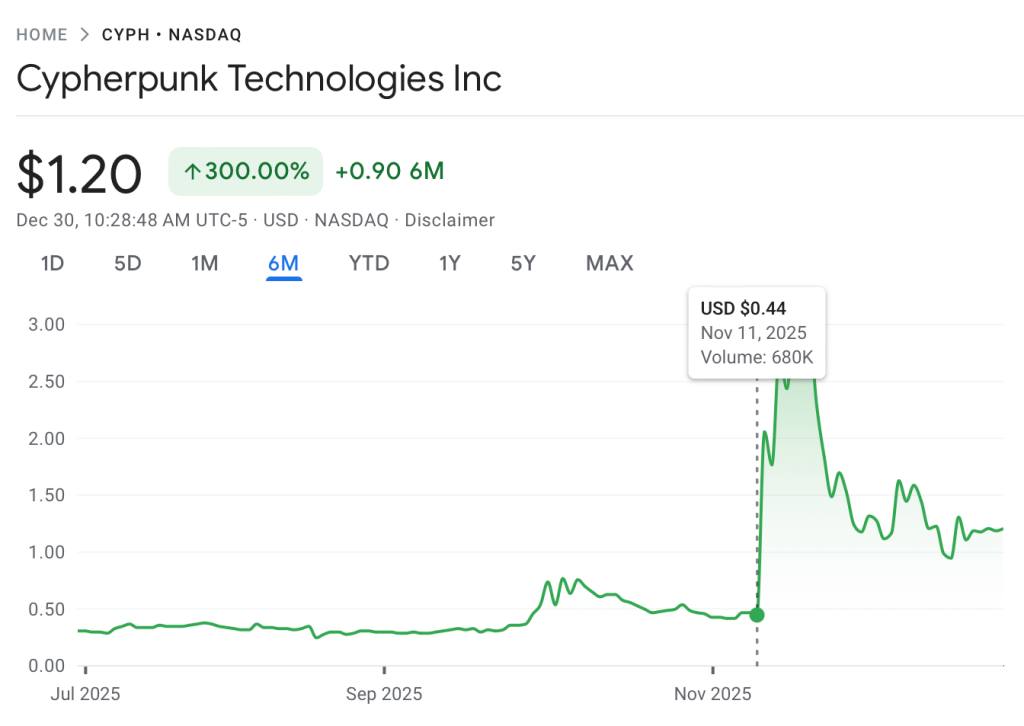
The move comes after a dramatic corporate change, as the company was formerly known as Leap Therapeutics before rebranding in November as Cypherpunk Technologies and has now repositioned itself as a Zcash-focused digital assets company.
Its stock is up nearly 170% since the rebranding, to about $1.18 from about $0.44, according to Google Finance.
Zcash, in turn, has seen one of the most robust performances in the crypto market this year. The token is up over 800% in the past 12 months and is currently trading at around $530, based on CoinGecko.

In comparison, Bitcoin is down around 5% over the same period, although ZEC is up almost 27% over the last 7 days alone.
Notably, Zcash’s daily trading volume fell by about half to around $499 million over the past 24 hours, showing that activity has slowed after the recent boom.
As Bitcoin Dominates Treasuries, Zcash Offers a Privacy Alternative
Zcash is a fork of Bitcoin, released in 2016, and has many structural features in common with BTC, such as a 21 million coin limit and a proof-of-work blockchain.
The difference lies in privacy, where Zcash uses zero-knowledge proofs, known as zk-SNARKs, which users can use to hide transaction information such as sender, recipient, and value, while providing optional transparency and auditability using view keys.
These characteristics have shaped how ZEC is viewed as a treasury asset. Bitcoin’s appeal to businesses is based on verifiable scarcity, significant liquidity and increasing regulatory clarity, reinforced by the approval of spot Bitcoin ETFs in the United States earlier this year.
Companies holding BTC typically treat it as a long-term store of value or macro hedge, with potential returns tied to price appreciation rather than operating profit.
Zcash, in comparison, is often described by companies adopting it as a privacy-centric hedge.
Cypherpunk and a small number of other companies, including Reliance Global Group, have cited the need to protect sensitive financial activities as a reason to hold ZEC.
Like Bitcoin, Zcash does not generate cash flow, and any cash “income” would come from unrealized or realized gains if prices rose.
Market participants are divided on near-term price direction, with former BitMEX CEO Arthur Hayes saying ZEC could be gearing up for a move towards $1,000, pointing to possible liquidity changes that could favor privacy-focused assets.
However, others are more cautious, as analyst Eric Van Tassel warned that a pullback toward $400 was possible, while macro investor Raoul Pal recently described Zcash’s rally as looking more like a capital turnover than a confirmed long-term trend.
Even after its recent rise, Zcash remains more than 80% below its all-time high of $3,191.93.
The post Is Zcash the Next Business Cash Play? Cypherpunk now holds almost 2% appeared first on Cryptonews.


