



Litecoin (LTC) is preparing to introduce smart contracts via LitVM, an EVM-enabled layer 2 that expands the network without changing its base layer.
Rather than modifying Litecoin’s base layer, LitVM will execute transactions off-chain before reinstalling them on layer 1. As a result, the network’s established security model will be preserved.
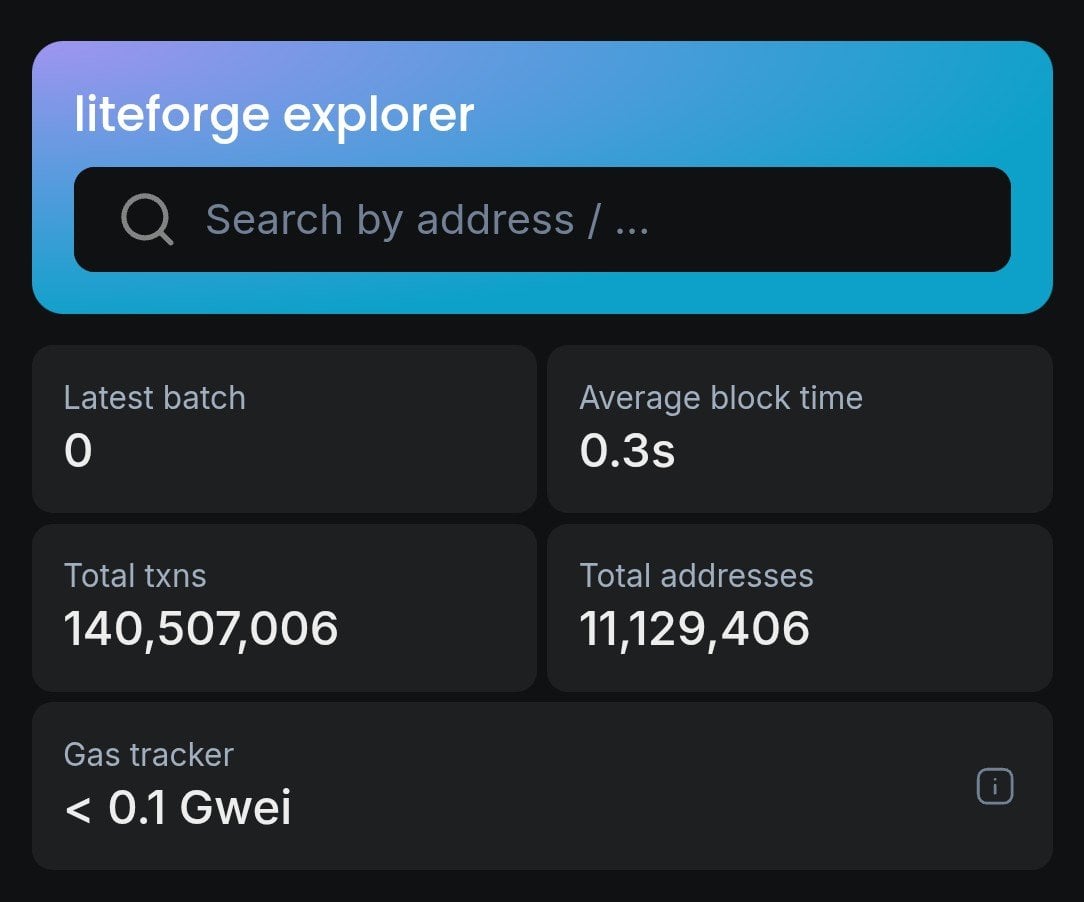
Meanwhile, the LiteForge public testnet has already processed more than 140 million transactions across 11 million addresses. This step suggests that the developers have actively explored the network.
Yet, according to DeFiLlama data, Litecoin’s DeFi ecosystem only holds $700,000 in total value locked. This implies that application growth has not yet kept pace with technical progress.
This gap indicates that LitVM’s architecture extends Litecoin’s capabilities. Although broader ecosystem activity must grow before these technical advantages translate into significant network utility.
LiteForge gains ground ahead of mainnet
As the LitVM mainnet launch approaches, attention now turns to the LiteForge testnet. Since April 2026, LiteForge has attracted over 4.4 million wallets and processed well over 63 million transactions.
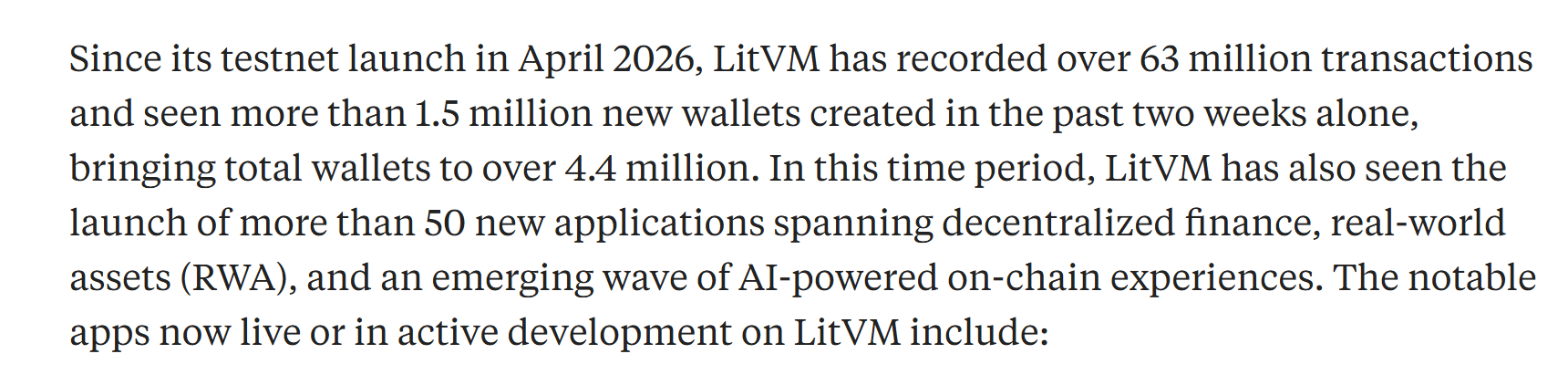
These numbers indicate strong participation, although test networks often see high activity due to experimentation and incentives. Additionally, DeFi applications, AI agents, and cross-chain tools show that developers are testing Litecoin’s expanded functionality.
Can LitVM deliver Litecoin?
As LitVM moves closer to mainnet, the focus shifts from early participation to its potential impact on the broader Litecoin economy. If deployed successfully, LTC could expand beyond payments by serving as a gas token, collateral asset, liquidity source, settlement layer, and yield-generating asset.
These additional functions would diversify network demand instead of relying primarily on transaction payments. However, launching in Q4 2026 remains a development target rather than a fixed milestone.
Additionally, smart contracts and cross-chain bridges introduce new security risks that require rigorous auditing before widespread adoption. Even then, technical readiness alone cannot support growth without active developers, committed liquidity, and consistent user participation.
Investors should therefore monitor the mainnet progress, bridge security, and ecosystem capital post-launch. Together, these indicators will better reveal whether LitVM is creating lasting economic value for Litecoin rather than simply adding new technical features.
Final summary
- Litecoin is expanding beyond payments through LitVM, strengthening its long-term utility.
- However, LTC faced its biggest test as LitV moved to its mainnet.


