



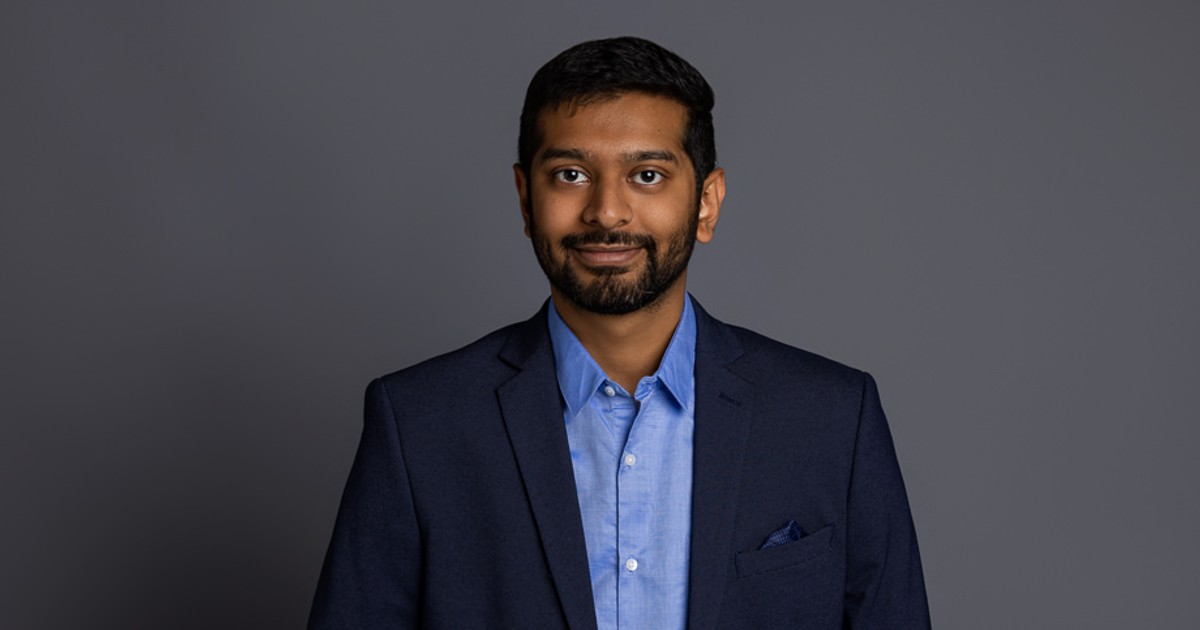
Rahul Arulkumaran, director of AI Engineering at Yuma, a subsidiary Digital Currency Group (DCG), Guide to innovative research in decentralized artificial intelligence (AI), combining AI with blockchain technology to develop transparent collaborative frameworks which provide alternatives to traditional centralized platforms. Its history in data architecture and blockchain technology allow it to supervise AI solutions that operate distributed networks while supervising new talents and pleading for responsible AI practices.
A market of $ 30 billion takes off
The decentralized AI market demonstrates remarkable momentum, with investments reaching $ 30 billion in 2024, marking an increase of 200% compared to the previous year. This expansion reflects a broader growth in the AI industry, which analysts plan to go from $ 214 billion in 2024 to 1.5 dollars by 2030. The blockchain AI sector specifically shows high potential, with projections indicating that it could potentially reach more than $ 400 billion by 2033.
Traditional AI platforms are faced with challenges regarding transparency and data, while decentralized executives use open-source protocols and the big permanent blockchain book to improve data clarity and responsibility. “Decentralized AI fundamentally changes the way we establish confidence in digital networks”, “ Rahul Arulkumaran explains. “Data distribution and calculation on several nodes creates more secure and verifiable operations.”
IA future engineering
The implementation of a decentralized AI meets several technical obstacles which require advanced solutions. Performance challenges occur during data distribution and calculation on several nodes, and the integration of blockchain at AI requires meeting the complex data standardization and compatibility requirements. The Yuma engineering team focuses on these priorities under the direction of Rahul Arulkumaran.
David Pinger, CEO of Warden Protocol, notes the adoption of the market as a key factor: “The decentralized AI remains in the first stages of development. Although technology is promising, many initiatives must still prove their efficiency on a large scale.” Current market conditions promote centralized AI platforms, reflecting the established infrastructure and user familiarity. However, Rahul Arulkumaran maintains an optimistic perspective while recognizing current limitations.
From Wall Street to health care: Impact of the real world
Under the leadership of Rahul Arulkumaran, the companies in which he worked like Foundry and Yuma demonstrate the practical applications of decentralized AI. His team has developed the S&P 500 Oracle on Bittensor, a 4 billion dollars blockchain platform, which provides market prices forecasts at five-minute intervals. This highlighted the potential of technology in financial operations.
Health care networks use federated learning, allowing the development of AI models in several facilities while protecting the confidentiality of patient data. This approach advances medical research while retaining robust data security protocols. The implementations of the supply chain improve monitoring and verification workflows, while urban infrastructure projects benefit from better management of resources through decentralized frameworks.
The regulation responds to innovation
The advancement of the field increases environmental and regulatory considerations. High calculation requests and energy consumption conducts research on effective consensus mechanisms, the Rahul Arulkumaran team providing significant contributions to these initiatives. The regulatory landscape surrounding decentralized executives continues to develop, creating both obstacles and opportunities for companies like Yuma.
Rahul Arulkumaran underlines the value of the measured supervision: “Well -designed directives protect users while promoting stable conditions for technological development.” His current work at Yuma illustrates the ability of decentralized AI to strengthen digital accessibility and transparency. Despite the technical and regulatory complexities, Rahul Arulkumaran focuses on the construction of practical solutions that come under real world challenges while preparing for future innovations.


