




Ethereum News: Robinhood Chain processed 7.6 million daily transactions on July 10, just 11 days after its mainnet launched on July 1, abruptly closing out Coinbase, which recorded 9.2 million over the same period.
The gap is closing faster than expected in the competitive landscape of Ethereum Layer 2, and the mechanism behind it is simple: Robinhood pays each user’s gas fees.
This number of transactions matters less as a milestone and more as a forcing function. Base has built its position over several years thanks to Coinbase’s exchange ecosystem, deep DeFi integrations, and first-mover liquidity.
Robinhood Chain closed most of the gap in less than two weeks, but thanks to a promotional structure rather than organic demand. What happens at the end of September, when the grant expires, is a question the data can’t yet answer.

Discover: The best crypto to diversify your portfolio
Ethereum News: Gas subsidies do the heavy lifting, and the math is grim
Robinhood’s 90-day gas subsidy completely eliminates transaction costs for users through the end of September 2026. The effect on volume is direct: retail traders, DeFi participants, and memecoin activity are all moving toward costless execution when a credible alternative exists.
MSBIntel noted that despite processing 7.6 million transactions in a single day, Robinhood Chain only generated about $4,000 in daily protocol fees, a figure that reflects both the subsidy absorbing usage costs and the initial pricing structure of an Arbitrum-based rollup.
For context, Base users pay per transaction. The asymmetry of costs between the two networks during the subsidy period makes direct comparisons of the number of transactions analytically incomplete. A fairer comparison will come in October, when Robinhood Chain competes on a level playing field.
Network activity extends beyond simple transfers. Robinhood Chain surpassed $500 million in single-day volume on Uniswap deployments, taking second place behind the Ethereum mainnet in terms of one-time activity. This volume figure, cited in the primary source report, indicates that liquidity is accumulating alongside transaction throughput, and not just inflating the raw numbers through micro-transactions.
Separately, previous analysis of Robinhood Chain’s DEX volume surge flagged memecoin-related activity as a significant contributor to this $500M+ DEX day, which adds a sustainability caution to the volume headline.
Discover: the best token presales
Tokenized shares and 23 million users as structural differentiation
Where Robinhood Chain makes a truly differentiated case is in its distribution and product stack. The network launched alongside Robinhood’s tokenized stocks platform, with Chainlink providing Oracle pricing for 95 tokenized assets including Nvidia, Apple and Alphabet, Uniswap providing trading liquidity and Morpho supporting lending.
These tokenized stocks are available in over 120 countries, a reach that no other Ethereum L2 has built around a brokerage-native user base.
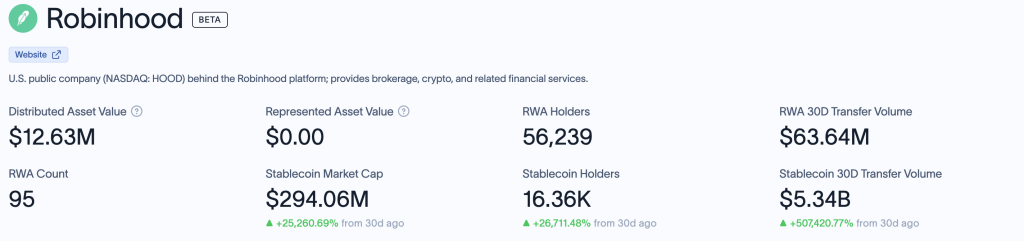
Robinhood enters with approximately 23 million pre-existing brokerage users, a distribution channel that Base and Arbitrum have gradually built toward through crypto-native integration.
If even a fraction of these users engage with on-chain products after the subsidy, the retention argument becomes credible. The network built on Arbitrum Orbit technology also positions it in an established fee-sharing ecosystem, with 10% of on-chain fees redirected to the ARB ecosystem, a structural alignment with the broader L2 stack rather than a competitive break from it.
HOOD stock has already priced in some of that optimism. The initial Layer 2 announcement sent shares up about 10%, with an additional gain of about 7% coinciding with the rollout of the AI-based agent trading feature, according to Yahoo Finance data cited in the source report.
Don’t miss our $1,000 USDT airdrop on ByBit
Robinhood Chain Gas Subsidy Closes Gap to Base: Ethereum Future on the Horizon? appeared first on Cryptonews.


