




The SEC backed away from releasing an “innovation exemption” framework that would have given regulated crypto platforms a legal path to list tokenized versions of stocks like Apple and Tesla, a draft that would have been released days before regulators changed course to consider industry feedback.
The pause does not mean that the tokenized actions are dead. This means that the legal on-ramp that regulated platforms in the United States have been waiting for has stalled, while offshore products continue to operate in the gray area they already occupy.
Michael Burry just notified the SEC
The SEC wants to allow trading of tokenized stocks on crypto exchanges and Michael Burry is sounding the alarm.
These tokens are not real shares:
• No voting rights
• No dividends
• Companies don’t even need to consent to being tokenized…— Manpreet Kailon (@preetkailon) May 27, 2026

Here is the central tension this article uncovers: the SEC’s hesitation does not slow symbolic actions globally; it simply determines whether U.S. platforms can compete in this market or cede ground to operators outside U.S. jurisdiction.
This news came as Bitcoin crashed overnight to $73,200, marking a -3.5% 24-hour decline, with analysts and investors fearing less than $70,000 is on the way.
Tokenized Stocks: What Are They and Why Are They Exploding?
Think of tokenized inventory as a digital receipt. You walk into a store, hand over some money, and receive a piece of paper saying you’re entitled to one share of Apple stock. This receipt can be exchanged instantly, 24 hours a day, on a blockchain, but whether it gives you the same rights as a real Apple shareholder depends entirely on who issued it and how it is structured.
This is the basic mechanism: a tokenized stock is a blockchain-based token whose value is linked to an underlying stock. The token trades 24/7 on crypto platforms, bypassing the 9:30 a.m. to 4 p.m. window of traditional exchanges. For crypto platforms, the appeal is obvious: They can offer users exposure to Tesla or Amazon without building a brokerage from scratch.
The market grew rapidly. Tokenized real-world assets (RWA) now exceed $34 billion globally, with tokenized stocks alone surpassing $1 billion in market capitalization, according to data from CoinGecko.
Projects like Ondo Finance have been at the forefront of bringing this infrastructure to market, and platforms like MetaMask have already begun to integrate tokenized stock products, but not without running into regulatory hurdles, as our coverage of the MetaMask and Ondo Finance situation details.
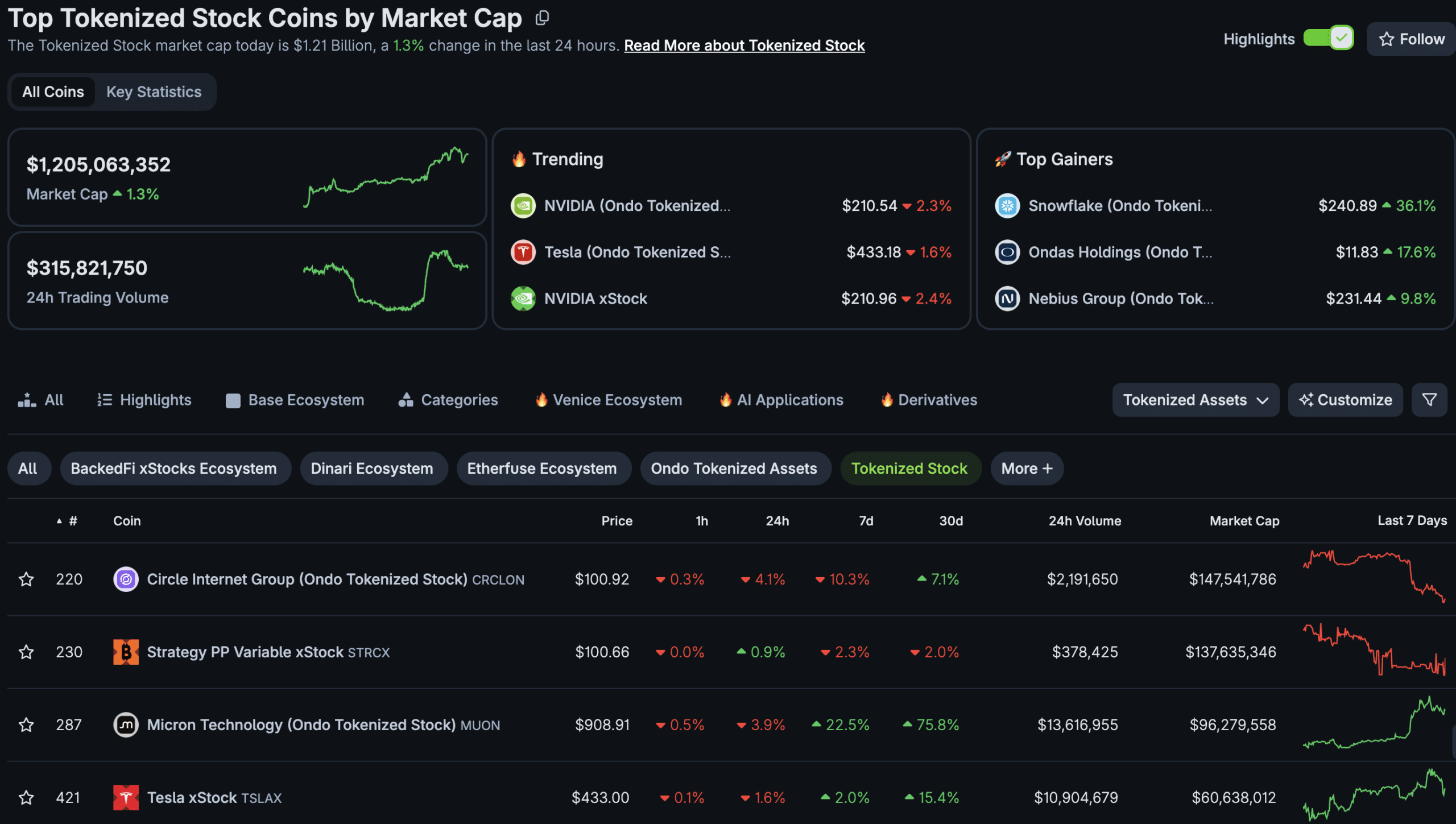
(SOURCE: CoinGecko)
DISCOVER: The Next 1000x Crypto Gem Ahead of Its Listing on Binance
SEC Crypto Tokenized Stocks Pause: The Details Most Headlines Miss
The first reading of the situation is that the SEC is blocking crypto innovation, but that is only part of the story. The SEC has ended a formal exemption that would have allowed registered U.S. platforms to offer tokenized shares to domestic retail investors, leaving U.S. exchanges on the sidelines while foreign platforms continue to operate.
The SEC differentiates between issuer-sponsored tokens, involving the companies themselves, and third-party tokens, created by separate operators without the company’s participation. Commissioner Hester Peirce noted that exemptions would likely be limited to “digital representations” of shares, not synthetics.
Additionally, critics say multiple third-party tokens tracking the same security could fragment liquidity and complicate price discovery, posing problems for investor protection. The previously developed exemption framework aimed to resolve these issues before the break.
Exposure to tokenized stocks: why platforms and token holders are watching closely
The pause in SEC regulation primarily affects projects creating tokenized stock infrastructure for U.S. markets. Ondo Finance (ONDO), active in the RWA tokenization space, operates primarily through offshore structures, so its products are not immediately affected, but the lack of a formal SEC framework calls its legitimacy into question.
For retail investors holding tokenized stocks through offshore platforms, the situation remains largely unchanged, but those seeking regulated versions in the United States will face delays.
A key question for the SEC is whether token holders receive dividends and voting rights, as this distinction is critical in defining the nature of these products and their regulatory treatment.
DISCOVER: The best Meme Coin ICOs to invest in 2026
The article SEC Crypto: US agency pauses on tokenized stock plan appeared first on 99Bitcoins.


