



The SEC’s Division of Commerce and Markets issued a staff statement telling certain wallet-related crypto trading apps that they can operate without a broker’s license – for now – as long as they operate as neutral software and stay outside of the actual transfer of your money.
The detail missing from most headlines, however, is that this exemption has no legal force, expires in five years, and could evaporate entirely if Congress fails to act or if a future SEC leader decides to reverse course.
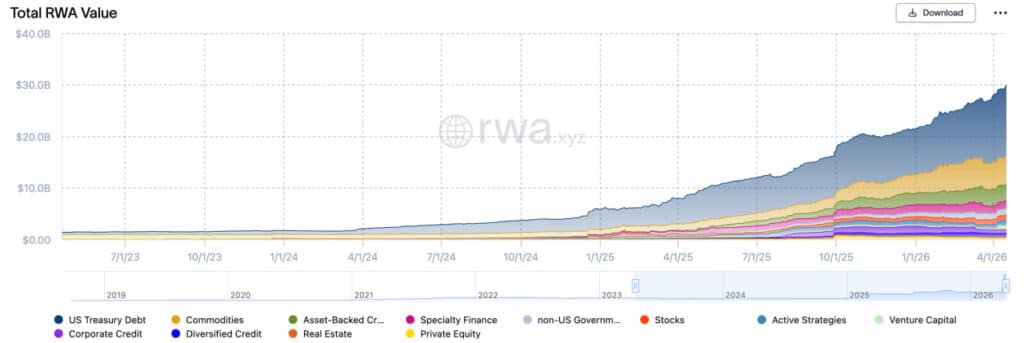
The market targeted by these rules is already large. RWA.xyz currently boasts $29.3 billion in real-world distributed assets, $13.4 billion in tokenized U.S. Treasuries, and over $1 billion in tokenized public stocks and ETFs. The SEC draws lines around a market with real users and real money.
DISCOVER: The Next 1000x Crypto Gem Ahead of Its Listing on Binance
What is a self-custody crypto application and why is this rule important?
Self-custody means you hold your own crypto, no company has access to your funds, no bank holds your assets on your behalf. Think of it like keeping cash in a safe bolted to your floor rather than depositing it in a bank. With autonomous custody, you control the keys. Lose them and you won’t have a customer service line to call.
A self-custodial app or wallet-linked interface allows you to interact with crypto markets while maintaining direct control. It can show you prices, let you compare transaction routes, or help you sign a transaction, all without ever touching your funds. This is the key distinction that the SEC is currently trying to formalize.
The SEC just issued guidance clarifying that certain self-custody interfaces used to trade digital asset securities do not require broker registration, provided they remain within narrow guardrails.
The conditions: users must control their own keys, the interface… pic.twitter.com/Nk68ZzNy39
-TFTC (@TFTC21) April 13, 2026
This is where broker licenses come into play. Under traditional securities law, anyone who facilitates securities transactions – executing trades, holding client assets, routing orders – generally must register as a broker-dealer. This is a costly and compliance-intensive process designed for Wall Street firms.
Applying this standard to a simple cryptographic interface that just helps you click buttons would effectively shut down most of the self-custody app ecosystem overnight. Understanding why self-custody matters is increasingly important as regulators establish clearer boundaries on who can offer what services.
What does the SEC’s 5-year crypto exemption actually allow?
The SEC statement defines a narrow category called “covered user interface provider.” To be eligible, an app must meet a strict set of conditions – and the list of things that disqualify you is longer than the list of things that don’t disqualify you.
What this actually describes is a move towards transparency and user control, not hidden decision-making by the platform.

Instead of the app deciding everything behind the scenes, users set their own transaction parameters, so execution reflects their choices, not the platform’s incentives.
Routing is meant to be objective, based on things like price or speed, not which path brings the most money to the application, removing much of the usual conflicts of interest.
The logic behind these routes can no longer be a black box either; they must be disclosed and independently verifiable, so that everyone can verify how decisions are made.
And importantly, this explicitly includes connections to decentralized trading systems such as AMMs, meaning these standards apply not only to traditional platforms but also to on-chain liquidity.
Simply put, the direction is clear: fewer hidden controls, more transparency, and systems that can be verified instead of blindly trusting.
The part that’s worth reading twice is everything that gets you kicked out of this path. No transactions running. No holding of user funds or stablecoins. No settlement transactions. No advice on specific professions. No compensation linked to specific products, locations or itineraries. Any interface that begins to resemble – even slightly – like an intermediary falls back into broker territory and requires full registration.
The exemption expires in five years in the absence of positive action from the Commission. And because it is a staff statement rather than a formal rule, it does not create any enforceable rights. If the SEC changes its mind tomorrow, or if a new administration takes a different view, the path closes. The SEC’s broader proposal follows a similar interim process, highlighting how the current crypto regulatory framework depends on policy continuity rather than lasting law.
DISCOVER: The best Meme Coin ICOs to invest in 2026
Follow 99Bitcoins on X for the latest market updates and subscribe on YouTube for daily expert crypto analysis.
The post SEC Gives Some Self-Custody Crypto Apps 5 Years to Sort Broker Licenses appeared first on 99Bitcoins.


