



The Solana crypto hit an all-time high of $295 in January 2026. It now trades at nearly $84 — a 68% collapse that wiped out billions in market value and triggered more than $300 million in long liquidations in a single day, including an individual position worth $6.69 million wiped out in a matter of hours. This kind of reduction doesn’t happen in a vacuum.
What makes this moment harder to read is the structural deterioration occurring below the price.
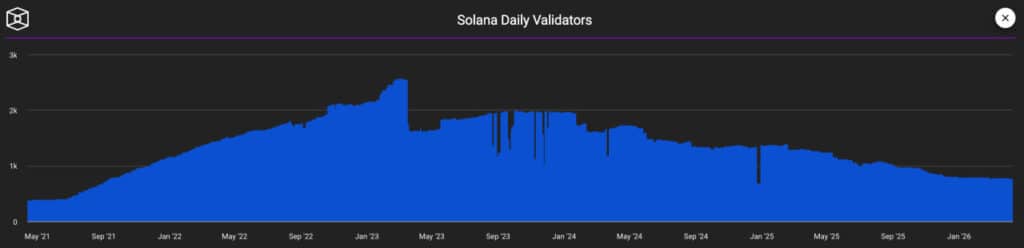
The number of validators fell from around 2,500 to less than 800, a 68% drop that almost exactly mirrors the price chart. This is not a coincidence. This is a trend that deserves to be understood before calling it a bottom.
DISCOVER: The Next 1000x Crypto Gem Ahead of Its Listing on Binance
Can Solana Crypto (SOL) Reclaim $120 or Is a Drop Below $80 Coming?
SOL is currently trading around $84, just above a support zone that technical analysts have flagged as critical. A head-and-shoulders model with a confirmed neckline break at $170 set a measured target of $120 – a level that has since been removed. The next line of defense is $80. Below, the technical structure does not have a significant floor until the $59-$65 range.
Data from Glassnode shows that the 30-day average realized profit/loss ratio has fallen below 1, confirming that more capital is being realized at a loss than at a gain. This is a bearish sentiment signal, not a contrarian buying indicator – at least not yet. The formation of the double top at $265, combined with the failure of the neckline to $170, suggests that the market has already priced in the bad news well before most retail investors notice it.
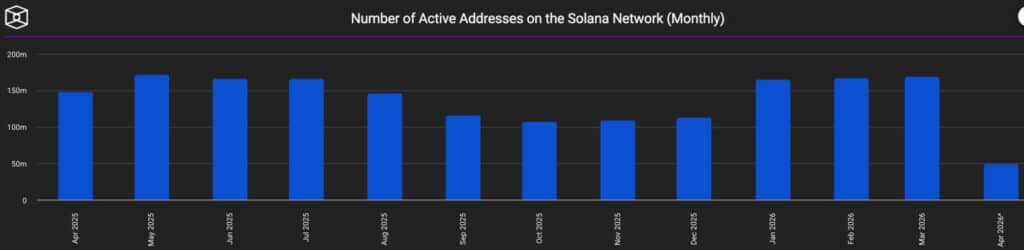
On-chain activity slows alongside price. Monthly transactions fell 10% to 1.79 billion, active addresses fell 5.7% to 49.1 million and network fees fell 21% to $14 million over the same period.
Solana crypto remains the most active blockchain in terms of transaction volume – but activity is contracting, not expanding. This is important when the bull thesis relies on network adoption.
The decline of validators is the most acute structural concern. Smaller nodes are disappearing due to rising operational costs and fee compression, which concentrate validating power among larger, better-capitalized operators.
Data on derivatives and ETF outflows point in the same direction: institutional positioning has become cautious rather than opportunistic. The Firedancer client upgrade provides a real path to better congestion management and validator incentives, but its deployment timeline remains a watchdog, not a confirmed enabler.
SOL sits at a make-or-break level, and $80 is the one that holds the entire structure together, because if it stays intact and the Firedancer rollout brings back validators while macro conditions improve, that’s where momentum can rebuild and push the price back towards $120 and even $150 over time.
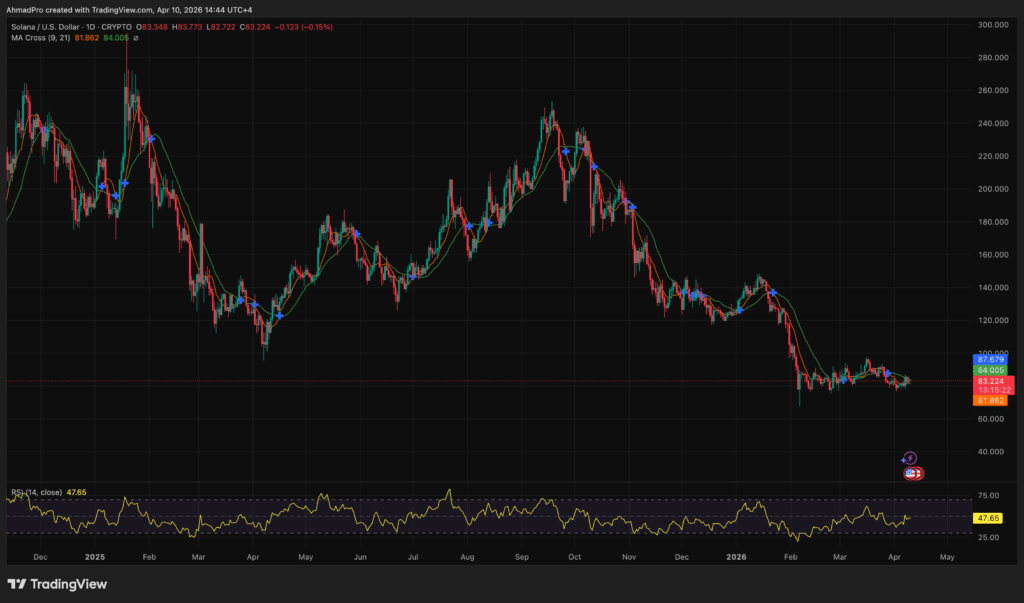
For now though it still feels like a chore with SOL likely stuck between $80-$100 while the network stabilizes and the broader market sorts out, so you’re getting a sideways move instead of a clear trend.
The risk is that $80 breaks, as this is where things can unravel quickly, with leveraged positions emptied and capital outflows increasing, which can push the price down to $60 and bring back concerns about validator concentration and network health.
Look at $80. That’s the line in the sand.
The post Solana Crypto Has Lost 68% From Its All-Time High and Validators Are Disappearing at the Same Rate appeared first on 99Bitcoins.


