



Close Menu
Altcoin ObserverAltcoin Observer
  • Regulation
  • Bitcoin
  • Altcoins
  • Market
  • Analysis
  • DeFi
  • Security
  • Ethereum
Categories
  • Altcoins (3,732)
  • Analysis (3,840)
  • Bitcoin (4,470)
  • Blockchain (2,157)
  • DeFi (2,623)
  • Ethereum (2,773)
  • Event (119)
  • Exclusive Deep Dive (1)
  • Landscape Ads (2)
  • Market (2,714)
  • Press Releases (12)
  • Reddit (2,847)
  • Regulation (2,474)
  • Security (4,103)
  • Thought Leadership (3)
  • Videos (44)
Hand picked
  • Uniswap RFC explores running private exchanges using v4 and UniswapX hooks
  • Australia targets Telegram a day after Russia indicts Durov
  • Bitcoin’s weak hands fold
  • Success Story: Jonathan Nichols’ Learning Journey with 101 Blockchains
  • Kraken Cyprus honored at the 14th Invest Cyprus International Investment Awards
We are social
  • Facebook
  • Twitter
  • Instagram
  • YouTube
Facebook X (Twitter) Instagram
  • About us
  • Disclaimer
  • Terms of service
  • Privacy policy
  • Contact us
Facebook X (Twitter) Instagram YouTube LinkedIn
Altcoin ObserverAltcoin Observer
  • Regulation
  • Bitcoin
  • Altcoins
  • Market
  • Analysis
  • DeFi
  • Security
  • Ethereum
Events
Altcoin ObserverAltcoin Observer
Home»Ethereum»Vitalik Buterin explains how Ethereum’s Verge can bring blockchain nodes to smartwatches
Ethereum

Vitalik Buterin explains how Ethereum’s Verge can bring blockchain nodes to smartwatches

October 23, 2024No Comments
Share Facebook Twitter Pinterest LinkedIn Tumblr Reddit Telegram Email
Vitalik Buterin Ethereum 1.jpg
Share
Facebook Twitter LinkedIn Pinterest Email


Receive, manage and grow your crypto investments with BrightyReceive, manage and grow your crypto investments with Brighty

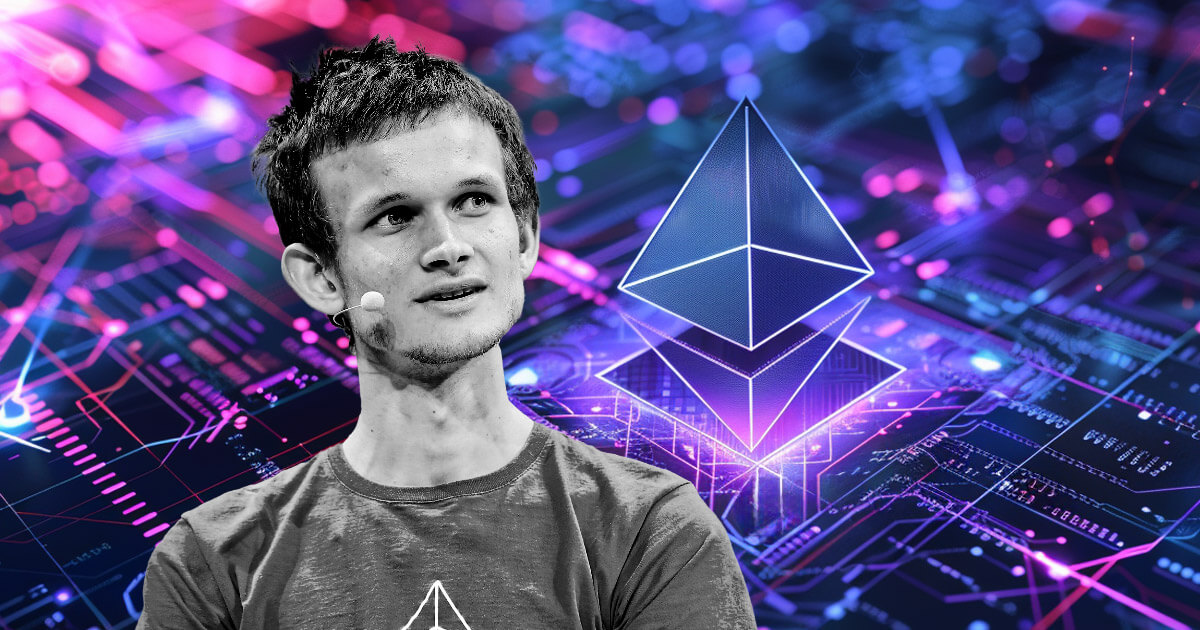
Ethereum co-founder Vitalik Buterin has outlined further plans to improve the blockchain’s proof-of-stake (PoS) system with a new upgrade called “The Verge.”

In a blog post published on October 23, Buterin explained that while running an Ethereum node is technically possible on a standard laptop, current data requirements make it impractical for many users.

Operating a node requires hundreds of gigabytes of data to verify blocks, and this data grows by approximately 30 GB each year. These high storage requirements limit the number of users who can run full verification nodes on Ethereum.

Buterin’s proposed Verge update addresses this challenge by introducing “stateless client verification,” which allows devices to validate blockchain data without storing the entire dataset locally.

He explained:

“The Verge aims to change that, and making full chain verification so computationally affordable that every mobile wallet, browser wallet, and even smartwatch does it by default.”

The edge

Initially, “The Verge” focused on adopting Verkle Trees, a data structure that facilitates more compact proofs and enables stateless verification of Ethereum blocks.

But since then, the scope has widened. The update now aims to make Ethereum verification more resource efficient by combining stateless validation techniques and advanced cryptographic proofs such as SNARKs (Succinct Non-Interactive Arguments of Knowledge).

SNARKs allow a party to prove they hold certain information without disclosing the details, allowing complex on-chain transactions to be quickly verified. Buterin believes this technology could enable verification of the Ethereum blockchain on small devices like smartwatches, expanding the potential for widespread participation in the network.

Stateless verification, in particular, eliminates the need for nodes to store all blockchain data. Instead, each block would include a “witness” containing the essential data and cryptographic proof needed to validate the block.

This move toward stateless clients is crucial because it reduces storage demands and accelerates blockchain performance. This would improve the overall user experience while reducing barriers to running Ethereum nodes, making solo staking much more accessible.

To implement these changes, Buterin proposes replacing Ethereum’s current state structure, known as the Merkle Patricia tree, with Verkle trees or STARKed binary hash trees. Although STARKs serve a similar function to SNARKs, they provide additional benefits in terms of scalability and security, helping Ethereum overcome some of the limitations of its existing proof systems.

Mentioned in this article


Source link

Share. Facebook Twitter Pinterest LinkedIn Tumblr Email
Previous ArticlePeter Schiff Speculates on MicroStrategy “Crash” – Is Bitcoin the Reason?
Next Article IFAD’s TRACE blockchain wins Sustainable FinTech award

Related Posts

Ethereum

Ethereum Foundation Board Update | Ethereum Foundation Blog

July 30, 2026
Ethereum

Morgan Stanley uses $7.4 trillion in client assets and minimal fees to hijack Wall Street’s crypto boom

July 29, 2026
Ethereum

On-chain data shows 5,280 ETH flowing to single address following quiet Triple-A wallet breach

July 27, 2026
Add A Comment
Leave A Reply Cancel Reply

Single Page Post
Share
  • Facebook
  • Twitter
  • Instagram
  • YouTube
Featured Content
Event

Dutch Blockchain Week 2026 strengthens position as Europe’s leading B2B blockchain event week

April 14, 2026

Amsterdam, April 2026 – Dutch Blockchain Week 2026 is rapidly evolving into one of Europe’s…

Event

Global Games Show Riyadh: The Ultimate Creator & Influencer Hub

March 31, 2026

The fast-evolving gaming ecosystem of Riyadh is powered by solid national investment, a flourishing esports…

1 2 3 … 82 Next
  • Facebook
  • Twitter
  • Instagram
  • YouTube

Australia targets Telegram a day after Russia indicts Durov

July 30, 2026

Ethena whales withdraw 102 million tokens from exchanges: has ENA selling pressure eased?

July 30, 2026

Audiera loses KEY support – can BEAT recover from 24% crash?

July 29, 2026
Facebook X (Twitter) Instagram LinkedIn
  • About us
  • Disclaimer
  • Terms of service
  • Privacy policy
  • Contact us
© 2026 Altcoin Observer. all rights reserved by Tech Team.

Type above and press Enter to search. Press Esc to cancel.

bitcoin
Bitcoin (BTC) $ 79,111.00
ethereum
Ethereum (ETH) $ 2,496.81
tether
Tether (USDT) $ 0.999765
bnb
BNB (BNB) $ 753.58
xrp
XRP (XRP) $ 1.42
usd-coin
USDC (USDC) $ 0.999948
solana
Solana (SOL) $ 103.66
tron
TRON (TRX) $ 0.339082
zcash
Zcash (ZEC) $ 1,238.63
staked-ether
Lido Staked Ether (STETH) $ 2,265.05