



Key takeaways
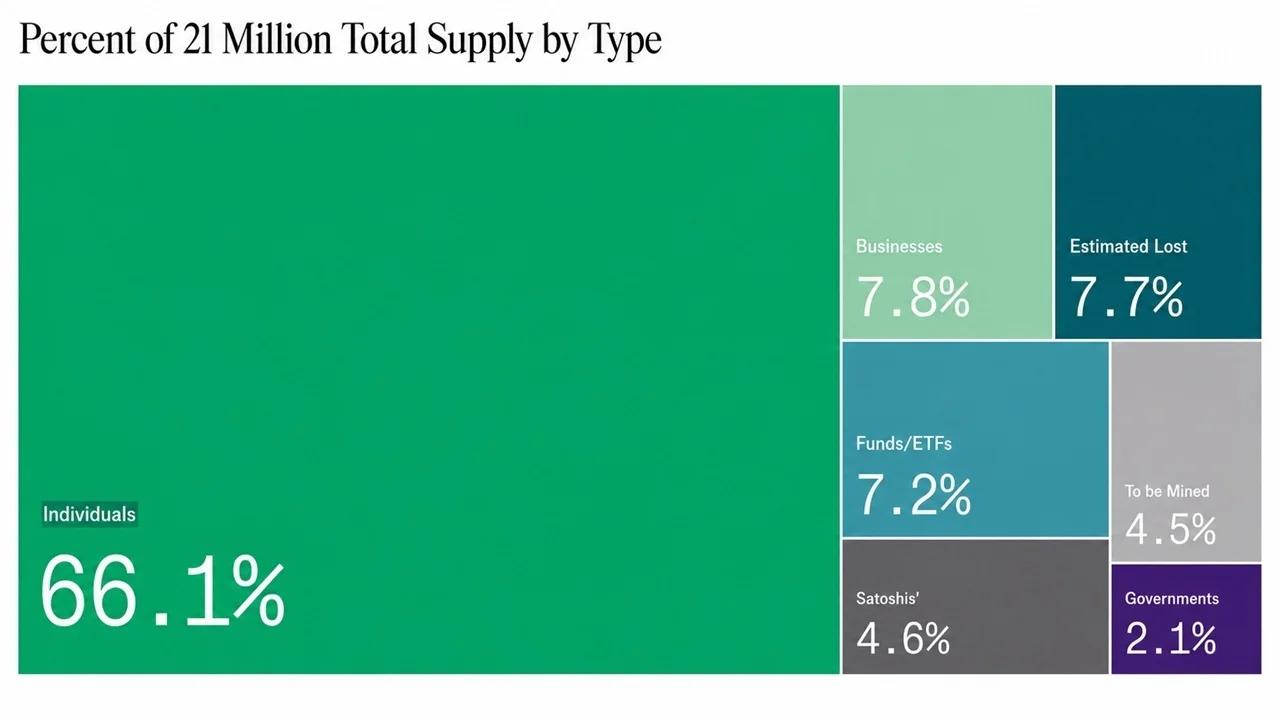
- Bitwise data shows that individuals control 66.1% of the BTC supply, compared to 7.8% for businesses and 7.2% for funds.
- The share of institutional investors has increased since the launch of US cash ETFs in January 2024, but the dominance of the retail sector remains.
- US Bitcoin and Ether ETFs just ended an 8-week outflow streak that drained $9.46 billion from funds.
Retail still owns this market
The breakdown, shared Monday by Bitwise and broadcast by crypto media, is based on public portfolio data, on-chain analysis and disclosures from publicly traded companies and fund managers. The digital asset manager, which manages one of the American spots Bitcoin ETFmapped known wallets associated with exchanges, custodians and large holders to paint the picture.
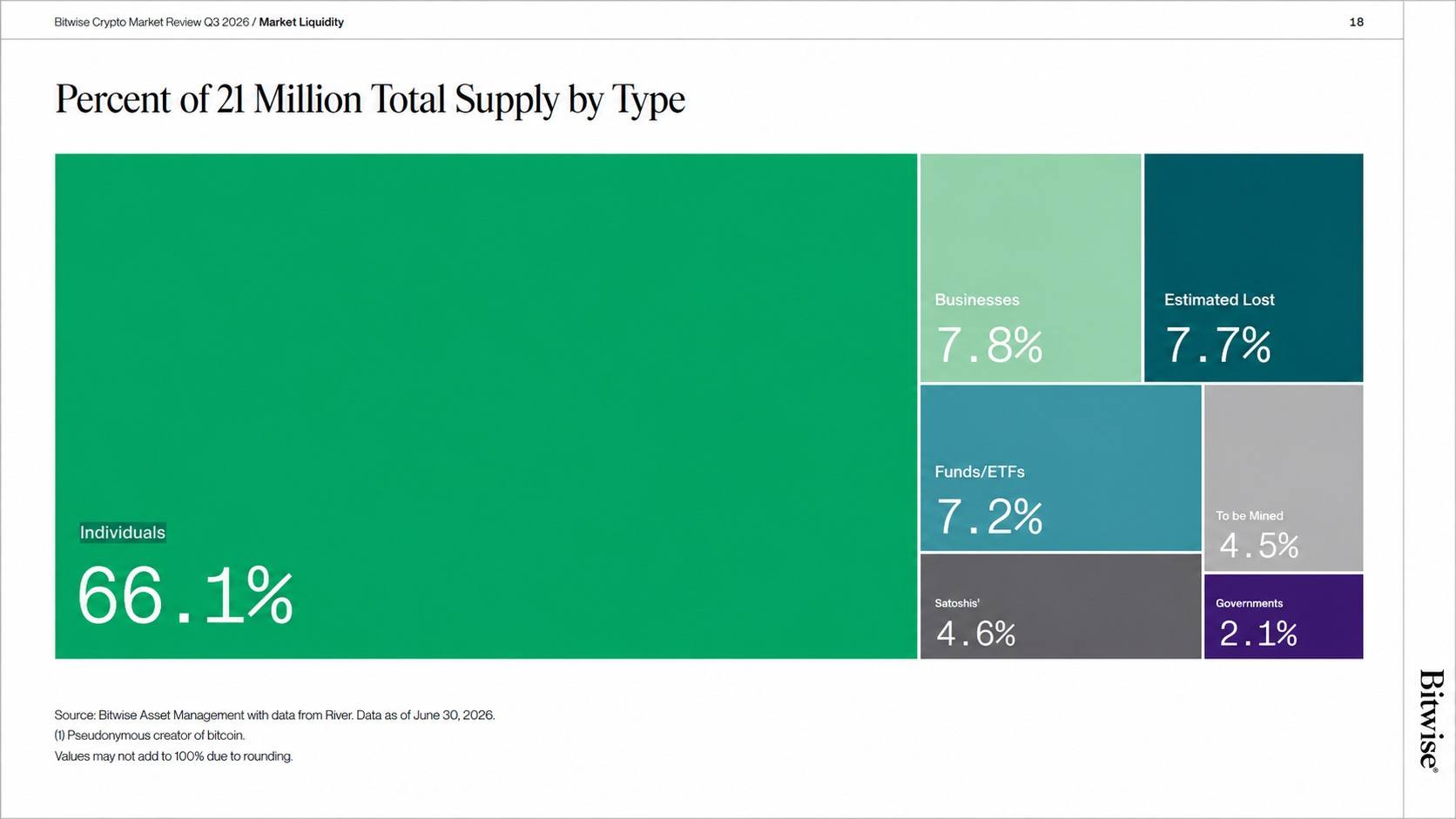
The result flies in the face of the dominant narrative of recent years and, despite relentless coverage of corporate Treasuries, sovereign accumulation, and ETF launches on Wall Street, roughly two-thirds of all bitcoin always sits on individuals. Companies hold 7.8% and investment vehicles 7.2%, meaning that the entire institutional complex controls a total of 15% of the supply.
The rest, about 19%, is for governments, miners, missing wallets, and other categories. That said, Bitwise acknowledged that the methodology has blind spots, noting that multi-signature wallets and pooled custody agreements can obscure the actual ownership of the coins behind an address.
The share of institutions is greater than before, but remains slim
Institutional holdings have increased significantly since the spot Bitcoin ETF debuted in the United States in January 2024, and the category’s footprint continues to expand through corporate cash programs and government stockpiles. Some of these positions are huge in isolation; The largest Bitcoin addresses tracked on-chain include exchange cold wallets and government stashes containing hundreds of thousands of BTC.
However, the flows behind this 7.2% fund share remain volatile. U.S. Bitcoin and Ether spot ETFs ended an eight-week outflow streak last week (the longest run of redemptions since the products launched) with $282 million in combined inflows. Bitcoin funds brought in $197.4 million and Ether funds brought in $84.4 million, a slight reversal after the previous streak drained about $9.46 billion from the two product categories.
ETF money moves based on sentiment, macroeconomic data, and quarterly rebalancing. In contrast, the individual majority has historically been stickier (a holder base that on-chain analysts attribute to absorbing supply through notable recessions).
Why the split matters now
In a market this deeply down, who holds the coins determines how the next leg plays out, because a retail-dominated supply base means the marginal seller is more likely a household than a fund office, and that mitigates the common criticism that Wall Street has quietly taken over the network.
For the industry decentralization argument, data is ammunition. Bitcoin ownership remains dispersed among tens of millions of individuals seventeen years after its existence, even as regulated products make institutional access trivial.
The number to watch from here is the fund’s share, because if ETFs restart with enthusiasm, the 7.2% slice could rise and test the real sustainability of the two-thirds majority of retail trading. But for now, Bitwise data clearly shows that OGs still dominate.
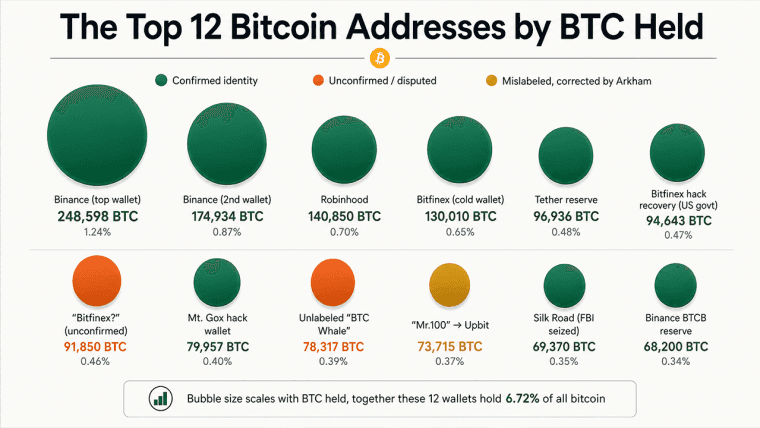
Inside the Top 12 Bitcoin Addresses: Who Holds 1.35 Million BTC
Twelve addresses on the Bitcoin rich list hold a total of 1,347,380 BTC, worth approximately $85.2 billion at current prices near $63,265.…

Inside the Top 12 Bitcoin Addresses: Who Holds 1.35 Million BTC
Twelve addresses on the Bitcoin rich list hold a total of 1,347,380 BTC, worth approximately $85.2 billion at current prices near $63,265.…
Inside the Top 12 Bitcoin Addresses: Who Holds 1.35 Million BTC
Twelve addresses on the Bitcoin rich list hold a total of 1,347,380 BTC, worth approximately $85.2 billion at current prices near $63,265.…


