



Close Menu
Altcoin ObserverAltcoin Observer
  • Regulation
  • Bitcoin
  • Altcoins
  • Market
  • Analysis
  • DeFi
  • Security
  • Ethereum
Categories
  • Altcoins (2,931)
  • Analysis (3,068)
  • Bitcoin (3,678)
  • Blockchain (2,157)
  • DeFi (2,619)
  • Ethereum (2,491)
  • Event (110)
  • Exclusive Deep Dive (1)
  • Landscape Ads (2)
  • Market (2,714)
  • Press Releases (11)
  • Reddit (2,360)
  • Regulation (2,461)
  • Security (3,537)
  • Thought Leadership (3)
  • Uncategorized (2)
  • Videos (43)
Hand picked
  • The Lobstar Wilde $450K loss wasn’t a “decimal error.” It was a memory failure that affects every AI agent with a wallet.
  • Payward partners with Nasdaq to develop xStocks-powered gateway connecting permissioned and permissionless tokenized equity markets
  • Hyperliquid jumps following improved margins and a 533% increase in oil trade
  • GENIUS Act turns stablecoins into tools of dollar domination, not crypto rebels
  • Markets Rebound as Trump Signals Possible Quick End to Iran Conflict
We are social
  • Facebook
  • Twitter
  • Instagram
  • YouTube
Facebook X (Twitter) Instagram
  • About us
  • Disclaimer
  • Terms of service
  • Privacy policy
  • Contact us
Facebook X (Twitter) Instagram YouTube LinkedIn
Altcoin ObserverAltcoin Observer
  • Regulation
  • Bitcoin
  • Altcoins
  • Market
  • Analysis
  • DeFi
  • Security
  • Ethereum
Events
Altcoin ObserverAltcoin Observer
Home»Market»Why Japan’s ‘Takaichi Trade’ Could Pressure Crypto Market Despite Post-Election Rebound
Market

Why Japan’s ‘Takaichi Trade’ Could Pressure Crypto Market Despite Post-Election Rebound

February 11, 2026No Comments
Share Facebook Twitter Pinterest LinkedIn Tumblr Reddit Telegram Email
Share
Facebook Twitter LinkedIn Pinterest Email


Trusted Editorial content, reviewed by leading industry experts and seasoned editors. Advertising disclosure

Japan’s snap elections delivered a decisive mandate to Prime Minister Sanae Takaichi, sparking an immediate rally in the stock, foreign exchange and crypto markets. The Nikkei 225 hit a record high above 57,000, the yen weakened sharply and Bitcoin briefly topped $72,000 during Asian trading hours.

Related Reading: Arthur Hayes Invests $100,000 in Hyperliquid (HYPE), Surpassing Every $1 Billion+ Altcoin

At first glance, the reaction looked like a classic risk-taking trend, driven by expectations of fiscal stimulus and policy continuity. But behind this rebound, a different dynamic is emerging, one that could tighten global liquidity and put pressure on risky assets in the short term.

Traders have dubbed the shift the “Takaichi trade,” a combination of aggressive fiscal expansion, tolerance of a weaker yen and support for accommodative monetary conditions. While the combination has boosted Japanese stocks and exporters, analysts warn it is also reshaping cross-border capital flows in ways that could weigh on global markets.
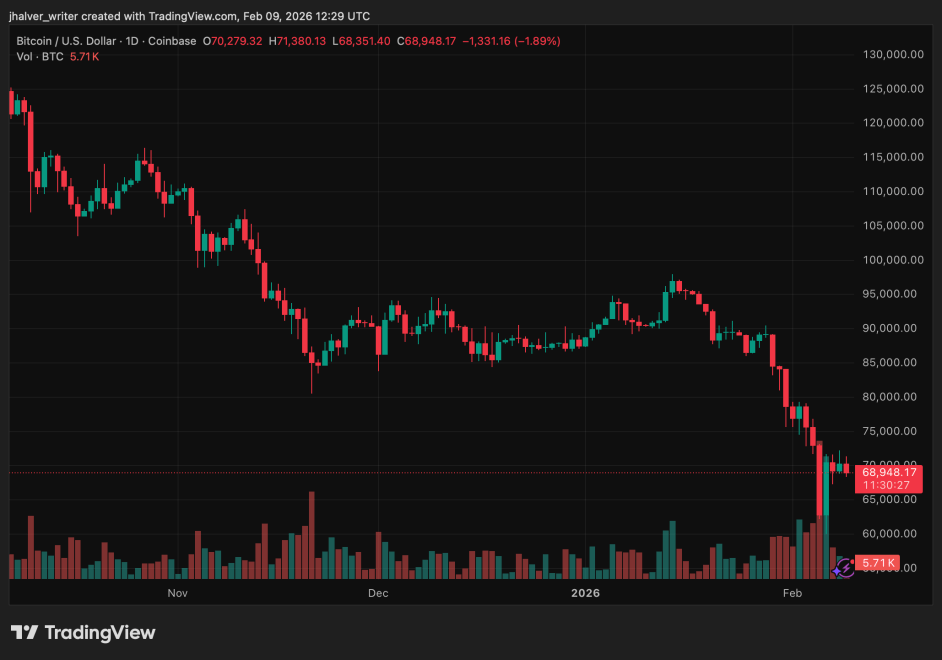
BTC's price trends sideways on low timeframes as seen on the daily chart. Source: BTCUSD on Tradingview

Portfolio rebalancing and tightening liquidity

According to the analysis of XWIN Research Japan, contributor to CryptoQuant, the main risk does not come from the outright flight of capital to the United States. Instead, global investors are rebalancing their portfolios as Japanese government bonds regain their appeal after years of extremely low returns.

Expectations of higher spending and reflation have pushed yields higher, drawing capital into Japanese domestic assets. This rotation coincided with a decline in US stocks.

Over the past week, major indices including the Nasdaq and S&P 500 have entered correction territory, reflecting tightening financial conditions and a reassessment of risk. As flows into U.S. equity ETFs slow, marginal liquidity in global markets has diminished, amplifying volatility.

Currency dynamics add another layer of pressure. The weak yen, persistent U.S.-Japan rate differentials, and continued demand for dollars have increased financing costs for leveraged trades. Historically, such conditions tend to push investors to reduce risk across multiple asset classes simultaneously.

Stock weakness spills over into Bitcoin

Bitcoin’s recent pullback fits this pattern. Despite briefly recovering to levels above $70,000 after the election, analysts note that crypto markets remain closely tied to U.S. stocks during phases of risk aversion. When stocks weaken, portfolio managers often simultaneously reduce exposure to cryptocurrencies to manage overall volatility.

Data from CryptoQuant suggests that Bitcoin’s current price weakness is less due to on-chain deterioration and more to futures unwinding and reduced leverage. Open interest declined and forced liquidations earlier this month eliminated saturated long positions, making traders more cautious in continuing rallies.

From a longer-term perspective, Japan’s political stability could further support the adoption of digital assets. Takaichi’s vast majority gives his administration room to advance tax reforms, stablecoin regulation, and Web3 initiatives later in 2026.

Related Reading: Crypto Alert: 2 Victims Lose Over $60 Million in Address Poisoning Scam

However, for now, the market remains vulnerable to global risk cycles. As capital continues to adjust to Japan’s fiscal pivot and U.S. stocks remain under pressure, near-term downside risks are likely to persist despite the post-election rebound.

Cover image from ChatGPT, BTCUSD chart from Tradingview

Editorial process as Bitcoinist focuses on providing thoroughly researched, accurate and unbiased content. We follow strict sourcing standards and every page undergoes careful review by our team of top technology experts and seasoned editors. This process ensures the integrity, relevance and value of our content to our readers.


Source link

Share. Facebook Twitter Pinterest LinkedIn Tumblr Email
Previous ArticleCan Ethereum Price Still Reach $7,600 in 2026? Here are the chances
Next Article Consumer Financial Services Law MonitorDigital Commodity Intermediaries Act Clears Senate Committee AGOn January 29, the U.S. Senate Committee on Agriculture, Nutrition, and Forestry (AG Committee), led by Chairman John Boozman (R‑AR),….12 hours ago

Related Posts

Market

New Bull Market May Be About to Begin, Says Owen Lau

March 8, 2026
Market

why the crypto market is crashing — TradingView News

March 8, 2026
Market

The US crypto market in 2026: the change no one expected

March 8, 2026
Add A Comment
Leave A Reply Cancel Reply

Single Page Post
Share
  • Facebook
  • Twitter
  • Instagram
  • YouTube
Featured Content
Event

HIPTHER Baltics Launches in Vilnius with Agenda Revealing Lithuania’s 2026 Regulatory Reset

March 10, 2026

Vilnius, Lithuania — HIPTHER officially announces the agenda for HIPTHER Baltics: Vilnius 2026, the inaugural event of its…

Event

UAE Institutional Leaders Gather in Abu Dhabi as Digital Asset Strategy Accelerates Across the Gulf

March 9, 2026

Abu Dhabi, United Arab Emirates— Senior leaders from global finance, digital asset infrastructure, and regulatory institutions…

1 2 3 … 77 Next
  • Facebook
  • Twitter
  • Instagram
  • YouTube

Hyperliquid jumps following improved margins and a 533% increase in oil trade

March 11, 2026

ZCash Rises Following Funding News, But ZEC Traders Shouldn’t Buy Yet – Here’s Why!

March 10, 2026

XRP Traders Face $50 Billion in Unrealized Losses as Price Falls Below $1.40

March 10, 2026
Facebook X (Twitter) Instagram LinkedIn
  • About us
  • Disclaimer
  • Terms of service
  • Privacy policy
  • Contact us
© 2026 Altcoin Observer. all rights reserved by Tech Team.

Type above and press Enter to search. Press Esc to cancel.

bitcoin
Bitcoin (BTC) $ 69,609.00
ethereum
Ethereum (ETH) $ 2,021.16
tether
Tether (USDT) $ 1.00
bnb
BNB (BNB) $ 640.21
xrp
XRP (XRP) $ 1.38
usd-coin
USDC (USDC) $ 0.999989
solana
Solana (SOL) $ 85.61
tron
TRON (TRX) $ 0.285929
figure-heloc
Figure Heloc (FIGR_HELOC) $ 1.04
staked-ether
Lido Staked Ether (STETH) $ 2,265.05