





Japan’s snap elections delivered a decisive mandate to Prime Minister Sanae Takaichi, sparking an immediate rally in the stock, foreign exchange and crypto markets. The Nikkei 225 hit a record high above 57,000, the yen weakened sharply and Bitcoin briefly topped $72,000 during Asian trading hours.
Related Reading: Arthur Hayes Invests $100,000 in Hyperliquid (HYPE), Surpassing Every $1 Billion+ Altcoin
At first glance, the reaction looked like a classic risk-taking trend, driven by expectations of fiscal stimulus and policy continuity. But behind this rebound, a different dynamic is emerging, one that could tighten global liquidity and put pressure on risky assets in the short term.
Traders have dubbed the shift the “Takaichi trade,” a combination of aggressive fiscal expansion, tolerance of a weaker yen and support for accommodative monetary conditions. While the combination has boosted Japanese stocks and exporters, analysts warn it is also reshaping cross-border capital flows in ways that could weigh on global markets.
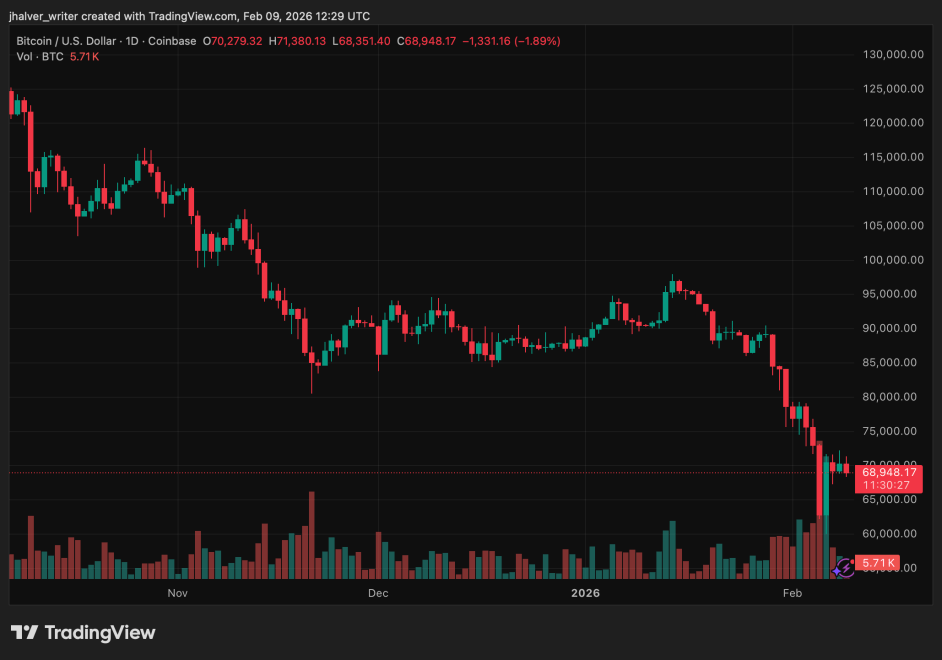
BTC's price trends sideways on low timeframes as seen on the daily chart. Source: BTCUSD on Tradingview
Portfolio rebalancing and tightening liquidity
According to the analysis of XWIN Research Japan, contributor to CryptoQuant, the main risk does not come from the outright flight of capital to the United States. Instead, global investors are rebalancing their portfolios as Japanese government bonds regain their appeal after years of extremely low returns.
Expectations of higher spending and reflation have pushed yields higher, drawing capital into Japanese domestic assets. This rotation coincided with a decline in US stocks.
Over the past week, major indices including the Nasdaq and S&P 500 have entered correction territory, reflecting tightening financial conditions and a reassessment of risk. As flows into U.S. equity ETFs slow, marginal liquidity in global markets has diminished, amplifying volatility.
Currency dynamics add another layer of pressure. The weak yen, persistent U.S.-Japan rate differentials, and continued demand for dollars have increased financing costs for leveraged trades. Historically, such conditions tend to push investors to reduce risk across multiple asset classes simultaneously.
Stock weakness spills over into Bitcoin
Bitcoin’s recent pullback fits this pattern. Despite briefly recovering to levels above $70,000 after the election, analysts note that crypto markets remain closely tied to U.S. stocks during phases of risk aversion. When stocks weaken, portfolio managers often simultaneously reduce exposure to cryptocurrencies to manage overall volatility.
Data from CryptoQuant suggests that Bitcoin’s current price weakness is less due to on-chain deterioration and more to futures unwinding and reduced leverage. Open interest declined and forced liquidations earlier this month eliminated saturated long positions, making traders more cautious in continuing rallies.
From a longer-term perspective, Japan’s political stability could further support the adoption of digital assets. Takaichi’s vast majority gives his administration room to advance tax reforms, stablecoin regulation, and Web3 initiatives later in 2026.
Related Reading: Crypto Alert: 2 Victims Lose Over $60 Million in Address Poisoning Scam
However, for now, the market remains vulnerable to global risk cycles. As capital continues to adjust to Japan’s fiscal pivot and U.S. stocks remain under pressure, near-term downside risks are likely to persist despite the post-election rebound.
Cover image from ChatGPT, BTCUSD chart from Tradingview
Editorial process as Bitcoinist focuses on providing thoroughly researched, accurate and unbiased content. We follow strict sourcing standards and every page undergoes careful review by our team of top technology experts and seasoned editors. This process ensures the integrity, relevance and value of our content to our readers.


