




Although the broader crypto market rebounded slightly, Bittensor (TAO) maintained its bearish structure. The altcoin broke the $200 support and fell to a monthly low of $193.
At the time of writing, TAO was trading at $197 following a 2.13% 24-hour decline. Trading volume also fell by 16%, indicating lower market participation.
Why is Bittensor in decline?
After the decline of the TAO, derivatives traders reduced their exposure. Therefore, futures outflows have exceeded futures inflows over the past 24 hours.
The altcoin saw $90.81 million in futures outflows and $78.64 million in futures inflows.
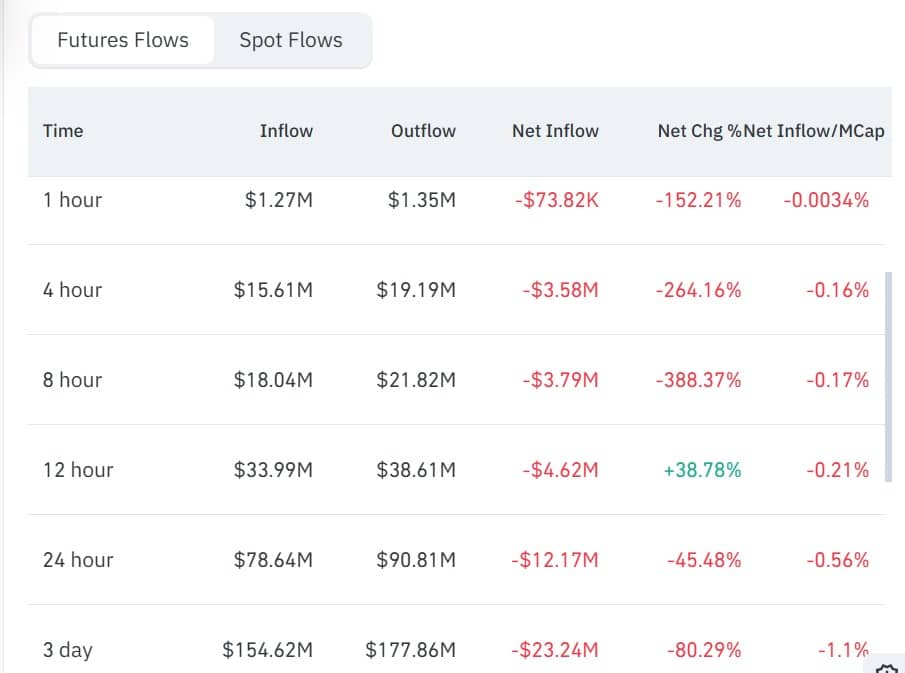
This pushed Futures Netflow down 45% to a negative $12.17 million. The decline extended a three-day trend. At the same time, Open Interest fell 1.26% to $229 million.
Together, these readings suggest that traders closed their positions as the TAO weakened. Reduced speculative activity could maintain short-term pressure on its price.
Do whales buy the dip?
Even though the TAO was decreasing, Spot market data suggested the whales remained active.
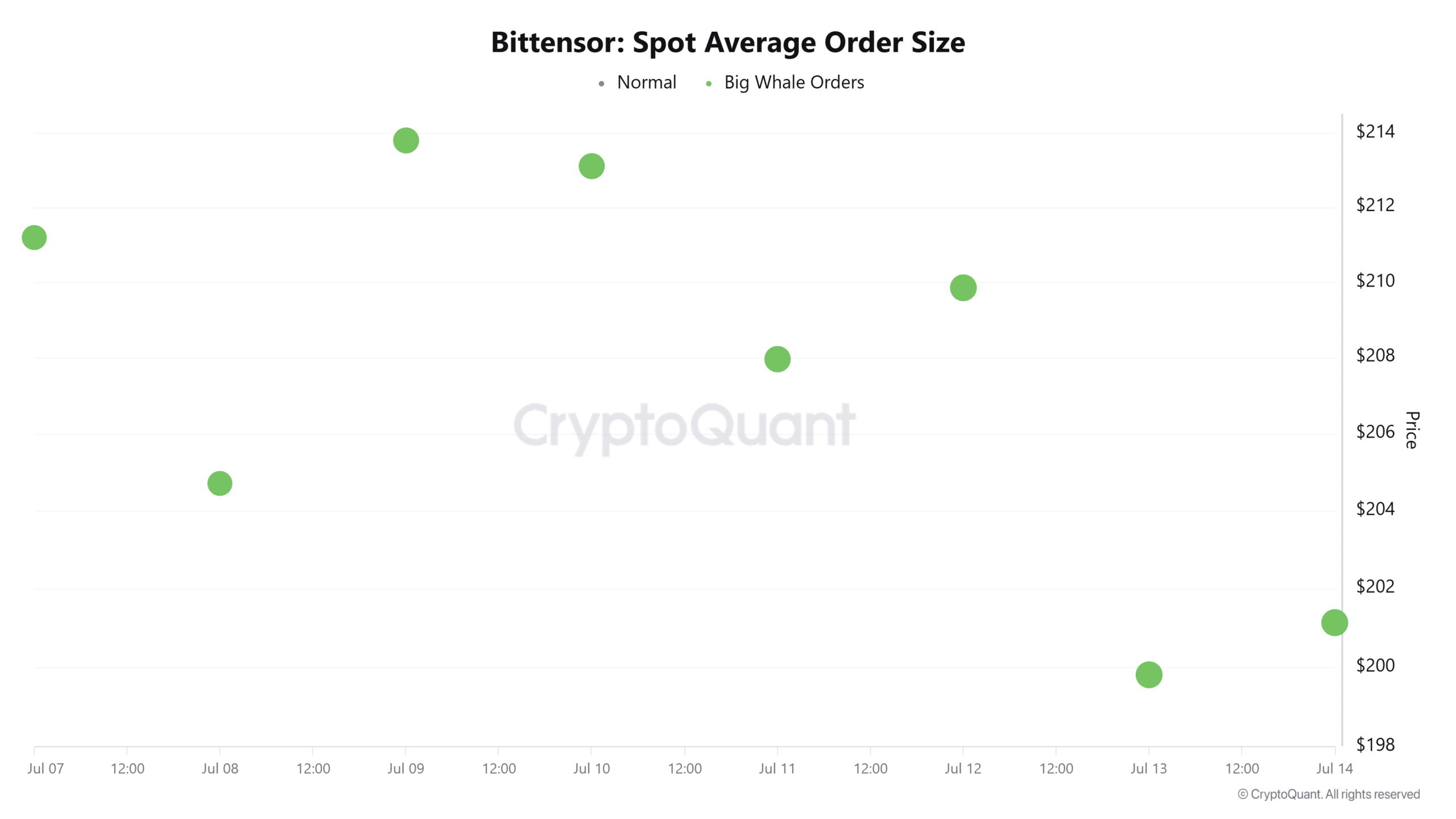
CryptoQuant’s average spot order size has seen large whale orders below $200. However, this measurement alone could not confirm their orientation.
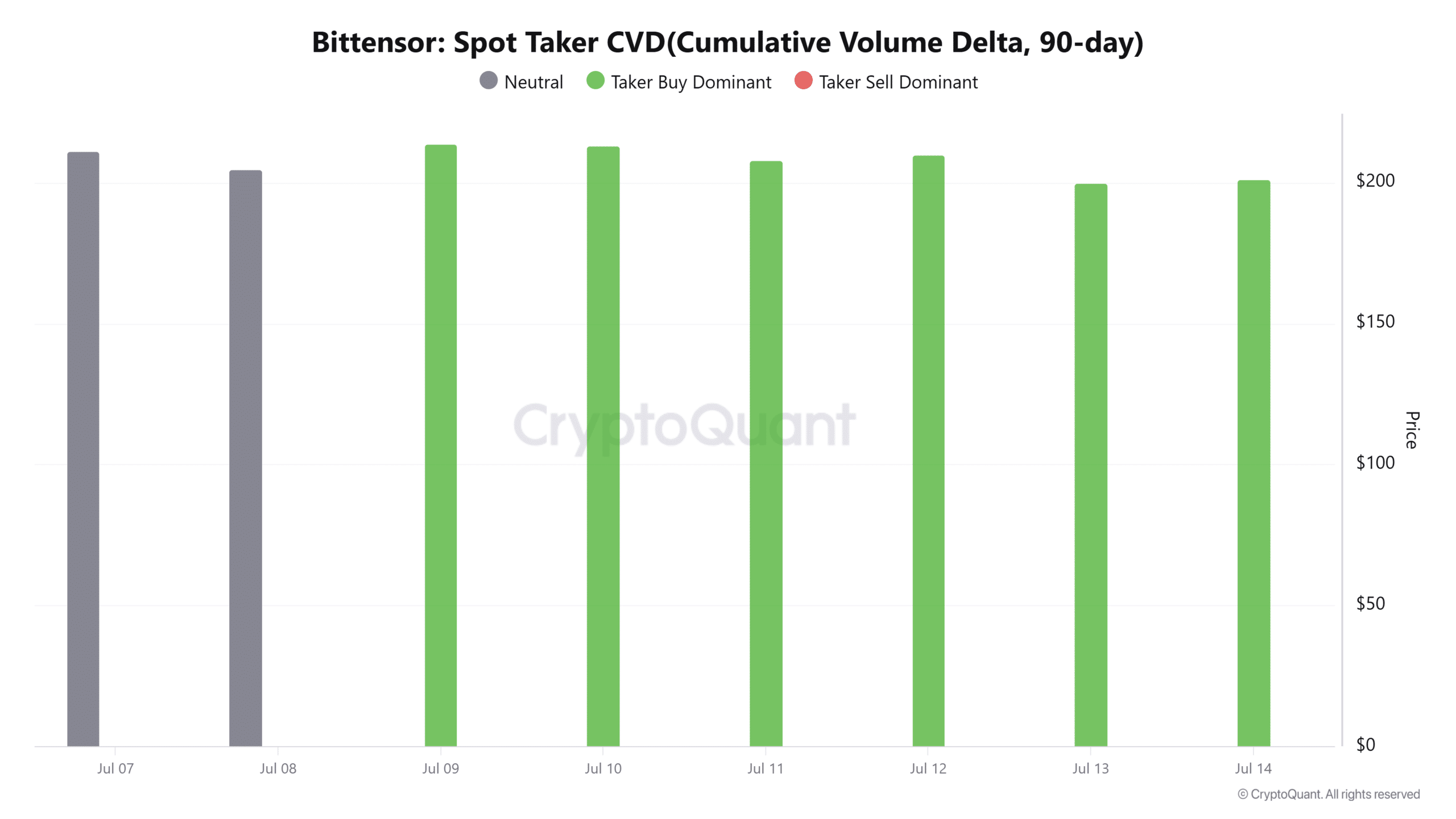
Spot Taker CVD provided clearer evidence. The indicator remained positive for five days, suggesting that market buyers held the advantage.
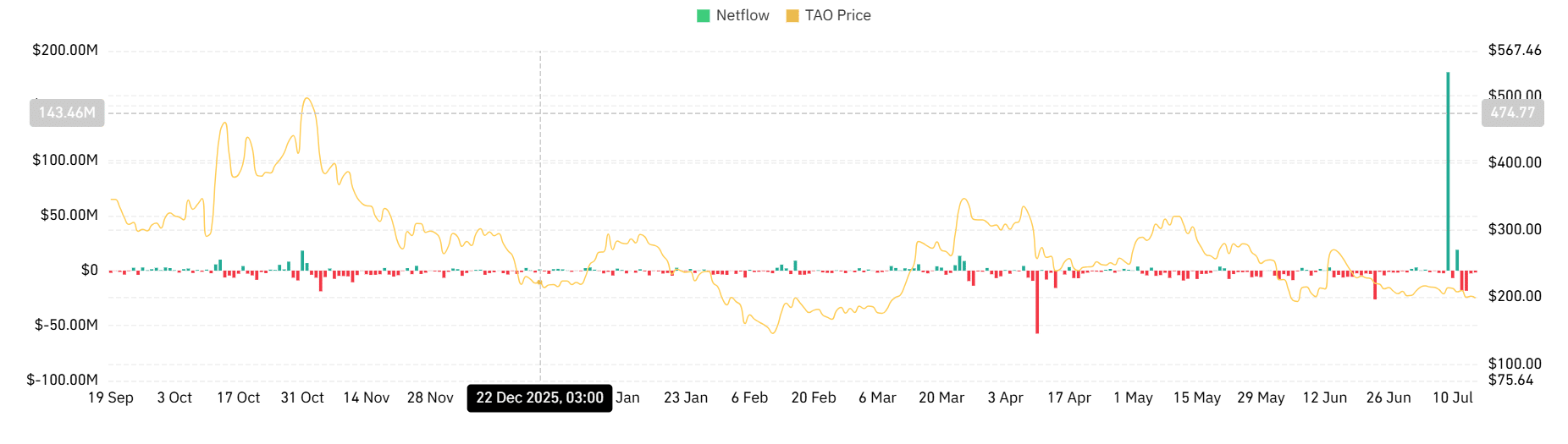
Additionally, Bittensor’s Spot Netflow remained negative for four consecutive days. The spot net flow was a negative $1.68 million, compared to a negative $2.5 million a day earlier.
A persistent negative Spot Netflow indicated that more TAO was leaving exchanges than entering. This trend could reflect accumulation or transfers to private care.
Combined with a positive Spot Taker CVD, the data strengthened the accumulation argument. However, this did not prove that whales were behind every outing.
Historically, stronger demand during periods of market weakness has sometimes preceded a price recovery.
Can TAO recover $200?
Bittensor remained caught between bearish momentum and renewed spot demand. For now, sellers appear to be in control.
The Directional Movement Index (DMI) supports this view. The positive directional indicator fell to 9.
Meanwhile, the negative directional indicator rose to 22, while the average directional index reached 23.
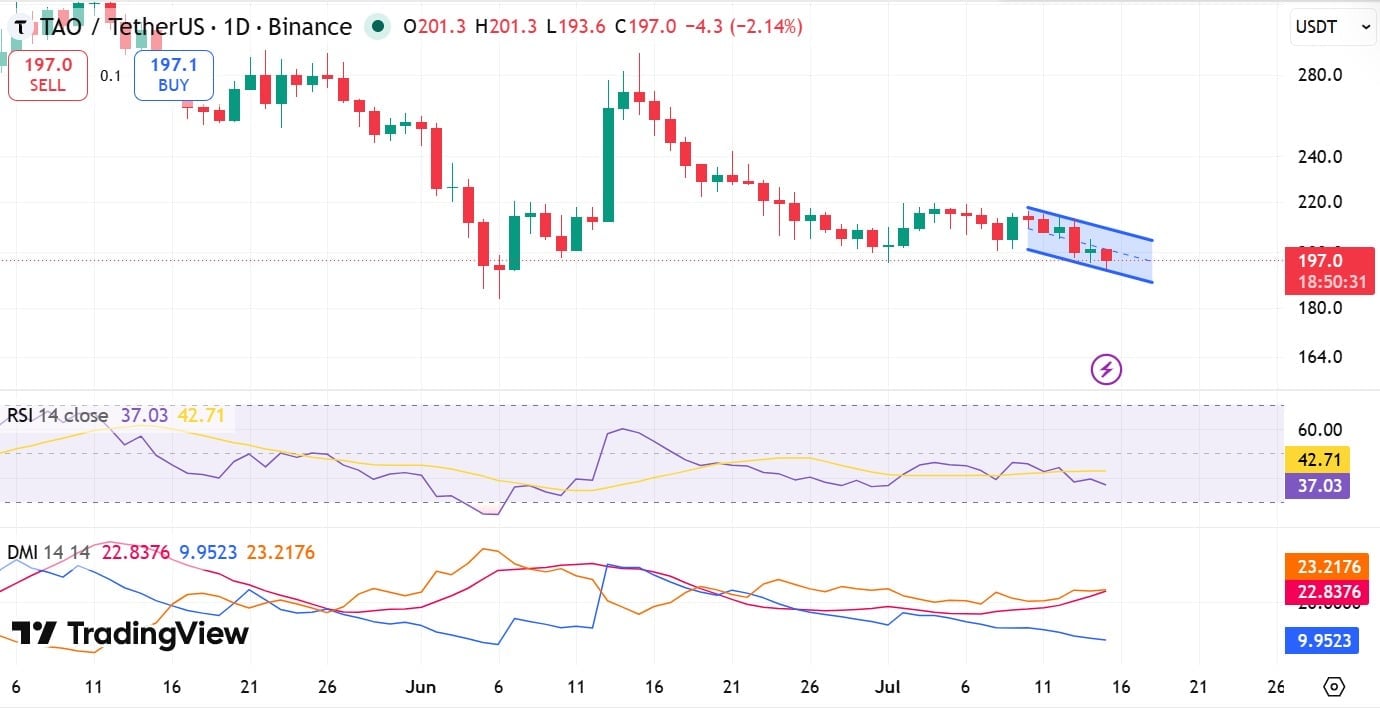
This pattern suggests that bearish momentum is strengthening. The relative strength index also fell to 37.
If the selling continues, TAO could fall below $190 and test the $186 support. However, stronger spot demand could help TAO reclaim $200. A sustainable recovery could then put $216 back in focus.
Final summary
- TAO fell below $200 because futures outflows outpaced inflows as open interest declined, suggesting derivatives traders reduced their exposure during the sell-off.
- Spot Taker’s positive CVD and FX outflows suggest accumulation.


