




XRP News: Flare Network has achieved an infrastructure milestone, integrating native support for
The mechanism is Flare’s FAssets Protocol, which uses the network’s State Connector to verify transactions on the XRP Ledger, allowing XRP to be issued as FXRP on Flare in a supersized, trustless format.
XRP in cold storage should not remain idle.
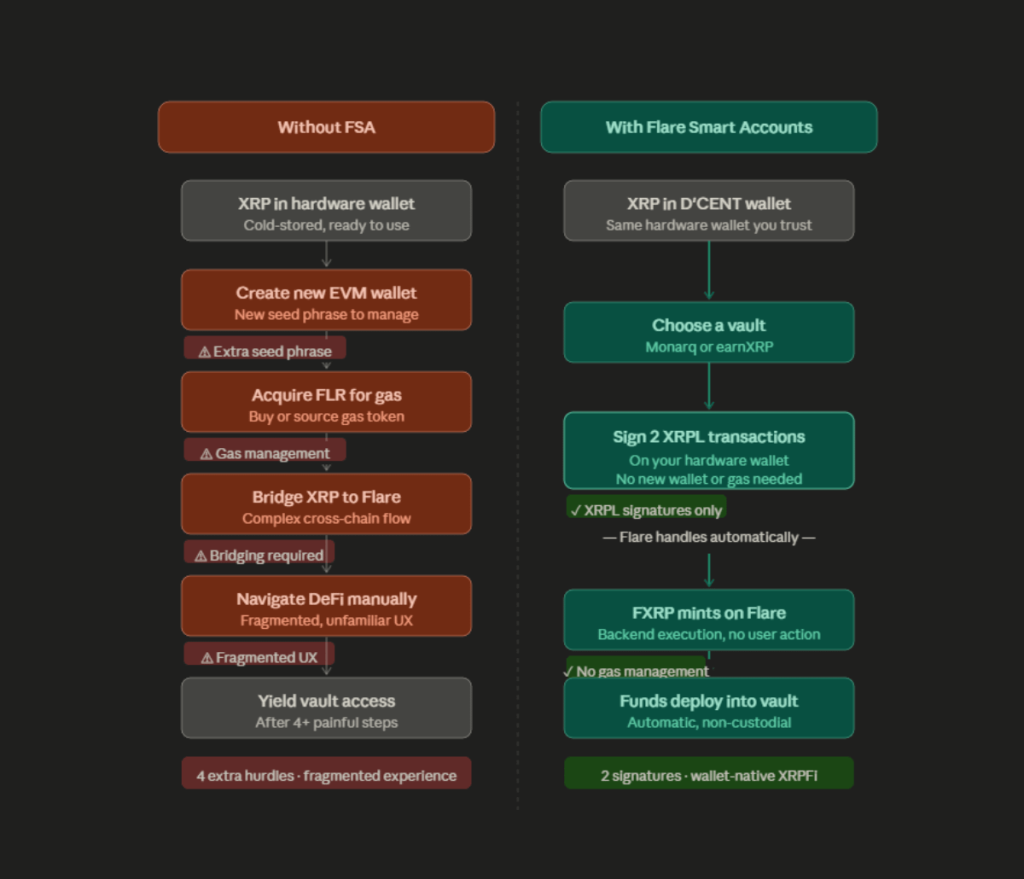
Flare Smart accounts are now available @DCENTwallets.
Two signatures on XRPL → FXRP issued → Monarq XRP Yield Vault. Self-guarded throughout the process.
$55,000 campaign reward pool for D’CENT users and early depositors. pic.twitter.com/tevApnUyBO
— Flame
(@FlareNetworks) May 19, 2026
 (@FlareNetworks)
 The structural implication is a direct response to XRP’s long-standing utility deficit: a token with significant liquidity and institutional reach that has historically been excluded from the smart contract DeFi stack.
On-chain data indicates a 20% increase in Flare’s total value locked following the integration announcement, with large wallets, those holding over 10 million XRP, identified as the main players.
The open question is whether this initial influx represents a sustainable capital migration or opportunistic positioning ahead of anticipated catalysts.
XRP holders moving assets from XRPL to Flare accept smart contract risk and bridge complexity in exchange for yield exposure that the native ledger cannot currently match. Whether the rates of return justify this trade-off and crypto liquidity deepens quickly enough to support the ecosystem is what the market is currently assessing.
Discover: The best crypto to diversify your portfolio
XRP News: How Flare FAssets and FXRP Really Work, and Why the State Connector is the Real Story
The mechanism here deserves to be understood precisely. Flare’s State Connector protocol monitors the XRP Ledger for confirmed transactions and transmits cryptographic proof of those transactions to Flare’s EVM-enabled execution layer.
When an XRP holder initiates a mint, Flare side agents provide oversized support, denominated in FLR, and FXRP is issued on a 1:1 basis against the locked
Agents receive minting and redemption fees; the excess collateral provides a liquidation buffer if FLR prices fall.
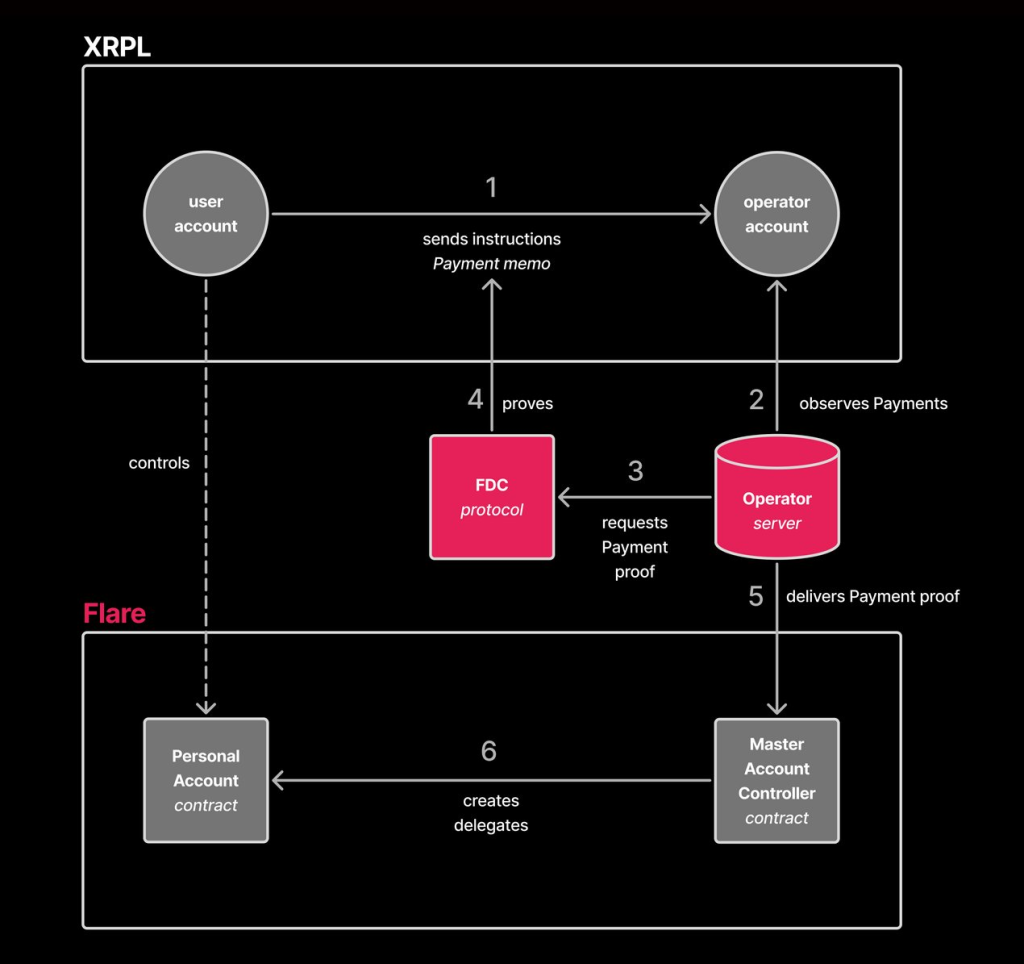
This structure, first described in Flare’s introduction to XRP DeFi, is what differentiates FXRP from wrapped token custody approaches.
There is no single bridge to compromise with; The collateral safety net is reinforced by Flare’s proof-of-stake consensus, in which 98% of the stake is held by the community and no data provider can exceed 3.3% of the total stake.
The network achieves an average block time of 1.2 seconds with single-slot finality, which is important for DeFi protocols where price feeds and liquidation triggers operate in near real-time.
Once created, FXRP becomes a composable DeFi asset. Holders can deploy it on lending protocols, provide it to automated market maker pools on SparkDex (Flare’s native DEX), or route it to yield optimizers under development as part of Flare’s developer incentive program.
The Firelight Protocol, currently being rolled out, goes a step further by introducing economically secure services, in which FXRP stakeholders ensure the security of third-party applications and earn a share of the fees paid by those applications.
Liquid staking tokens issued through Firelight act as receipts that can themselves be redeployed into additional XRP DeFi strategies, creating compound yield loops without sacrificing the base staking position.
What was previously impossible for XRP holders, namely access to a complete DeFi environment with native collaterals, decentralized price feeds via Flare’s FTSO, and programmable yield, is now accessible via a single wallet integration. This is the structural change that the TVL data reflects.
XRP is currently trading near $1.36, consolidating after a strong rally that followed the passage of the Clarity Act by the Senate Banking Committee. The token has held above the $1.30 support band for 11 consecutive sessions, a level the market considers a short-term structural floor.
Discover: Best Pre-Launch Token Sales
The article XRP News: Flare Wallet Integration Unlocks Native XRP DeFi appeared first on Cryptonews.


