



Key takeaways
- Semianalysis revealed that the $200 tier of ChatGPT Pro can deliver $14,000 of AI value.
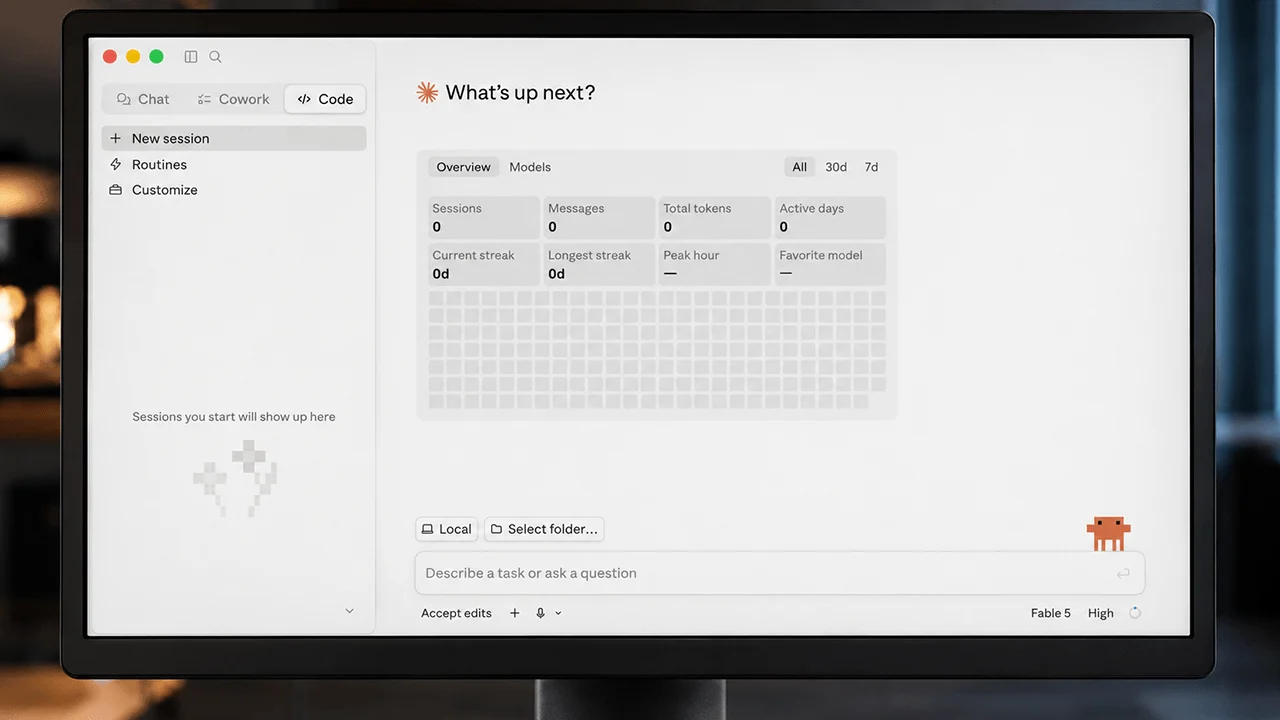
- Anthropic’s Fable 5 moves to usage credits after June 22, 2026.
- Bittensor, io.net, Akash and more could see demand as AI labs measure heavy usage.
The June 2026 report tested the consumer levels of Anthropic and OpenAI by running long-term coding and agent tasks until the weekly limits were exhausted.
The observation is clear: $200 subscriptions can behave less like ordinary software packages than like heavily subsidized IT contracts.
Unveil the hidden subsidy
According to the report, ChatGPT Pro 20x, priced at $200 per month, provided up to approximately $14,000 in estimated API equivalent token value under heavy usage. Claude Max 20x, also priced at $200, has reached up to around $8,000 in estimated API equivalent value.
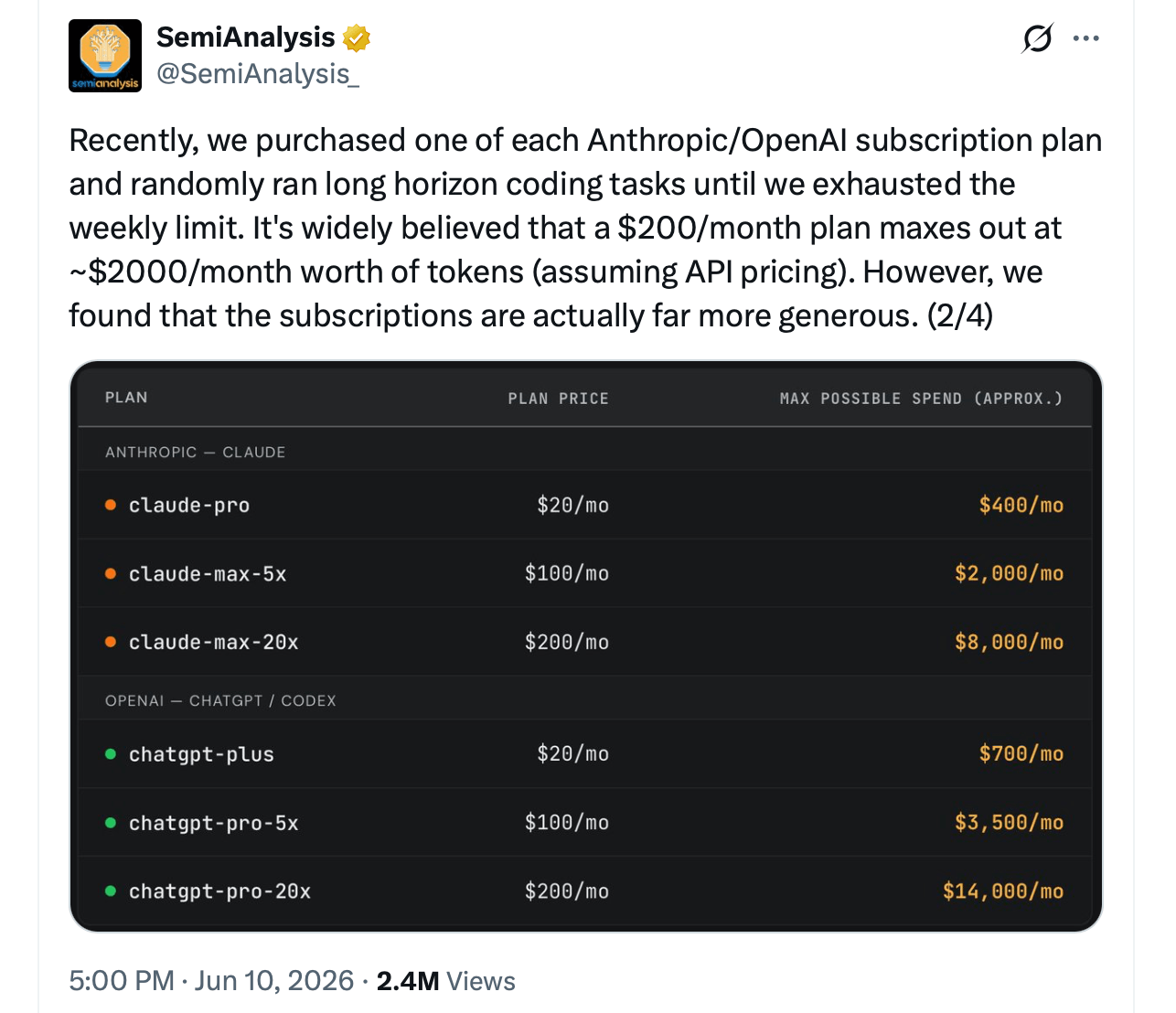
The lower levels followed the same pattern. Claude Pro at $20 was estimated at almost $400, while ChatGPT Plus at $20 was estimated at around $700. Mathematics is particularly relevant for crypto developers use AI to review code and debug smart contractscreate trading infrastructure and run agents using tools.
Semianalysis emphasized that these figures reflect the maximum quota value and not average subscriber behavior. Most customers don’t exhaust weekly limits with large codebases, multi-round debug loops, and agent workflows. Power users do it, and that’s where the economics get difficult.
Revealing the Margin Trap
Assuming an API gross margin of 75%, Semianalysis found that the economic costs of subscriptions can become negative with modest usage. At full usage, the report estimates margins at nearly 900% for Claude Max 20x and 1,650% for the top tier of OpenAI.
This creates a strategic problem for AI labs. Narrowing the boundaries too openly risks angering developers who have built daily workflows around these products. Semianalysis argues that the more likely path is more subtle: keep subscriptions attractive, but reserve the newer, more expensive models for the API, usage credit, and enterprise channels.
Anthropic’s Claude Fable 5 rollout fits this model. The Mythos Class model is included at no additional cost in seat-only Pro, Max, Team, and Enterprise subscriptions until June 22, 2026. After that, Fable 5 switches to usage credits unless capacity allows it to revert to standard plans.
Push frontier models behind the counters
This change is significant because Fable 5 costs $10 per million input tokens and $50 per million output tokens, which is double the price listed for Opus 4.8. Leaving a model with this pricing profile open under flat-rate plans would make the subsidy even harder to defend.

For crypto teams, the message is straightforward: current AI subscription arbitrage can be valuable, but it is not guaranteed to last. The next phase will likely favor hybrid usage, with subscriptions for daily interactive work and metered systems for production worker workloads.
This is where decentralized AI, often called DeAI, AI x cryptoor AI-driven decentralized physical infrastructure networks, could become more than a speculative theme. These projects aim to transform computation, inference, model access and autonomous agents into market-priced networks rather than closed systems controlled by a few laboratories.
Open the escape route for decentralized AI
The io.net project aggregates GPU capacity from data centers, miners, and independent hardware vendors for AI and machine learning workloads. Its rationale is simple: let users source through a decentralized network, while agent systems can provision GPU resources as needed.
Another DeAI project, Render Network, has moved from decentralized rendering to broader GPU-based AI workloads. Akash Network offers an open cloud for CPU, GPU and storage demand. Additionally, Nosana, built on Solana, focuses on scalable AI model inference.
Bittensor takes a different path. Its subnet system rewards miners who provide useful AI results, while validators score quality. In this model, intelligence becomes a competitive marketplace, not just a centralized product sold through a subscription or API dashboard.
Transform agents into Cryptocurrency Infrastructure
Ridges AI, Bittensor Subnet 62, is one of the clearest examples related to the Semianalysis thesis. It focuses on autonomous software engineering agents that can ingest repositories, troubleshoot issues, write code, test changes, and submit pull requests.
This makes it a direct analogue of the heavy coding workloads that generated Semianalysis’s highest subscription values. Instead of relying entirely on OpenAI or Anthropic, crypto developers could route some of the work to decentralized inference and agent networks when cost, access, or flexibility becomes more important than using the latest proprietary model.
Virtuals Protocol extends the theme to tokenized AI agents, while the Artificial Superintelligence Alliance connects Fetch.ai, SingularityNET, and related elements around autonomous agent services and decentralized AI coordination. Internet Computer and NEAR are also part of this conversation with on-chain AI execution and agent-friendly infrastructure.
Evaluate the next round of AI
The caveat is important. Many decentralized AI systems still rely on open source models, and not all workloads match the most recent pioneering systems from OpenAI or Anthropic. Latency, verification, regulatory issues and quality control remain active challenges. Of DeAI’s efforts today, only a few may succeed, and a myriad will ultimately fail.
Despite this, the direction is clear. If centralized AI companies push high-end models behind the counters, crypto-native compute and agent networks are gaining a clearer business story. They don’t need to beat every pioneer model in every task. They must offer builders cheaper, open and flexible options where centralized pricing becomes burdensome.
For investors and developers, the Semianalysis report reframes DeAI as a practical question of infrastructure. The question is not just whether AI tokens are hot. The question is whether decentralized networks can capture demand from users who have exceeded subsidized consumption plans.
The current offer is interesting for heavy users, especially coders. But if the most advanced models continue to move toward usage credits and API pricing, the crypto AI sector has a timely opening: selling computation and intelligence on an open market before the subsidies disappear.


