



The Bank of Thailand (BOT) has launched a massive anti-money laundering offensive targeting USDT stablecoin transactions, cash flow and gold trading – and the scale of the enforcement suggests this is not a routine compliance update.
The central bank is working alongside the Thai SEC to conduct in-depth audits of high-volume stablecoin activity, with Tether’s USDT directly in the crosshairs. This is Thailand’s most aggressive crypto regulation move to date, driven by a gray economy that saw an estimated $3.4 billion in fraudulent losses in 2025 alone.
Central Bank of Thailand and SEC investigate high-value USDT transactions
According to The Nation, the Bank of Thailand will require people depositing 5 million THB ($150,000) or more in cash to verify the source of the funds. It also works with the Thai SEC to review large… pic.twitter.com/ysl2dEv4jk
— Wu Blockchain (@WuBlockchain) July 12, 2026
The central tension this story highlights is that Thailand wants to keep crypto trading legal while simultaneously treating stablecoin flows as a systemic money laundering risk. It’s a tough line to maintain, and the burden of compliance is about to fall on every exchange, bank and gold store in the country.
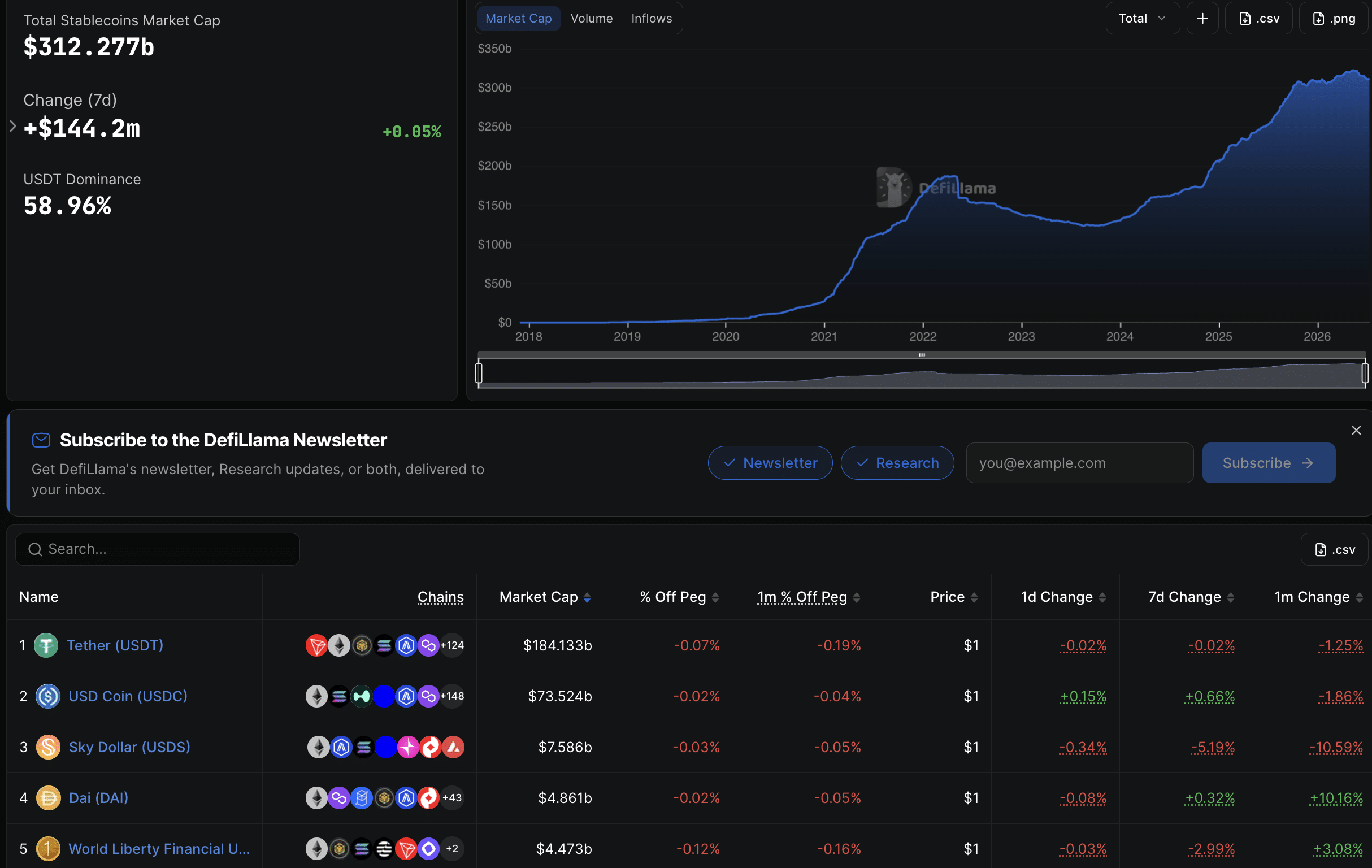
This news comes as USDT sits comfortably as the third-largest digital asset, behind Bitcoin and Ethereum, with a supply of 184 billion tokens and a market capitalization of $189 billion, according to data from CoinGecko.
EXPLORE: Best Crypto Presales with 1,000x Upside Potential
What the BOT actually does and why USDT is the target
(SOURCE: DéfiLlama)
Stablecoins, particularly USDT, have become a crucial tool for illicit cross-border financing due to their stable value and rapid settlement, unlike the volatile Bitcoin or Ethereum. The Bank of Thailand (BOT) and the Thai SEC are responding by auditing high-volume USDT transactions and expanding compliance requirements for commercial banks.
This includes cash networks and exchange offices. Cash deposits of more than 5 million baht ($150,000) now require a full declaration of the origin of the funds, and exchanges of large notes without clear reasons are reported.
BOT Governor Vitai Ratanakorn stressed that these measures reflect a long-term strategy rather than short-term solutions. The gray money problem is significant in Thailand, with fraudulent call centers affiliated with China reportedly causing $3.4 billion in losses in 2025.
The USDT crackdown aims to combat these operations, which benefit from the stablecoin’s ability to facilitate cross-border transactions. The Himalaya Exchange fraud case highlights the scale of these networks and the challenges of enforcing them.
DISCOVER: The best Meme Coin ICOs to invest in 2026
Bitkub in the crosshairs and the 40% problem of Stablecoin
CRYPTO NEWS: Thailand is stepping up oversight of large crypto transactions, with regulators putting more emphasis on USDT (Tether) as part of broader anti-money laundering (AML) efforts.
The Bank of Thailand and the Thai Securities and Exchange Commission (SEC) are… pic.twitter.com/T1TsBBc0YC
– Hata (@hataglobal) July 13, 2026
 CRYPTO NEWS: Thailand is stepping up oversight of large crypto transactions, with regulators putting more emphasis on USDT (Tether) as part of broader anti-money laundering (AML) efforts.
Bitkub, Thailand’s largest crypto exchange, handles around $26 million in daily volume, almost 40% of which is in forex, particularly the USDT/THB pair. Regulators are reviewing this AML stablecoin risk concentration.
Although cryptocurrency trading is legal in Thailand, using digital assets or stablecoins for payments is prohibited. The Bank of Thailand (BOT) has approved USDT and USDC for transactions, but maintains the payment ban, distinguishing the legality of transactions from their use as currency.
Currently, Thai platforms have frozen more than 10,000 accounts suspected of money laundering, echoing a broader 2025 crackdown in which 3 million accounts were frozen, affecting many legitimate users. There is a risk of overcorrection and the ability of the BOT to avoid repeated problems is called into question.
This trend is not unique to Thailand; South Korea strengthened withdrawal rules from exchanges and France added reporting requirements for self-hosted wallets. Brazil’s Operation Veil of Maya highlights global efforts to combat crypto-related money laundering amid growing illicit activity.
EXCLUSIVE: Join 99Bitcoin’s 1,000 USDT Airdrop on ByBit
What comes next for exchanges and retail traders
Thailand’s compliance architecture for digital asset operators extends beyond audits, imposing significant anti-money laundering (AML) obligations. Thailand’s SEC is considering expanding shareholder approval rules to review major backers of crypto companies to close loopholes exploited by hidden sponsors.
Tether has cooperated with law enforcement by freezing USDT, which could lead to blacklists based on BOT audit results, permanently affecting any flagged wallets. For retail traders, this translates to stricter KYC verification, enhanced transaction monitoring, and potential account restrictions based on reported on-chain patterns.
It is also important to monitor the evolving regulatory landscape for stablecoins, particularly in relation to that of the United States. The BOT’s campaign is far-reaching, raising questions about whether it will effectively dismantle gray money operations or simply shift high-risk flows to less regulated channels. The true impact will become clearer when audit data results in prosecutions rather than simply freezing accounts.
EXPLORE: Best Crypto Presales with Asymmetric Upside Potential in Today’s Market
The article Major Anti-Crypto Crackdown in Thailand: We’re Coming for Your Stablecoins appeared first on 99Bitcoins.


