




Cardano News: Charles Hoskinson defends a 1,096 BTC allocation from Cardano’s first foundation structure, an amount worth approximately $454,000 when transferred in March 2016 and approximately $70 million at current prices.
Hoskinson, speaking in a Weekend AMA video focused on governance and treasury management, presents it as payment for a legitimate audit of the original ADA token crowdsale.
The problem lies in asset appreciation: a plausible 2016 expense became a $70 million line item with no public paper trail.
Thomas Braziel, founder and managing partner of 117 Partners, doesn’t accept the narrative at face value.
BREAKING: Charles Hoskinson appears to reveal that Charles/IOHK received 54,000 BTC from initial Cardano ICO deals.
It is :
• ~50% of the entire raise of 108,844 BTC
• ~$20 to $25 million at 2015-2016 prices
• ~$3.6 BILLION at current BTC priceWhile discussing the… pic.twitter.com/1dk7h8UIl2
– Thomas Braziel (@Bkclaims) June 15, 2026
 BREAKING: Charles Hoskinson appears to reveal that Charles/IOHK received 54,000 BTC from initial Cardano ICO deals.
Braziel wants invoices, service contracts, corporate approvals, payment records and a custodial trail showing which entities held the private keys.
His position was clear: “The question was never whether audits cost money. The question was where 1,096 BTC went, who received them and why.” This gap between Hoskinson’s explanation and the verifiable documentation is at the root of the dispute – and it is becoming one of the most visible crypto governance disputes of 2026.
Discover: The best crypto to diversify your portfolio
Cardano News: Hoskinson’s Audit Defense, Three Evaluators, 2016 BTC Allocation
Hoskinson’s account is specific. He traces the 1,096 BTC to a March 2016 request from Michael Parsons, then chairman of the early Isle of Man Cardano Foundation.
The allocation was intended to cover a full audit of the ADA crowdsale, a multi-jurisdictional fundraiser that ran from October 2015 to January 2017 and raised the majority of its capital from Japanese investors, totaling approximately 108,844.5 BTC in four rounds.
While Bitcoin closed around $414 on March 13, 2016, the 1,096 BTC translated to about $454,000, not an implausible figure for complex, multi-layered international compliance work. Hoskinson says the bill was split between three appointed reviewers: Parsons, John Maguire and Bruce Milligan.
Steelman’s version of his position is valid: an audit fee of $454,000 for a cross-border token sale with significant retail exposure to Japan is within the range of defensible professional fees for that era.
The problem is that the reasonableness of 2016 does not close the question of evidence for 2026. Hoskinson provided a narrative. He has not yet provided any documents.
Braziel’s claims: what the paper trail must show
Braziel’s background is important here. He’s a bankruptcy claims investor, someone professionally accustomed to tracing asset flows through dissolved entities and incomplete records.
He began investigating after the official dissolution of the Isle of Man Foundation in December 2025, a dissolution which eliminated one of the main repositories of relevant historical documents.
Its demands are concrete: official invoices and service contracts from Parsons, Maguire and Milligan; board approvals authorizing payment; and on-chain or ledger evidence showing which wallets received the 1,096 BTC and when.
He also questions whether a $454,000 audit bill, paid entirely in Bitcoin, split into three parts, complies with standard corporate auditing practices for that period, stating that “the numbers just don’t seem to add up.”
Braziel made clear he was not alleging theft or fraud. This is strictly a transparency and recordkeeping investigation.
This framework deserves to be taken at face value, but it does not narrow the evidence gap. Former employees have reportedly contacted Braziel privately, indicating he is not simply an outside observer pushing for a closed case.
Founding of the Isle of Man, Cardano governance and why the dissolution matters
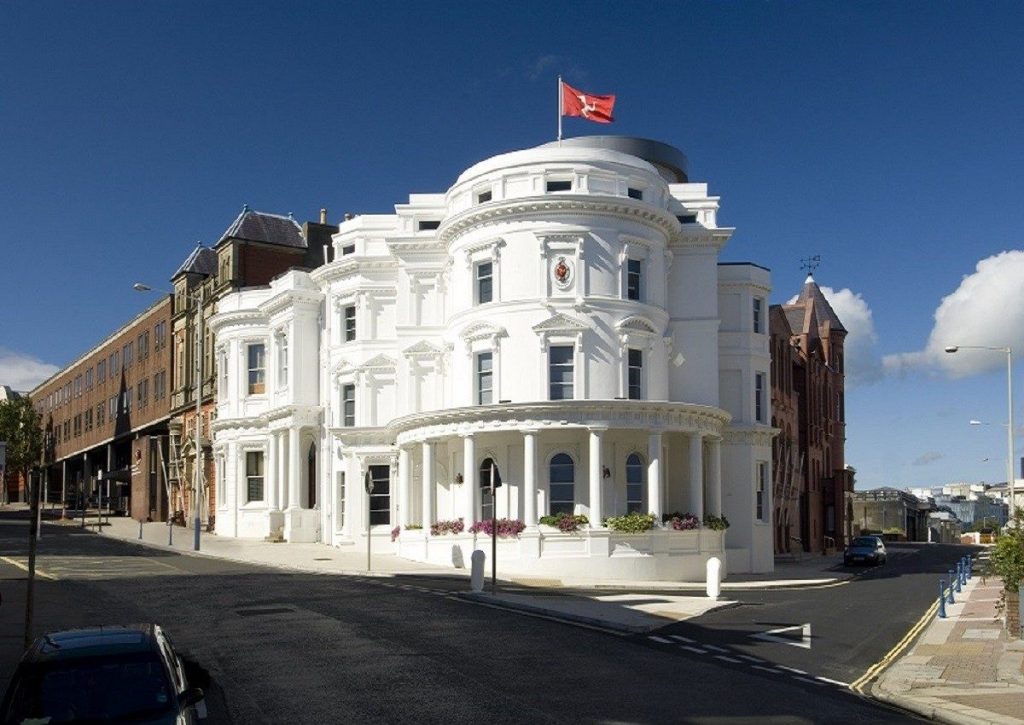
The Isle of Man Foundation was one of the original holding structures for the first profits from the Cardano crowdsale. The Switzerland-based Cardano Foundation received a separate tranche, approximately 7,168 BTC, while the Isle of Man entity held the share that includes the disputed 1,096 BTC.
The formal dissolution of the Isle of Man Foundation in December 2025 means that the entity which would have been the primary record keeper no longer exists as a legal structure.
“You can dissolve an Isle of Man foundation under company law, but you can’t dissolve blockchain history. Closing the Manx entity creates a dangerous accountability vacuum regarding the 1,096 BTC,” explained Samuel Cooling, a financial journalist based in the Isle of Man.
“As a jurisdiction, the Isle of Man prides itself on its compliance and transparency; therefore, it is highly unusual to see a legacy structure disappear without a clear and public handover of historical records. The onus now falls squarely on the Swiss Cardano Foundation to prove that this transition was not a corporate attempt to demonstrate historical transparency.”
This is a lack of accountability, regardless of whether the underlying payments were legitimate. Community members have argued that the Cardano Foundation, the successor to the Isle of Man structure, now takes responsibility for producing all surviving historical records.
This dispute is not occurring in isolation: Cardano has already faced a separate controversy surrounding a 318 million ADA transaction from 2021, which resulted in a 128-page independent audit by McDermott Will & Emery and BDO that cleared Hoskinson of embezzlement.
This audit raised baseline expectations for documentary evidence of historical fund movements.
Hoskinson’s criticism of ongoing governance discussions on X is noted; his call for “effective conversation” on Discord and structured forums is reasonable in principle. But telling critics to abandon X while refusing to publish the source materials does not resolve the underlying issue.
Discover: the best token presales
The post Charles Hoskinson relies on $70 million BTC payment from Manx entity 2016: Critics want paper trail appeared first on Cryptonews.


