





Eric Trump, co-founder and chief strategy officer of American Bitcoin Corp., has revealed the conditions under which he would sell Bitcoin — and the threshold he set is so extreme that it amounts to a declaration that, in any foreseeable market scenario, he would not sell.
Speaking in an interview for the Bonnie Blockchain channel published on May 12, Trump was directly asked about the circumstances that could force American Bitcoin to liquidate its holdings. His answer was unambiguous.
Selling would require something “beyond catastrophe,” according to the interview — a framework that places the selling threshold so far outside of normal market volatility, regulatory pressure or even prolonged bear markets that it functions less as a risk management policy than as a philosophical commitment to permanent accumulation.
The Two Races – and Why Selling Bitcoin Loses Both
The broader context behind Trump’s never-sell stance is the dual competitive framework he laid out in the same interview. According to Trump, the Bitcoin cash space is defined by two simultaneous races: one for the largest total Bitcoin holdings and one for the lowest possible acquisition cost. American Bitcoin, he argued, competes in both – and Bitcoin selling immediately loses ground in the first race while undermining the entire logic of the second.
According to Trump’s interview, the company’s north star metric is growth in “satoshis per share” – a measure of how much Bitcoin each outstanding share of ABTC represents. Each Bitcoin sold dilutes this figure. Every Bitcoin mined and held makes it worse. The accumulation model only works if the coins remain, making the “beyond catastrophe” sales threshold not a rhetorical flourish but a structural requirement of the strategy itself.
The Saylor reference – and the divergence
Trump acknowledged Michael Saylor’s role in creating the Bitcoin treasury category, describing him as a visionary and praising Strategy’s approach, according to the interview. But he made a clear distinction. Saylor recently suggested that Strategy could sell Bitcoin to help fund dividend payments – a hint of flexibility in the accumulation model that Trump appears unwilling to replicate.
American Bitcoin, he clarified, follows a stricter retention framework. While Strategy accumulates primarily in capital markets and has reported some exit flexibility, ABTC accumulates via mining – at a cost it says is about 53% below the spot price – and is holding steady without exception, according to the interview.
The distinction is important in how investors read the two companies. The never-sell attitude of a mining-integrated treasury company is more operationally credible than the same attitude of a pure accumulator, because the marginal cost of each new coin is structurally lower and the balance sheet pressure for monetization is reduced accordingly.
For the nascent sector’s growing cohort of Bitcoin cash companies, Trump’s “beyond catastrophe” framework serves as a crucial benchmark — the clearest long-term accumulation commitment a publicly traded executive has recorded this cycle. Whether the market will reward this belief or punish rigidity will depend on how Bitcoin is traded over the next few years.
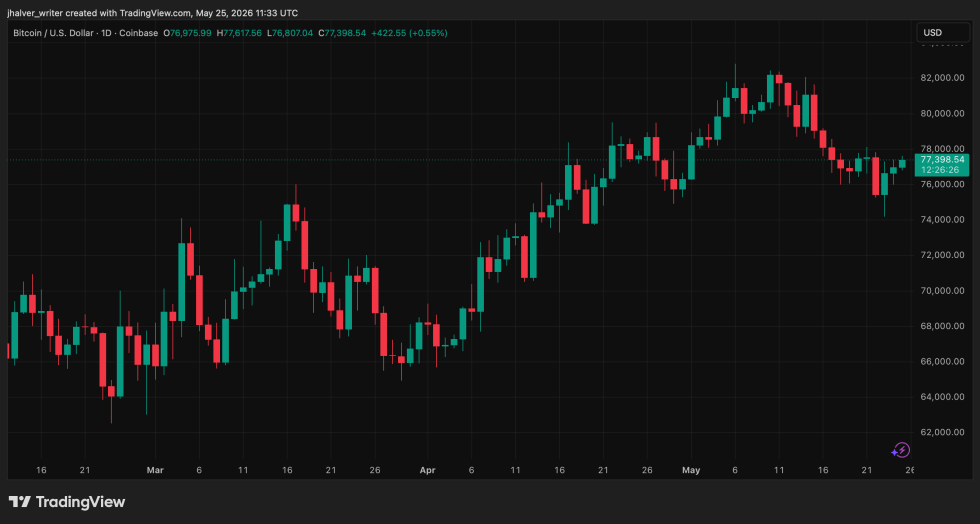
BTC's price trends to the upside, as seen on the daily chart. Source: BTCUSD on Tradingview
As of this writing, Bitcoin is trading at around $82,000, with American Bitcoin’s treasury holding over 7,000 BTC as the company pursues what its co-founder has now publicly described as a hardcore accumulation strategy.
Cover image of Grok, BTCUSD chart from Tradingview
Editorial process as Bitcoinist focuses on providing thoroughly researched, accurate and unbiased content. We follow strict sourcing standards and every page undergoes careful review by our team of top technology experts and seasoned editors. This process ensures the integrity, relevance and value of our content to our readers.


