




Fidelity Investments on June 15 launched the Fidelity Reserves Digital Fund (FYMXX), a government money market fund created specifically to hold stablecoin reserves under the GENIUS Act, joining a growing line of traditional finance giants rushing to own the plumbing of the regulated stablecoin economy.
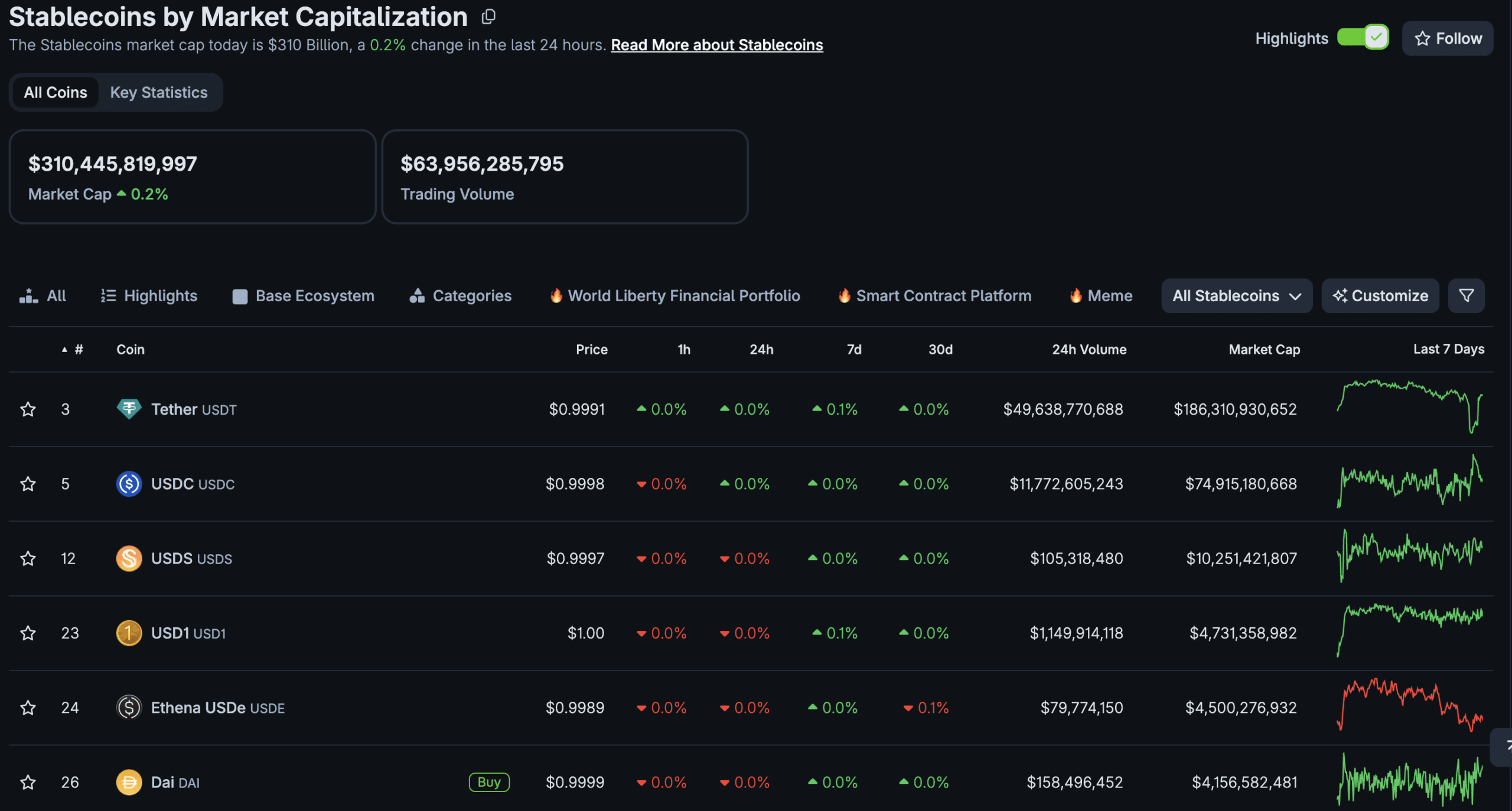
Currently, the total stablecoin market capitalization stands at over $315 billion, according to data from DefiLlama. Tether’s USDT is the leading stablecoin, with a market capitalization of $186 billion, making it the third largest digital asset overall.
Circle’s USDC stablecoin is the second largest of its kind, with a market capitalization of nearly $75 billion, making it the fifth-largest digital asset by market capitalization, according to CoinGecko data.
Fidelity Launches GENIUS Act Ready Stablecoin Reserve Fund
Fidelity has launched a new money market fund designed specifically for stablecoin issuers.
The Fidelity Reserves Digital Fund launched on June 15 and invests only in reserve assets permitted under the GENIUS Act… pic.twitter.com/DQEgW6AthV
– BSCN (@BSCNews) June 19, 2026
GENIUS Act News: What is FYMXX and how does it work?
The fund is structured as a Rule 2a-7 government money market fund – the same type of SEC-regulated vehicle that has long underpinned institutional cash management, but specifically designed for stablecoin issuers operating as Permitted Payment Stablecoin Issuers (PPSIs) under the GENIUS Act, which was signed into law in July 2025 as the first comprehensive federal framework for payments stablecoins in the United States.
FYMXX invests exclusively in GENIUS-permitted reserve assets: U.S. Treasury bills, notes and bonds with maturities of up to 93 days, cash and call-out repurchase agreements backed by Treasury bills. This ultra-short duration profile keeps interest rate risk to a minimum and meets the daily and weekly GENIUS Act liquidity thresholds.
The fund targets a net asset value (NAV) of $1.00, has a management fee of 0.25% and requires a minimum investment of $1 million from institutional investors – although Fidelity reserves the right to waive this floor.
Fidelity’s own prospectus language is unambiguous about the target customer: “The shares of the fund are expected to be held primarily by one or more stablecoin issuers, as all or part of the reserve assets that support the stablecoins issued to their customers.” »
A Federal Register notice also confirms that the fund may hold USDC, Circle’s dollar-pegged stablecoin, as its sole stablecoin exposure, highlighting USDC’s strengthened institutional position in the post-GENIUS regulatory era.
4/ Fidelity’s Reserves Digital Fund (FYMXX) hit the market on June 18.
No corresponding press release.
No external seed investors have been disclosed. All proposed shares held by Fidelity and its affiliates, as described in the prospectus.The quietest entry in the category yet.
— Sandmark (@sandmark_news) June 18, 2026
DISCOVER: The best Meme Coin ICOs to invest in 2026
TradFi’s Race to Control Stablecoin Reserve Infrastructure
The launch of Fidelity marks its entry into the competitive arena of top asset managers. Following State Street’s introduction of a GENIUS-aligned stable reserve money market fund on June 8, BlackRock, Goldman Sachs and BNY Mellon also launched similar funds in 2024-2025, with BlackRock’s Circle Reserve Fund predating the GENIUS Act.
The Crypto Council for Innovation sees these funds as key to connecting traditional finance with compliant, dollar-backed stablecoins, suggesting competition will improve transparency and risk management.
Although some view Fidelity’s entry as a catch-up, its scale could position it as a leader once major payments stablecoins adopt GENIUS-compliant frameworks over the next 12 to 18 months.
However, critics warn of potential centralization risks and regulatory challenges that could arise from concentrating stablecoin reserves among a few large U.S. managers, raising concerns among DeFi participants about the implications of stablecoin regulation on on-chain capital flows.
(SOURCE: CoinGecko)
EXCLUSIVE: Earn $10 USDC via Binance Signup
What’s Next for Stablecoin Regulation and Reserve Management?
The passage of the GENIUS Act formalized existing practices, allowing USDC and others to use SEC-registered 2a-7 funds as backing for stablecoins, thereby establishing a statutory standard. With management fees of 0.25% in a market expected to reach trillions, asset managers stand to gain significantly.
The next step is tokenization, where blockchain-native money market fund share classes could emerge once SEC guidance is provided, enabling compliant on-chain use.
Large companies like BlackRock and Goldman Sachs are already dabbling in yield-generating crypto products, illustrating the integration of traditional finance into the digital asset space.
For stablecoin holders, this means their reserves are managed by the same companies as their 401(k) funds, resulting in greater regulation, transparency, and integration than ever before in crypto history.
EXPLORE: Best Crypto Presales with Asymmetric Upside Potential in Today’s Market
The post Here’s How Fidelity Funds Are Getting Ahead of GENIUS Act appeared first on 99Bitcoins.


