



Key takeaways
- Iran collects $2 million per ship in the Strait of Hormuz, using 100% of those funds for its treasury.
- Some of these payments are not settled in barter or cash, but in USDT.
- The US OFAC has warned maritime companies about the risk of sanctions related to interacting with Iranian digital assets.
Iran says Hormuz toll brings in up to $2 million per ship, with some payments made to aid Stablecoins
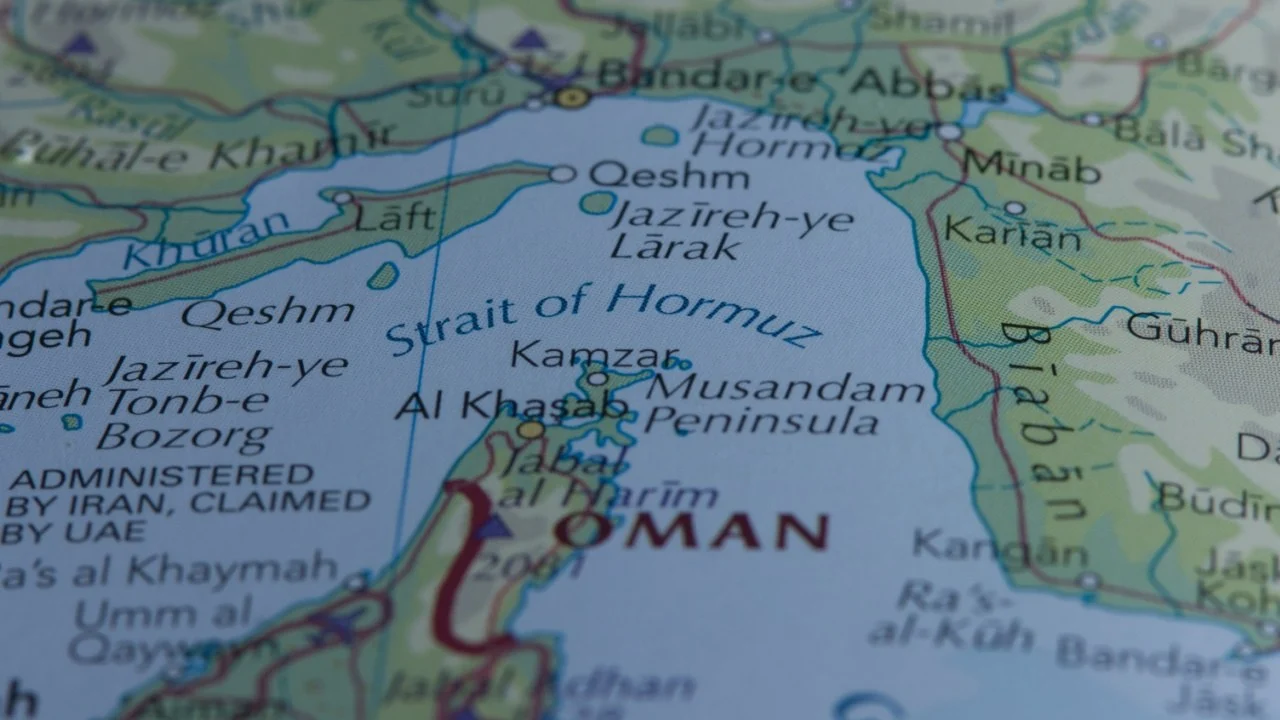
The geopolitical situation in Iran and the blockade of the Strait of Hormuz have led to crypto into the spotlight as an alternative payment method, enabling transactions that would otherwise be impossible to execute.
Recent reports have confirmed that Iran currently receives on average between $1.5 million and $2 million per ship passing through the Strait of Hormuz, a chokepoint concentrating up to 25% of global crude traffic. These figures would be consistent with previously disclosed payment structures and with the crude shipping capacities of some very large crude carriers (VLLCs).
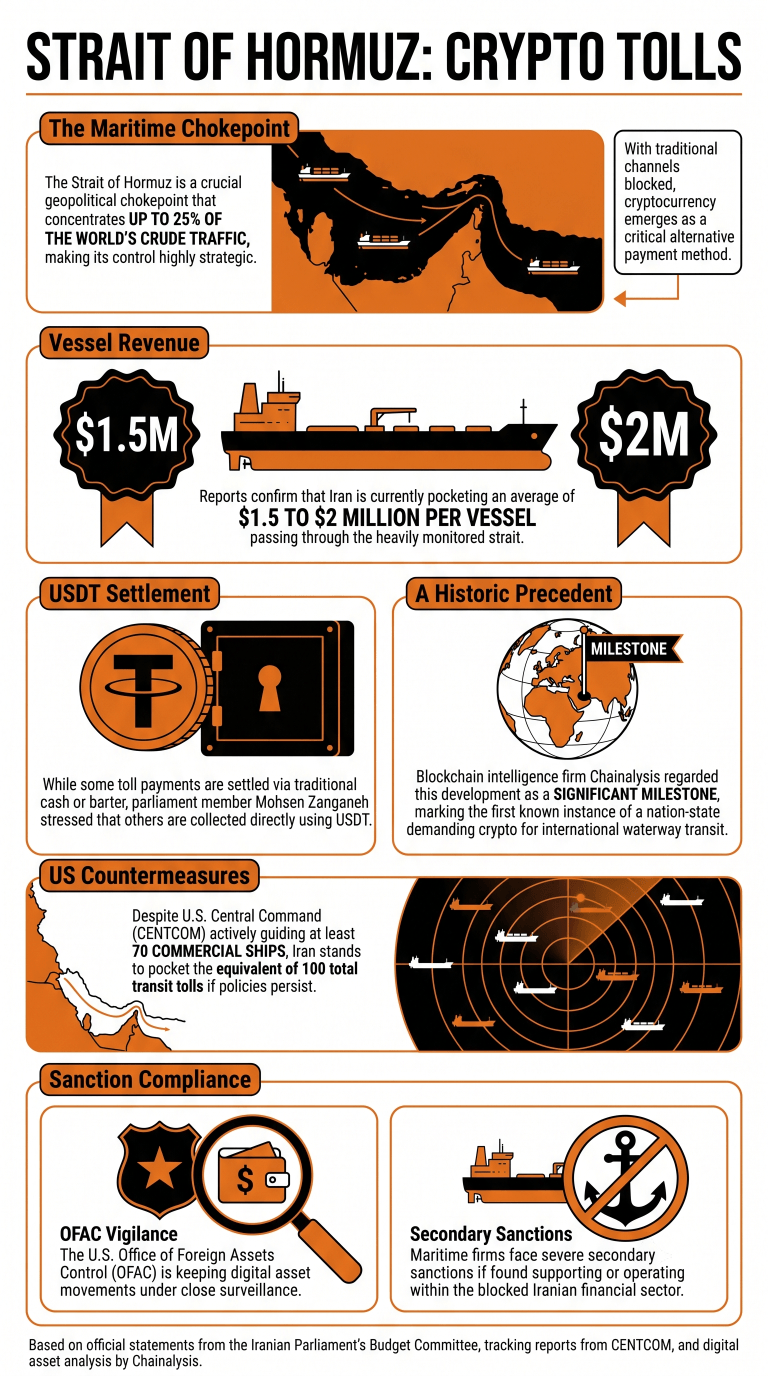
While some of these payments were settled in cash or by barter, Mohsen Zanganeh, a member of the parliamentary budget and planning committee, pointed out that others were also settled by barter. USDTthe largest stablecoin by market capitalization.
Funds from these operations were deposited into the Treasury in accordance with the budget law and spent in designated areas.
Despite the ongoing blockade, US Central Command (CENTCOM) has reportedly guided at least 70 commercial vessels through Hormuz in recent weeks. However, if Iran manages to maintain its toll policy after the end of the conflict, it will pocket the equivalent of 100 ships transiting the strait.
At the time, the use of digital assets in this case was considered “an important step” by Chainalysis, stating that it would “the first known example of a nation-state demanding cryptocurrency as payment for transit through an international waterway.
Nonetheless, the use of digital assets, including USDT and BTC, is still under US scrutiny. The US Office of Foreign Assets Control (OFAC) has warned that shipping companies could face secondary sanctions if they integrate with blocked Iranian entities. “for operating or supporting the sanctioned Iranian financial sector.”


