




Monad’s DeFi ecosystem has seen a significant increase in liquid assets since November, reflecting an increase in the number of participants in this environment.
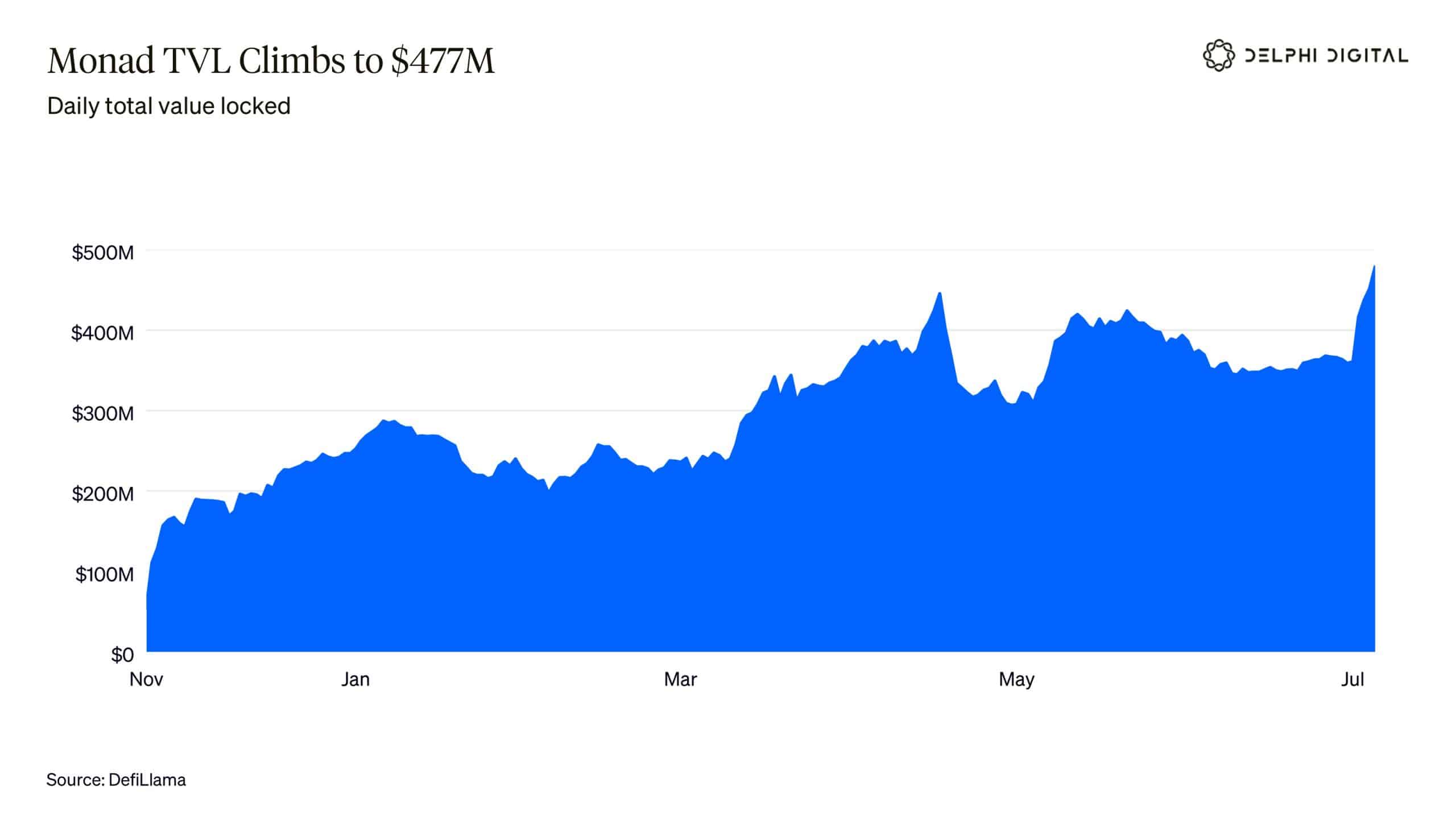
The total value locked (TVL) within the Monad Network (MON) increased from around $80 million in November to a high of $477 million. This increase indicates significant capital flows to Monad.
This growth started at a moderate pace, then accelerated rapidly from March onwards. In April, the network’s TVL exceeded $400 million.
Most recently, Aave (AAVE) V3 launched on Monad and attracted almost $100 million in deposits.
Additionally, MetaMask chose to have the home network for its “money account” on Monad. Despite this, continued growth in liquidity is an important indicator of potential long-term success.
However, the actual amount of liquidity does not necessarily translate into sustainable network usage.
It is possible that some of the current liquidity is incentive capital. Thus, the continued growth rate of wallets, the influx of bridges and the increasing usage of stablecoins indicate the extent to which increased liquidity is likely to drive long-term usage of the network.
Aavenomics begins to shape capital flows
It is becoming increasingly evident that capital is becoming more selective in crypto markets. As a result, liquidity will continue to concentrate around protocols offering stronger long-term value propositions.
This change has become increasingly visible within Aave, where deposits increased by more than $1.3 billion in the first four days of July ahead of Aavenomics 3.0.
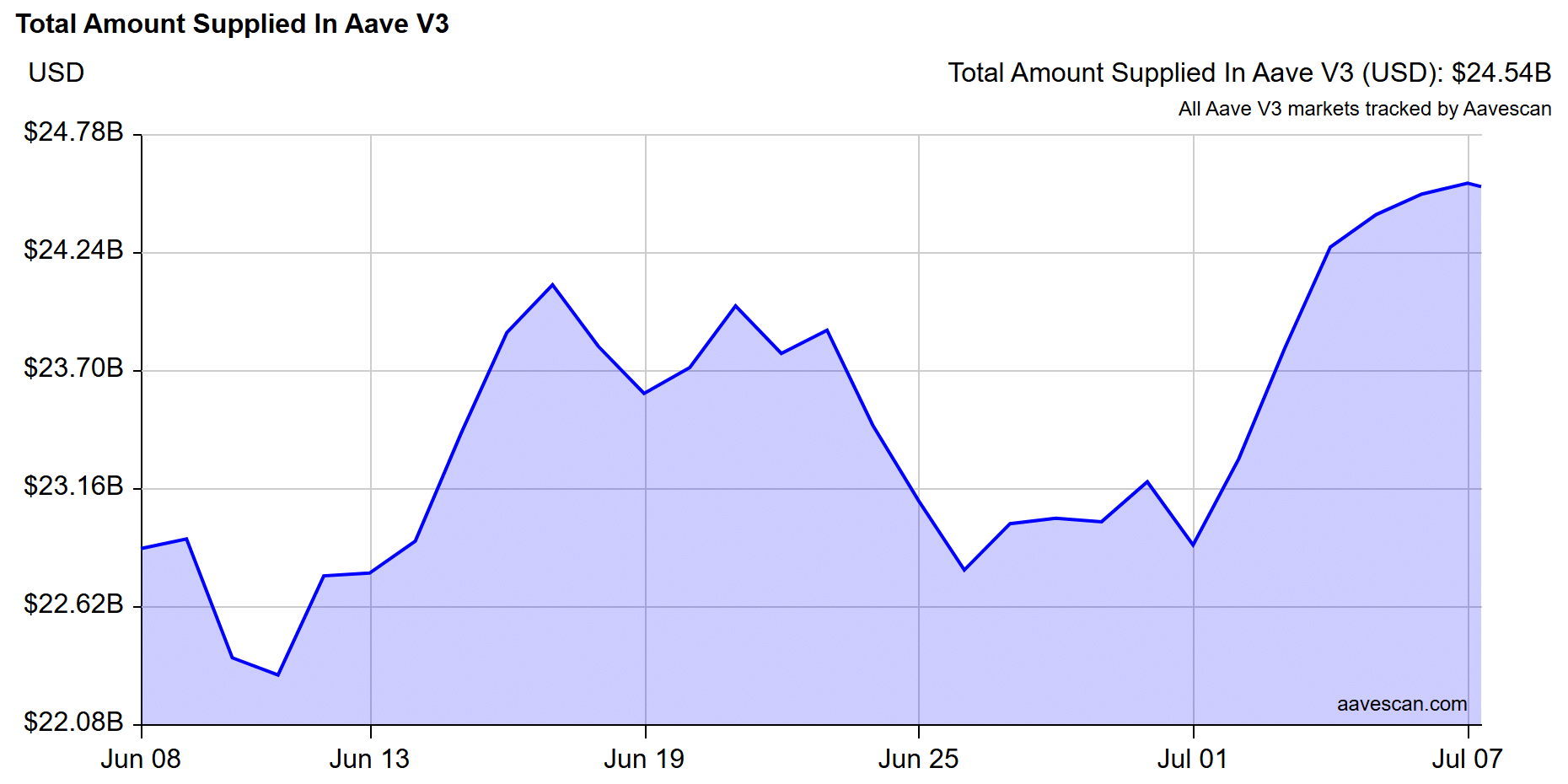
These increases in deposits were not directly related to borrowing demand. Instead, they suggest that investors position themselves early for improved tokenomics and automated redemption opportunities.
However, capital inflows will not be enough to ensure continued adoption.
However, the next step will be whether increased deposits will translate into increased borrowing activity, higher usage, and sustainable protocol revenue after Aavenomics 3.0.
As liquidity continues to return, attention is gradually turning to Aave’s ability to maintain this momentum. Aavenomics 3.0 addresses this challenge with automated redemptions funded entirely by protocol revenue.
Previous redemptions have acquired more than 205,000 AAVE for approximately $42 million. However, lasting success does not depend solely on buyouts.
Stronger borrowing demand, higher utilization, and resilient fee generation should convert Aave’s growing liquidity into sustainable growth for the protocol.
Final summary
- Aave (AAVE) needs to convert its cash into borrowing and income to support its growth.
- Monad’s liquidity growth requires sustained adoption to support the long-term expansion of the ecosystem.


