




Morgan Stanley holds $269.9 million in Spot Bitcoin ETF positions, with the majority of that exposure in GBTC – the Grayscale Bitcoin Trust – according to recent 13F filings submitted to the SEC.
The bank’s own Spot Bitcoin ETF, trading under the ticker MSBT, has collected more than $200 million in assets within weeks of its May 2026 launch, putting it ahead of most traditional ETF debuts in every way.
Here’s the detail that reframes the whole story: Morgan Stanley’s more than 15,000 financial advisors were not authorized to recommend these products. Every dollar received in those first weeks came because customers asked for it themselves.
This is not a distribution success story. This is a demand signal that raises a structural question worth investigating: What does it mean when wealthy clients turn to Bitcoin before advisors are allowed to push it?
DISCOVER: The Next 1000x Crypto Gem Ahead of Its Listing on Binance
Morgan Stanley’s $269M Bitcoin ETF Spot Position: What “Unsolicited” Really Means
In the broker world, the term “unsolicited” has a specific regulatory meaning. Think of it like a restaurant where the server isn’t allowed to recommend the steak, but you can still order it if you ask. FINRA’s suitability rules require advisors to obtain formal internal approval before proactively offering any investment products to clients. Without this approval, the product is on the menu and no one is allowed to describe it.
Morgan Stanley advisors are currently in this position with Spot Bitcoin ETFs. They cannot bring up MSBT or GBTC in a customer meeting without being prompted. But if a client comes in and says, “I want exposure to Bitcoin through a regulated product,” the advisor can execute that trade – and it’s recorded as an unsolicited order.
Amy Oldenburg of Morgan Stanley said:
“Almost all of that first week or two of $MSBT the business was self-directed, meaning it was NOT our advisors selling it.
It is only individuals who make the decision to place assets in the ETP."
– WOLF Bitcoin (@WOLF_Bitcoin_) May 6, 2026
 Amy Oldenburg of Morgan Stanley said:
This is precisely what happened during the first two weeks of MSBT. Amy Oldenburg, head of digital assets at Morgan Stanley, confirmed this directly at the Consensus conference in Miami Beach: “Almost all of this first week or two of activity has been self-directed. It wasn’t our advisors who were selling this.
GBTC, the Grayscale Bitcoin Trust that forms the core of Morgan Stanley’s $269.9 million position, has historically been the vehicle used by institutional investors when they wanted regulated exposure to Bitcoin before new Spot Bitcoin ETF structures became available. Morgan Stanley clients seeking this visibility did not wait for permission: they found the way themselves.
DISCOVER: The best Meme Coin ICOs to invest in 2026
Morgan Stanley’s Spot Bitcoin ETF Holdings Breakdown: The Numbers Behind the Filing
The $269.9 million position disclosed in Morgan Stanley’s 13F filings is heavily concentrated in GBTC, making the firm one of the largest institutional holders of that fund.
In addition to this existing position, the newly launched MSBT has amassed $200 million in assets under management in its first few weeks, a pace that places it among the rare ETF launches across all asset classes.
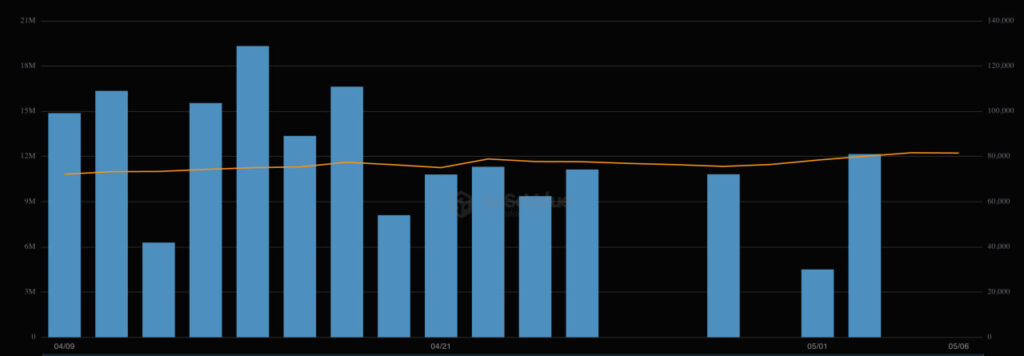
To calibrate the scale: Spot Bitcoin ETF total assets under management for all U.S.-listed products have increased significantly since the January 2024 approval wave, with cumulative net inflows reaching $59.6 billion, as Wall Street’s institutional appetite has proven more sustainable than many skeptics expected. Morgan Stanley’s combined position is only a fraction of that total – but the structural importance doesn’t lie in dollar size. It’s a question of who holds it and under what conditions.
MSBT launched with a referral fee of 0.14%, the lowest among Bitcoin ETPs at launch – a deliberate pricing decision that indicates Morgan Stanley is competing for long-term market share, not just checking a product box. Custody is held by Coinbase for Bitcoin cold storage and BNY Mellon for cash administration, a dual custody model that the bank has positioned as a security differentiator. BlackRock’s IBIT remains the dominant fund in terms of assets, but the institutional authorization dynamic that led to IBIT’s initial growth is now playing out in parallel at Morgan Stanley – with one key difference: this time, the bank directly controls the product.
Why Wall Street Buys Before Advisors Can Sell Them
The tension at the center of this story is structural. Morgan Stanley is both a Bitcoin ETF position holder, an issuer of a Bitcoin ETF product, and a company whose advisor network is currently limited in actively marketing this product.
This is not a contradiction; This is a sequencing strategy and is how large institutions have historically managed their regulatory exposure when launching into new asset classes.
The pattern of institutional adoption here mirrors what happened with BlackRock and Fidelity’s ETF launches in 2024: proprietary and client positions quietly accumulate through unsolicited channels while internal compliance and approval infrastructure catches up.
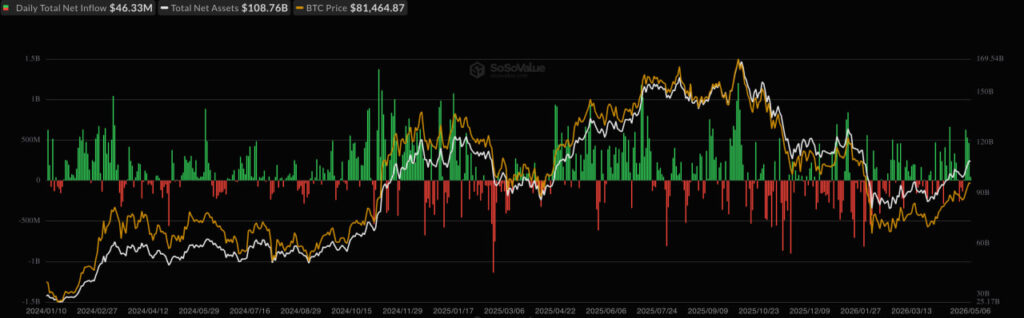
Advisor channel dynamics have consistently lagged behind institutional positioning in the ETF landscape, Morgan Stanley is no exception; it follows the same playbook on a larger scale.
Oldenburg clearly defined the longer arc: “We will live in a hybrid world for a while. » The bank is simultaneously expanding crypto spot trading through its E*TRADE platform – scheduled to launch in the first half of 2026 with Bitcoin, Ethereum and Solana – while investigating tokenized financial instruments as part of a decade-long infrastructure project. This is not a company that is hedging its bets. This is a company that is building a vertically integrated crypto stack.
DISCOVER: The Best Crypto Presales to Watch Now
Follow 99Bitcoins on X (Twitter) for the latest market updates and subscribe on YouTube for daily market analysis from experts.
The article Morgan Stanley’s $269M Bitcoin ETF Spot Bet: Why Wall Street is Buying Even If Your Advisor Isn’t appeared first on 99Bitcoins.


