




A new Solana governance proposal called SIMD-0550 aims to double the speed at which the network’s inflation rate is occurring. It aims to eliminate $1.5 billion in future SOL token issuance at current prices and reduces the time to reach the terminal inflation floor from 5.7 years to 2.8 years. The proposal was submitted by engineer Helius Lostintime101 and has already gained public support from Solana Labs co-founder Anatoly Yakovenko, giving it more institutional weight than most governance discussions at this point.
The tension within this proposition is real. SOL holders directly benefit from reduced dilution: fewer new tokens entering circulation means your existing holdings represent a larger share of the total supply over time. But validators, the infrastructure operators who secure the network, earn a significant portion of their revenue from inflationary staking rewards. Reduce the emission rate faster, and that revenue stream also declines faster.
This article will explain exactly what SIMD-0550 is changing on-chain, why the “mini-halving” label is useful but imprecise, and what the three most likely outcomes look like for holders and stakeholders.
New: @__lostin__ submitted SIMD-0550, a Solana proposal that could potentially reduce future $SOL issuance by approximately $1.5 billion by doubling the network’s disinflation rate from 15% to 30%, returning $SOL to its final inflation rate of 1.5% in 2.8 years instead of 5.7. pic.twitter.com/rueegmx6dy
– SolanaFloor (@SolanaFloor) June 4, 2026
What Solana SIMD-0550 Really Offers and How It Works
Solana’s current SOL inflation calendar operates on a decay curve. The network started with an annual emission rate of 8%, and this rate decreases by 15% each year until reaching a terminal floor of 1.5%.
Think of it like a faucet that turns off a little every year; it never closes completely, but it drips less and less. SIMD-0550 does not move the faucet’s starting position or final resting point. This simply makes the handle turn faster, doubling the annual disinflation rate from 15% to 30%.
This change alone, same start, same arrival, faster travel, is what produces the estimated $1.5 billion reduction in future emissions. The actual dollar amount fluctuates based on the price of SOL, but the calculations on the supply side are fixed: fewer tokens created over the next three years than would be issued under the current schedule.
we have just relaunched the simd to reduce solana inflation
don’t worry, it will happen this time
all gas, no brakes
– mert (@mert) June 3, 2026
Comparing the “mini-halving” with a crypto halving is useful for reader orientation, but quickly falls apart. Bitcoin halving is algorithmic and immutable; this happens every 210,000 blocks, regardless of governance votes or community consensus.
SIMD-0550 is a governance-focused proposal that requires approval from a large majority of validators to pass, and a nearly identical proposal, SIMD-0228, was rejected in March 2025 with only 37.8% of validator shares in favor, well below the required 66.67%. The mechanism for reducing emissions has a completely different character.
The only thing that determines whether this proposition is good or bad for a specific reader is its role. If you hold SOL without staking, reduced dilution is unambiguously positive. If you earn yield through staking, the calculation is more complicated, and this complication is where most of the debate lies. Understanding how Solana tokenomics evolved provides useful context for why this debate is happening now.
EXCLUSIVE: Earn $10 USDC via Binance Signup
What a 50% emissions reduction means for the SOL price: three scenarios
The passage of SIMD-0550 with strong validator consensus activates the bull case. Lower SOL inflation means less consistent selling pressure from validators liquidating rewards to cover operating costs. If demand remains stable while new supply entering circulation decreases significantly, calculating supply and demand favors price appreciation.
The $1.5 billion in avoided emissions are not redistributed. It remains completely out of circulation.
The base case is slower and more complicated. SIMD-0550 passes, but validator adoption is uneven, small operators are disappearing, and the governance timeline spans multiple epochs before implementation becomes clearer.
The predicted price hike is taking longer to materialize as the market simultaneously digests the validator pool contraction and the competing SIMD-0547 proposal, which aims to increase SOL consumption through enhanced resource-based fees. This is not a bad result for long-term holders. Just a slow one.
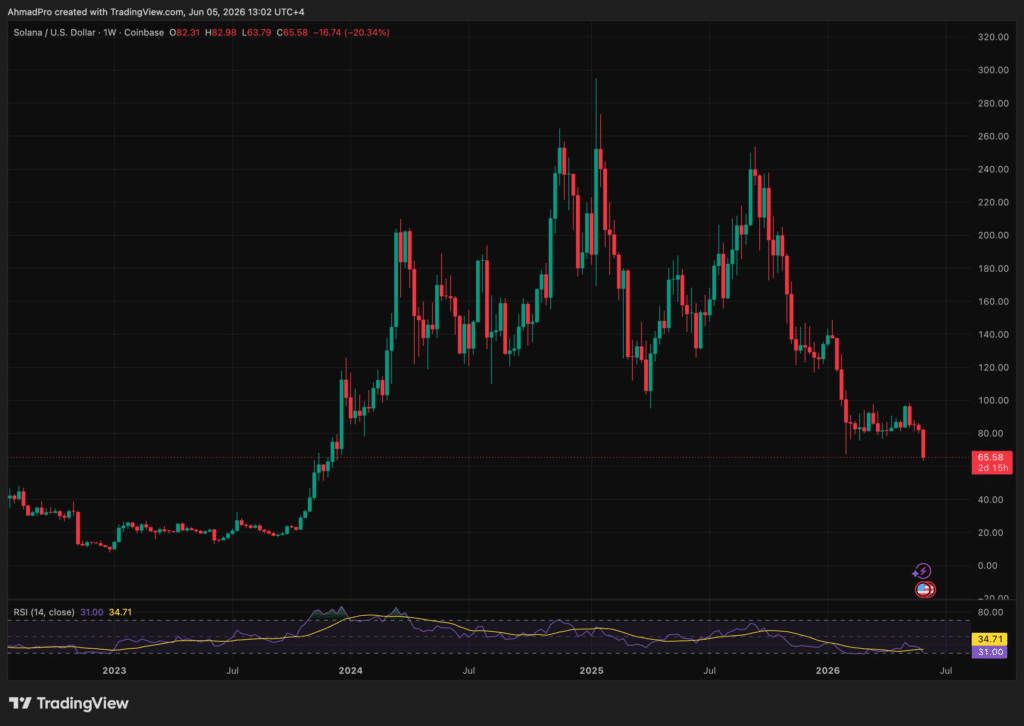
The bear’s case deserves the same weight. If squeezing validator revenue causes a significant number of operators to leave, especially small independent validators who cannot absorb the drop in yield, the result is a more centralized network with fewer nodes securing it.
A less decentralized Solana is a structurally weaker Solana, and this weakness becomes a pricing narrative of its own. Lower staking rewards also reduce the incentive to lock SOL, which could paradoxically increase the circulating supply as previously staked tokens are no longer staked and are transferred to exchanges. This is not an extreme risk. This is the direct mechanical consequence of a reduction in yields faster than the market adjusts.
Validator economics are important here. SIMD-0096, passed in May 2024 with 77% approval, has already redirected 100% of priority fees to validators instead of the previous 50/50 split. This change was intended to protect validators from future emissions reductions. The truly open question is whether this will provide a sufficient margin of safety under the accelerated SIMD-0550 schedule.
DISCOVER: 10+ next cryptos to 100X in 2025
Follow 99Bitcoins on X For the latest market updates and subscribe on YouTube for daily market analysis from experts.
The post Solana just proposed cutting $1.5 billion in token issuance in half the time, is this the supply shock SOL needs? appeared first on 99Bitcoins.


