



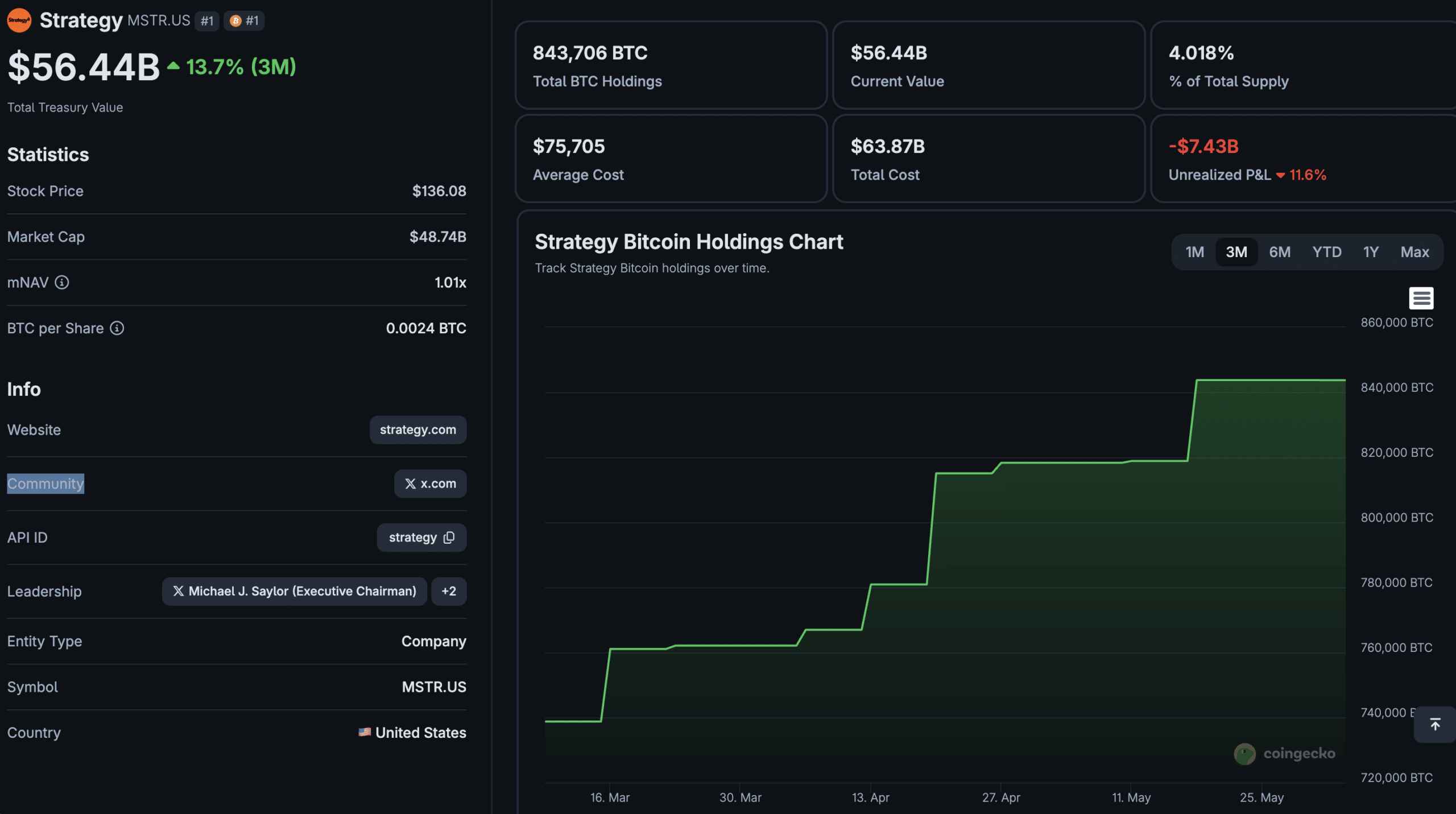
In today’s Bitcoin News, Strategy sold 32 Bitcoins on June 3, 2026, receiving approximately $2.5 million, and the market immediately treated it like a five-alarm fire, sending Bitcoin down 3.1% to $65,391 and erasing approximately $160 billion in total crypto market value over the week.
The company, which holds 843,706 BTC worth more than $60 billion, parted ways with such a small fraction that it barely appears as a line item on its balance sheet. Yet institutional investors withdrew nearly $4 billion from U.S.-listed Bitcoin ETFs over the next 12 sessions, a record consecutive outflow streak.
Here is the central tension this article uncovers: A mathematically trivial sell triggered a psychologically devastating response because it shattered one of Bitcoin’s most powerful support narratives, the idea that Michael Saylor and MicroStrategy would never sell.
Bitcoin News: explanation of the BTC sales strategy
Think of MicroStrategy’s Bitcoin treasury as a dam: its value depends not just on the water or Bitcoin it holds, but also on the belief that it won’t sell. When the company sold 32 BTC for $2.5 million, it raised concerns, even though the sale was insignificant compared to its $62 billion position. As Rajiv Sawhney pointed out, symbolism is more important than numbers.
To put things in perspective, selling 32 BTC from a hoard of 843,706 coins is like an owner opening a piggy bank containing $61 billion for a bill of $2,500. This was only MicroStrategy’s second Bitcoin sale; the first took place in December 2022 to manage tax losses. The recent sale coincided with a change in capital management, with the company also selling shares to raise cash.
CEO Phong Le said MicroStrategy will only sell BTC if it improves “Bitcoin per share.” This context is crucial for those who interpret the sale as a capitulation, as the company has historically engaged in small, tactical transactions without compromising its overall accumulation strategy.
$BTC hit March lows before a rebound.
$65,000 is the last strong support zone for Bitcoin, and its loss will accelerate the fall to new lows. pic.twitter.com/jUOceYTQ1n
— Ted (@TedPillows) June 3, 2026
EXCLUSIVE: Earn $10 USDC via Binance Signup
Is this a pivot or simply responsible balance sheet management?
In other Bitcoin news, two competing narratives are emerging in the crypto space. The first suggests that MicroStrategy has abandoned its “never sell” stance, indicating a decline in institutional confidence in Bitcoin. The second argues that the company, constrained by convertible debt and index pressures, must sell its positions for reasons unrelated to its long-term confidence in Bitcoin.
Research from TD Cowen supports the second narrative, showing that MicroStrategy’s Bitcoin purchases represent only about 3.3% of weekly trading volume and show little correlation with Bitcoin’s price movements. The company’s trading is overshadowed by broader market forces, such as large ETF outflows and futures liquidations.

(SOURCE: CoinGecko)
Additionally, there is a notable shift in equity, with companies like FXHB Asset Management shifting their investments from Bitcoin to AI stocks, with the Nasdaq up 41.5% while Bitcoin has fallen 37% over the past year. This divergence highlights broader institutional trends rather than a loss of confidence in Bitcoin itself.
There is, however, risk associated with leveraged funds tied to MicroStrategy stock, which has fallen more than 70% from its peak. Concerns have arisen about a “vicious feedback loop” in which declines in MicroStrategy’s shares lead to further capital outflows, negatively impacting sentiment toward their trading. Investors in these leveraged vehicles should be wary of this risk.
EXPLORE: Best Meme Coin ICOs to invest in 2026
The post What Saylor Strategy Selling Bitcoin Really Means appeared first on 99Bitcoins.


