



Key takeaways
- Qatar and Pakistan say the United States and Iran have agreed on a road map towards a final deal within 60 days.
- Technical negotiations began at the Swiss station Bürgenstock, with the establishment of a communication line in the Strait of Hormuz.
- Bitcoin fluctuated between around $60,000 and $75,000 during the conflict as oil and risk sentiment collapsed. The asset is currently trading above $64,000.
A 60 day window
The two mediators said a high-level committee had agreed on a road map aimed at reaching a final agreement within 60 days, laying the groundwork for the immediate start of technical negotiations. Those talks are expected to continue throughout the week at the resort town of Bürgenstock in Switzerland, covering issues ranging from a truce in Lebanon to an asset freeze.
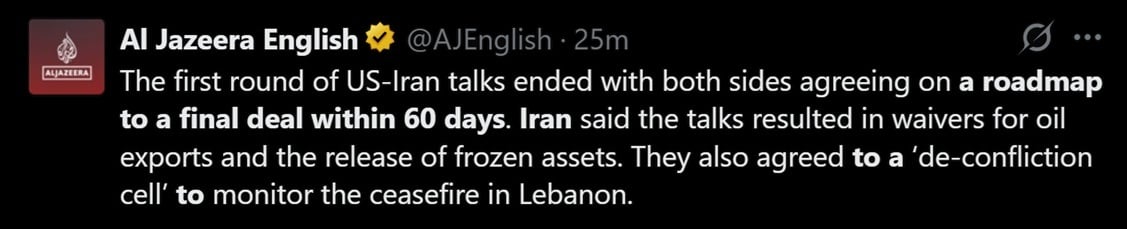
As part of the agreement, the representatives agreed to establish a deconfliction cell with Lebanon to end military operations and a communications line to manage incidents in the Strait of Hormuz, aimed at ensuring the safe passage of commercial vessels during the 60-day period. The reports also highlighted economic benefits for Tehran, including waivers on oil and petrochemical exports and the release of some frozen assets.
The breakthrough came after hours of negotiations that mediators described as demonstrating encouraging progressalthough conflicting narratives quickly emerged and previous cycles were disrupted by harsh rhetoric. A road map is not a signed peace deal, and the next two months will test whether the framework holds.
For what Cryptocurrency Cares for Hormuz
For digital asset traders, the stakes run directly through the Strait of Hormuz, the waterway that carries about 20% of the world’s energy supply. Its disruption during the conflict pushed oil and the United States inflation higher, leading to tighter financial conditions for risky assets, including cryptocurrencyand turn every diplomatic headline into a market-moving event.
Bitcoin.com News followed the whipsaw closely as BTC exceeded $65,000 when President Donald Trump declared a deal with Iran was reached and authorized the reopening of the strait, it then slipped toward $62,000 as traders undervalued risk and the peace rally faded away. At other times, the price fell to around $63,400 after Iran said the strait remained closed despite Trump» claims of a “good deal”.
In any case, a a lasting settlement would eliminate one of the most significant macroeconomic problems of the year, which could lower oil prices and inflation pressure and paving the way for the return of risk appetite. This context has always been favorable to bitcoin, which is increasingly trading in sync with broader sentiment of liquidity and risk rather than in isolation.
The risk, however, remains one of symmetry, because if the 60-day roadmap collapses, the same volatility that has gripped oil, stocks and cryptocurrencies for months could return in force. That said, traders will likely view the deal as a positive attempt rather than a resolution, at least for now, before technical negotiations in Switzerland come to fruition.


