



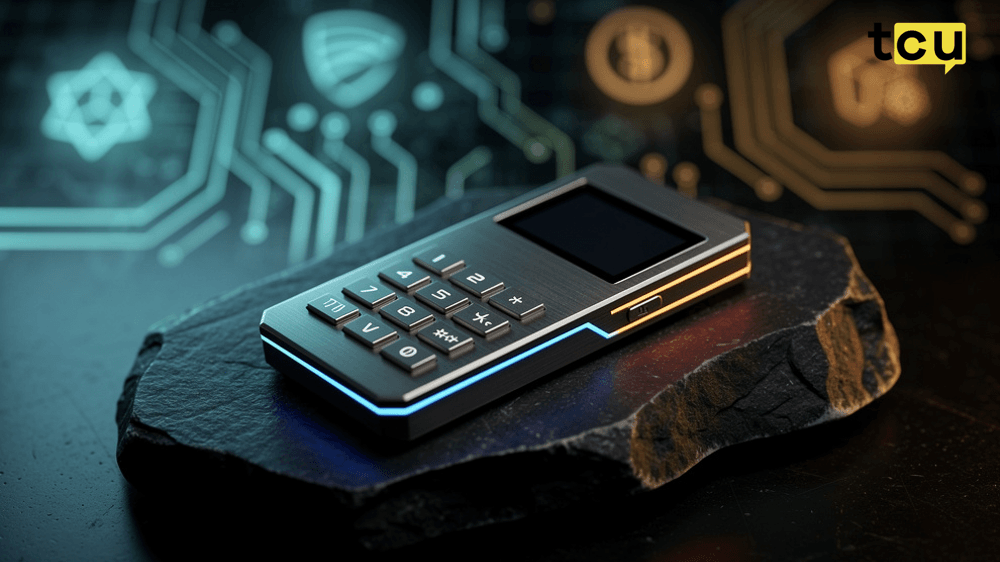

Coinkite, the maker of Bitcoin-only hardware wallets, recently launched the MK5, a significant upgrade in quality of life and user experience over the MK4 Coldcard. It builds on the solid security foundations established by its predecessor.
The MK5 is available in many colors and styles. This review covers the Orange and Glow in the Dark versions, as well as their form factor and user experience upgrades. The goal is to determine whether the upgrades are worth it.
Building on the Foundations of Security
The MK4 was known for its security platform, which brought together two secure element chips from different manufacturers and an MCU on the same device. The MK5 instead focuses on improving the quality of life. It improves NFC connectivity, reworks the buttons and plastic chassis, and adds a much larger screen. This is the first hardware upgrade to the Coinkite MK line since the MK4 launched in 2022. It incorporates some technologies that debuted on the Coldcard Q in 2023.
The big improvements to the user experience are immediately visible. The screen is much larger, maybe 30% larger. The announcement blog describes it as a “1.54-inch display protected by Gorilla Glass.” It looks and feels much more robust than older models.
The next obvious improvement is the buttons. Unlike the MK4 buttons, which are recessed and require your fingers to enter the socket to click, the MK5 buttons are almost flush with the chassis. This makes them much easier to squeeze. The press feels good and clicks, giving solid tactile feedback. It’s much more comfortable than the unresponsive feeling of a touchscreen found in other hardware wallets.
Design and chassis changes
The chassis has been redesigned. The screen section no longer protrudes above the keyboard. Instead, it’s a single rectangle with comfortable curved edges. It looks more modern and sleek while retaining that cypherpunk transparency that highlights the underlying hardware, a signature design principle of Coinkite products.
The MK5 also comes with a button and half screen protector case that slides in and snaps into place. It can be completely removed and fits snugly on the back of the device, seamlessly exposing the USB power input at the bottom.
NFC improvements
Coinkite doubles down on NFC support with the MK5. NFC antenna is becoming more and more popular in Bitcoin. Examples include tap-to-pay Lightning Bolt NFC cards, Coinkite’s own Tapsigners, and Cashu’s tap-to-send features.
NFC is a powerful alternative to Bluetooth or WiFi. Some hardware wallet providers have adopted these alternatives, but they have drawbacks, primarily their scope. NFC is by design, short range, operating in centimeters. Bluetooth and WiFi work tens of meters away. So the paranoid threat of someone with a long-range antenna connecting to your device remotely disappears.
There is also no multi-step device connection protocol with NFC. Phones have the feature turned on or off, the app starts scanning and transmission takes place. No PIN codes, no searching lists of Bluetooth devices. Much simpler user experience in theory. It is also far superior to SD card transmission of pre-signed transactions. Although NFC can technically cross the “airgapped” line in the MK4 and MK5, it still has the best qualities of the wireless options. It is disabled by default. Similar to the USB connection, the NFC antenna can be cut at the hardware level by scratching a specific wire.
Coinkite’s NFC Push Tx software is open source and much smaller in terms of lines of code than Bluetooth or WiFi. The complete NFC Push Tx code is open source. The client web application side has no defined licenses and is intended to be integrated by any web application. The hardware side of the code is public but limited by a non-commercial use license.
Collectibles and packaging
The MK5 is available in a wide range of cases, such as transparent gray with gold glitter, stunning orange and glow in the dark. This review covers the orange and blue glow-in-the-dark versions, although the gold glitter one might be more interesting. The designs are beautiful, transparent enough to see the material, but colorful enough to look stylish.
The packaging was interesting. The box containing the materials was accompanied by an order form for items placed in tamper-proof security bags. These bags were made of sturdy plastic and required a knife to cut through them. They were also marked with a unique number. Inside the bag, another strip of plastic contained the same number. When the device was first turned on, it showed the same number on the screen. This is a factory device-defined flash memory code. This makes interception and manipulation of firmware much more difficult. The next level would be to notify the user of the bag number via email or login so that they can verify the number through a secondary channel.
Integration and verdict
NFC Push Tx integration with mobile wallets was a bit inconsistent. I tried Cove, Bull Bitcoin and Nunchuck. Of the three, Nunchuck had the best integration, followed closely by Cove. Bull Bitcoin appears to have disabled or hidden the feature. Even with a stronger NFC antenna, I had to remove my phone’s thick case to get reliable data transmission.
As an MK3 owner, upgrading to the MK5 is a significant upgrade. At $167 plus shipping, it’s a no-brainer for those with older models. For active MK4 users, the larger screen and better buttons are obvious quality-of-life improvements. The best NFC antenna will also make transaction flows smoother. For passive MK4 owners who make a few transactions per year, the upgrades may not be worth it. They still get firmware updates and security benefits.
Disclaimer: Coinkite provided Bitcoin Magazine with some free MK5 Coldcards for testing purposes.


