




Peter Schiff is back with the receipts, and this time the numbers are harder to ignore. The longtime gold advocate and Bitcoin critic has renewed his attack on the MicroStrategy Bitcoin cash strategy, noting that MSTR increased its share of the the total supply of Bitcoin has increased from 2.76% to 3.9% over the past year.
This marked a 40% increase in market dominance, while Bitcoin itself fell by around 30%, from around $110,000 to around $76,000. The accumulation thesis was supposed to create a price floor. This is not the case.
He’s a complete impostor. This will never happen.
-Peter Schiff (@PeterSchiff) April 30, 2026
Schiff’s challenge is clear: If holding 3.9% of the supply couldn’t stop the slide, why should 5% be any different? Meanwhile, Bitwise CIO Matt Hougan maintains that MicroStrategy Bitcoin’s recent purchases remain the most important driver of the recent BTC USD rally, placing two credible voices on opposite sides of the same data set.
The Schiff counters. Saylor’s battle continues as Bitcoin rises +0.8% on the day, around $76,300, as the broader market continues to correct after a bullish rally in recent weeks.
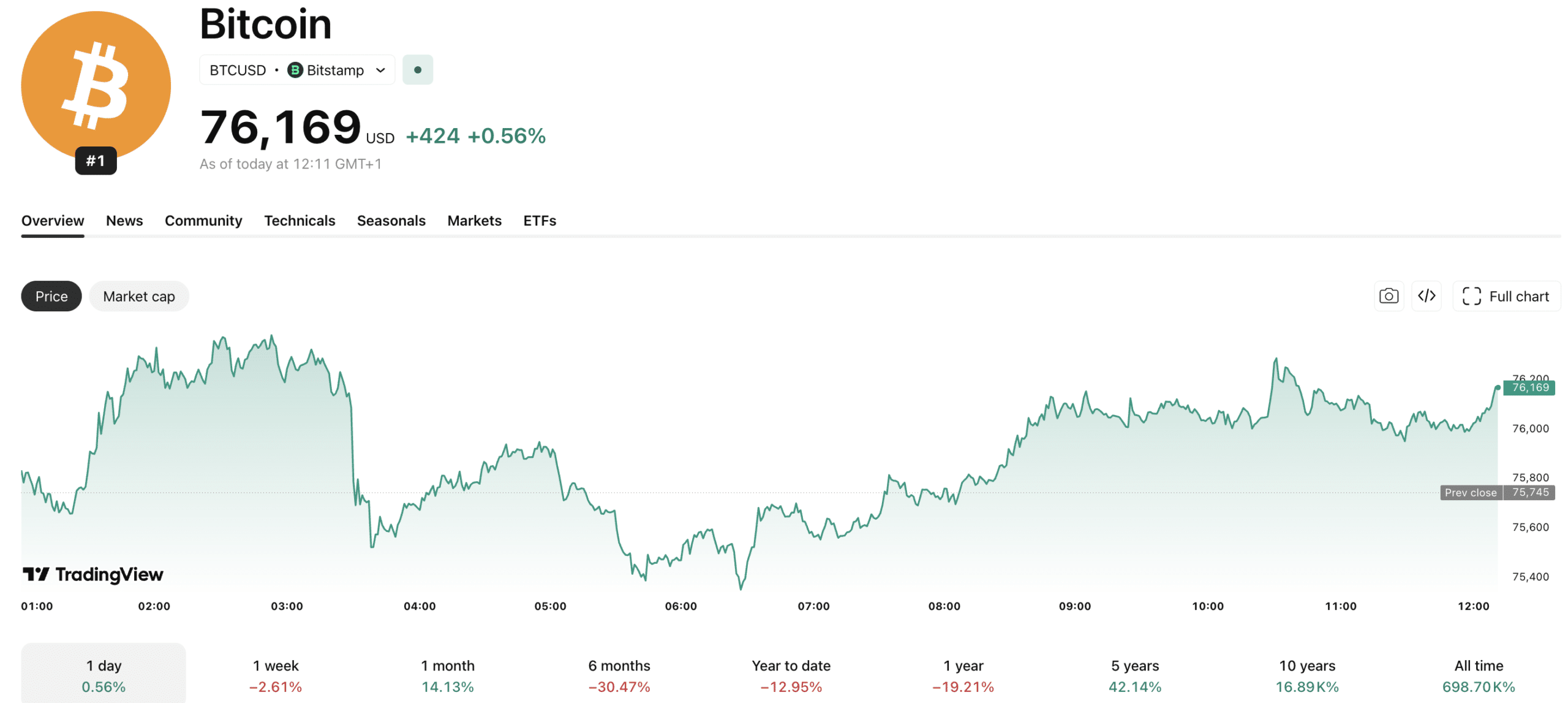
(SOURCE: TradingView)
The Schiff Case: Why Rising Treasury Yields Make Bitcoin’s Zero Yield a Real Problem
Peter Schiff’s argument against Bitcoin focuses on its lack of cash flow, dividends or interest. Although holding assets without yield was less of a concern with Treasury yields near zero, current yields of 4-5% change the calculations.
For retail investors, this is a personal choice, but for debt-strapped companies, it is essential. MicroStrategy holds 818,334 BTC at an average price of $74,436, putting significant equity at risk if Bitcoin declines.
A year ago, MicroStrategy held 2.76% of Bitcoin; it now holds 3.9%, even though the price of Bitcoin has fallen 30%. Schiff questions why Bitcoin should stop falling if MicroStrategy increases its stake to 5%.
He called MicroStrategy’s preferred stock product “the biggest Ponzi” and criticized the use of asset appreciation to support such instruments. Despite all the noise, the yields argument deserves attention, especially given the Fed’s policies boosting Treasury yields.
Any investment professional, government regulator or financial journalist who does not call out $MSTR And $STRC like scams, and @Saylor like a fraud, he cannot be trusted. I wonder what everyone working in the crypto industry will do once the bubble is completely deflated.
-Peter Schiff (@PeterSchiff) April 29, 2026
EXCLUSIVE: 99Bitcoin Readers – Earn $10 USDC when you sign up for Binance
MicroStrategy Bitcoin News Why the Strategy Model Holds Up and Where It Breaks
Saylor’s counterthesis focuses on long-term currency depreciation, arguing that nominal Treasury yields are irrelevant. Even though fiduciary bonds earn between 4 and 5 percent today, they often fail to preserve purchasing power over time. It positions Bitcoin as a monetary property that appreciates against major currencies.
MicroStrategy’s financing strategy is more complex than simply borrowing to buy Bitcoin. The company uses preferred stock and convertible notes, with its shares trading at a premium to its Bitcoin net asset value.
This premium suggests that MicroStrategy can acquire Bitcoin more efficiently than most institutions, leading to compound BTC returns. Similar strategies, such as Metaplanet in Japan, are also emerging.
However, Saylor’s model carries risks. If the price of Bitcoin falls significantly below the acquisition cost of $74,436 while Treasury yields remain high, MicroStrategy may need to issue new shares or sell BTC to meet liquidity needs, reflecting the bearish scenario anticipated by Schiff. This scenario is possible but not inevitable.
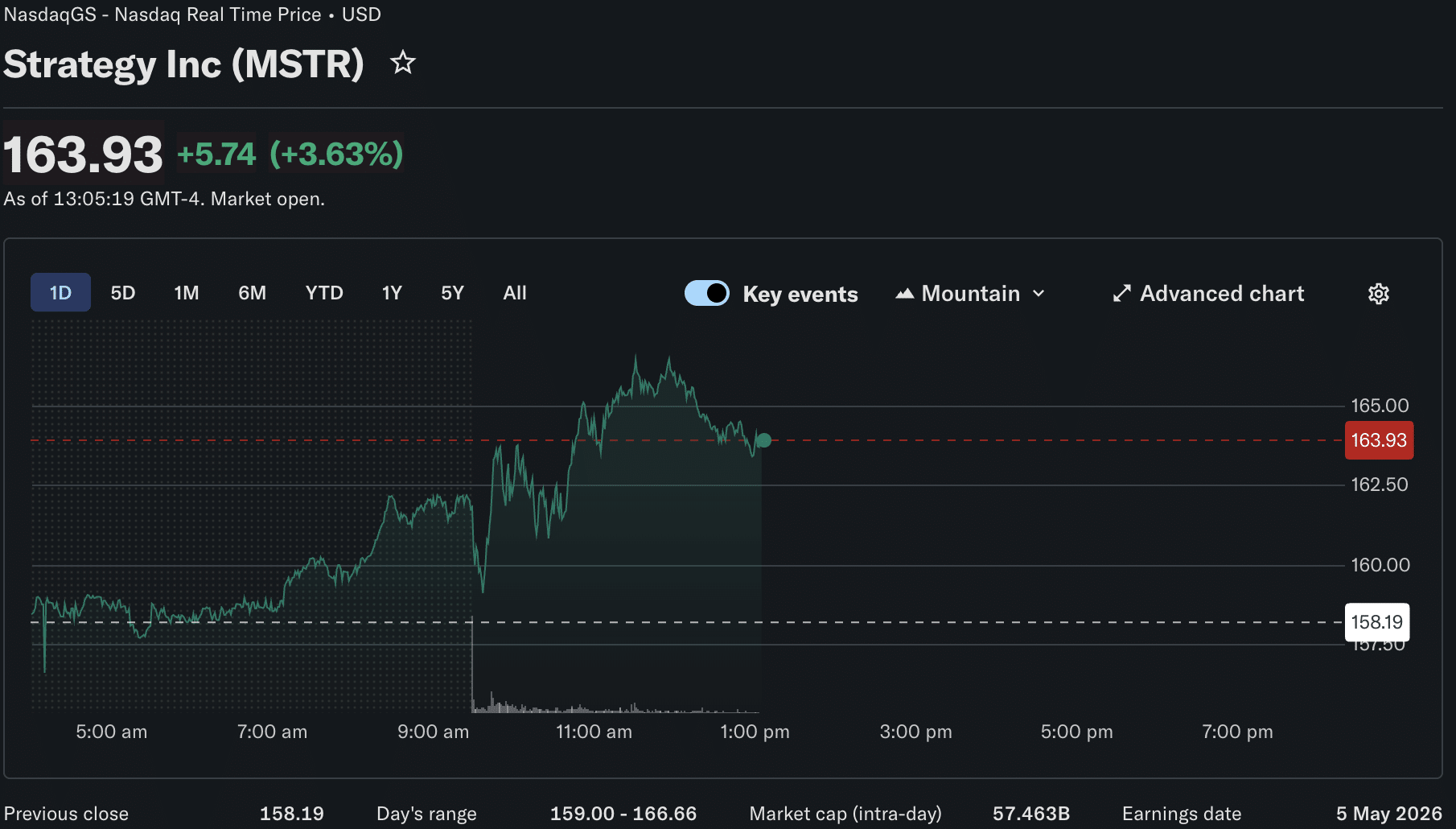
(SOURCE: Yahoo Finance)
Three scenarios: how this debate is actually resolved
- Case of the bull: Treasury yields peak and begin to reverse as growth slows. Bitcoin recovers over $90,000, MicroStrategy’s unrealized gains are rebuilding, STRC’s funding flywheel continues to spin, and Schiff is wrong again – as he has been for most of Bitcoin’s existence. Saylor’s 5% supply target becomes a story of justification.
- Base case: Yields remain high but stable. Bitcoin is moving between $75,000 and $85,000. MicroStrategy continues to pile on, the debate continues without resolution, and the strategy survives on patience rather than momentum. MSTR Stock Underperforms But Not Crashing.
- Bear case: Yields rise further on budget concerns, Bitcoin dips below $70,000, and MicroStrategy’s leveraged position faces real stress. A forced issuance of shares or, in an extreme scenario, sales of BTC would validate Schiff’s death spiral thesis and reshape the entire narrative of corporate Bitcoin cash flow.
The key variable to watch is simple: MSTR stock price relative to Bitcoin’s net asset value. If this premium narrows sharply, it indicates that the market is pricing in funding stresses – before a balance sheet event actually occurs.
EXPLORE: Best Crypto Presales with Staking Rewards
Follow 99Bitcoins on XYouTube and Telegram for more crypto news and analysis.
The article Michael Saylor vs. Peter Schiff: Is the MicroStrategy Bitcoin bet under threat? appeared first on 99Bitcoins.


