



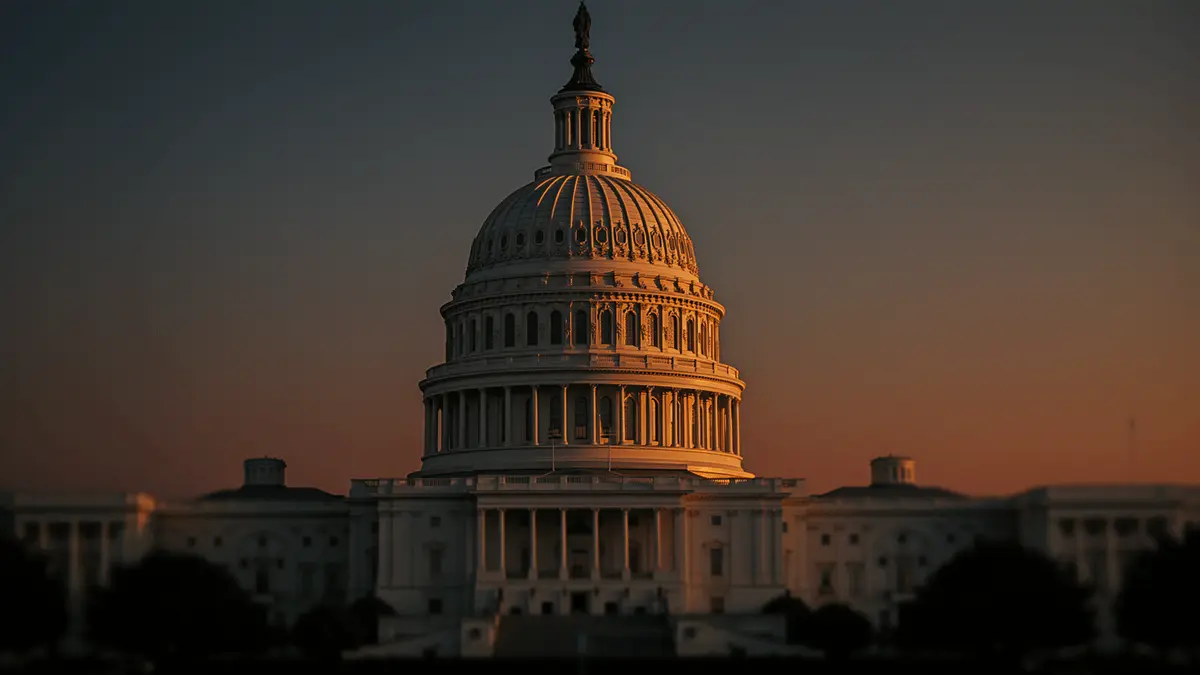
Sen. Bill Hagerty told FOX Business News on June 18 that he hopes the Digital Asset Market Clarity Act can clear the Senate before the July 4 congressional recess, even though Sen. Cynthia Lummis placed the most likely voting window in the period before the August recess, and David Nage, managing director and portfolio manager at Arca, characterized the bill’s basic trajectory as a Senate review after July 13. once ethical provisions are reconciled.
This isn’t just a scheduling conflict between optimistic and cautious lawmakers. This is a structural test of whether the 119th Congress can provide a jurisdictional framework dividing oversight of digital assets between the Securities and Exchange Commission and the Commodity Futures Trading Commission before the legislative calendar completely squeezes the opportunity, with Lummis warning that failure in the current window could delay meaningful legislation on market structure until 2030.
CLARITY Act News: the legislative journey, from committee to floor
The Senate Banking Committee advanced the Senate version of the CLARITY Act on May 14, 2026, by a vote of 15-9, with Democrats Ruben Gallego (AZ) and Angela Alsobrooks (MD) joining all Republicans on the panel. The bill was placed on the Senate legislative calendar as No. 423 on June 1, 2026, making it officially eligible for floor consideration.
The House passed its version, H.R. 3633, on July 17, 2025, by a margin of 294 to 134.
Financial sovereignty means that your government cannot inflate your savings without your consent. This is what Bitcoin and digital assets protect.
– Senator Cynthia Lummis (@SenLummis) June 18, 2026
The remaining procedural pile is considerable. The bill must pass the 60-vote threshold in the Senate, be reconciled with the Senate Agriculture Committee’s version, then merged with the House-passed text before reaching the president. The Astraea law provides for promulgation around August 2026, while signaling the risk of reconciliation at each stage.
Ethical provisions define the remaining gap
Nage, following direct conversations with Senate offices, said lawmakers and industry participants are in roughly 80% to 85% agreement on the substance of the bill. Stablecoin performance – previously a hot spot and one that JPMorgan CEO Jamie Dimon has continued to criticize, is no longer the main source of friction.
The remaining disagreement concerns conflicts of interest and ethics rules that would prevent public officials from engaging in crypto-related business activities while in office.
JUST IN: 🇺🇸 Federal Reserve offers stablecoin issuer identification program 👀
This is the Fed’s first GENIUS Act regulation. pic.twitter.com/Obej8CfbZy
– Bitcoin Magazine (@BitcoinMagazine) June 18, 2026
Nage characterized the pending debate as a question of enforcement mechanism and policy implementation rather than a fundamental dispute over the structure of the digital asset market.
His base case scenario calls for Congress to resolve these provisions in the weeks following the holiday and schedule a floor vote after lawmakers return on July 13. For a more complete treatment of the specific ethics provisions and their procedural implications, the contours of the remaining conflict concern how the restrictions of Section 604 would be applied rather than their place in the bill.
Hagerty’s remarks also invoked the GENIUS Act, the stablecoin legislation the Senate approved earlier that establishes a federal framework for payments stablecoins – as evidence that regulatory clarity produces lasting policy results. “It will be a matter of priority after the July 4 holiday, but I certainly hope it gets done before then,” Hagerty said.
Institutional participation depends on clarity
Solana Policy Institute President Kristin Smith said many asset allocators are actively exploring exposure to digital assets but are holding back on capital commitments pending defined regulatory guidance. She rejected the notion that the CLARITY Act would weaken oversight, arguing instead that it adds consumer protections, expands law enforcement tools, and closes jurisdictional gaps left by the existing patchwork regime.
Lummis separately revealed that the bill provides $150 million in dedicated funding to combat illicit cryptocurrency activity, a provision that reframes the legislation as an enforcement measure as much as a market structure measure. Galaxy Research estimated the chances of passage at about 50-50 for 2026, a figure that sees the August recess deadline as the last realistic legislative window before the calendar stacks up against enactment. Whether Senate leaders schedule the floor consideration before this recess or postpone the consideration until the fall is now the most important near-term variable.
We suspect that the debate over the ethics provision serves in part as cover for broader negotiations within the party over the scope of the bill. The disagreement over implementation described by Nage is real, but the pace at which it resolves will likely reflect leaders’ reading of the floor vote math as much as any substantive political compromise.
following
Disclaimer: Coinspeaker is committed to providing unbiased and transparent reporting. This article is intended to provide accurate and current information, but should not be considered financial or investment advice. Because market conditions can change quickly, we encourage you to verify the information for yourself and consult a professional before making any decisions based on this content.

Neil is a professional cryptocurrency content writer with years of experience. He has written for various cryptocurrency websites to report on the latest news and has been hired by all kinds of cryptocurrency projects, to create content that would increase their visibility and attract more potential investors.
Neil Mathew on LinkedIn


